• Fin del Mundo

    Spent the last 2 days in bed thanks to a cold – good thing both days were in the Drake Passage. It was relatively calm with some nice slow rocking.

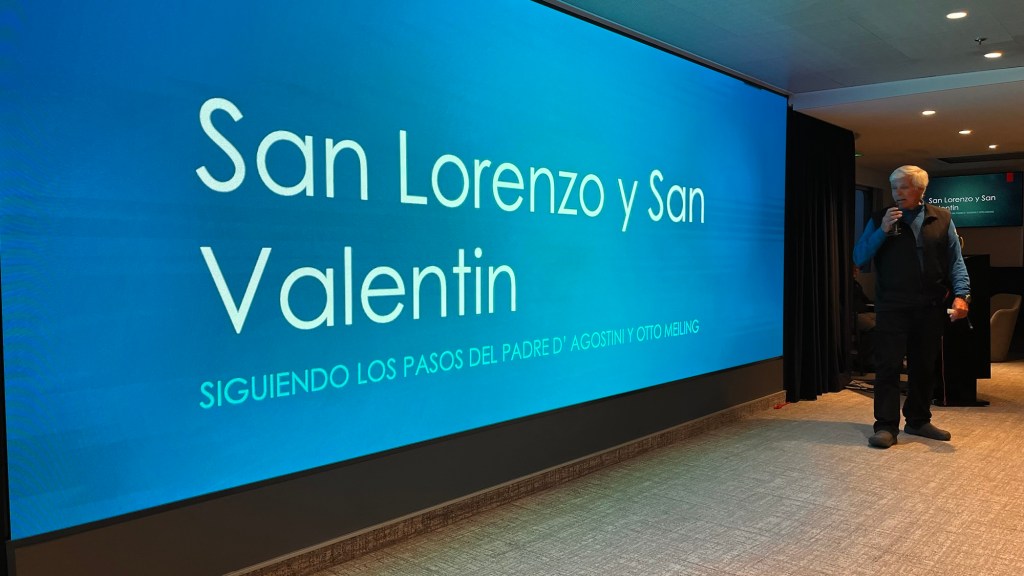
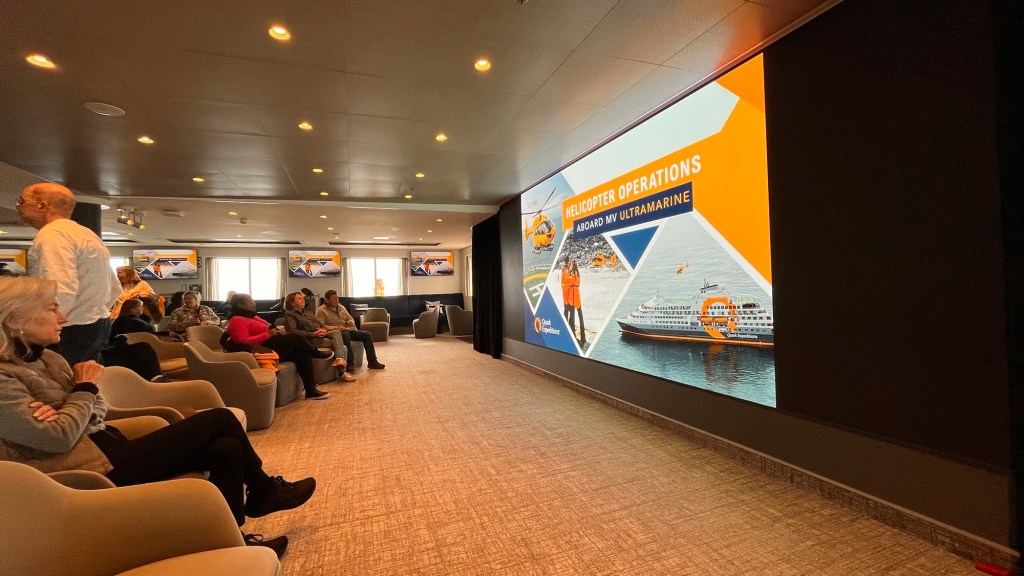
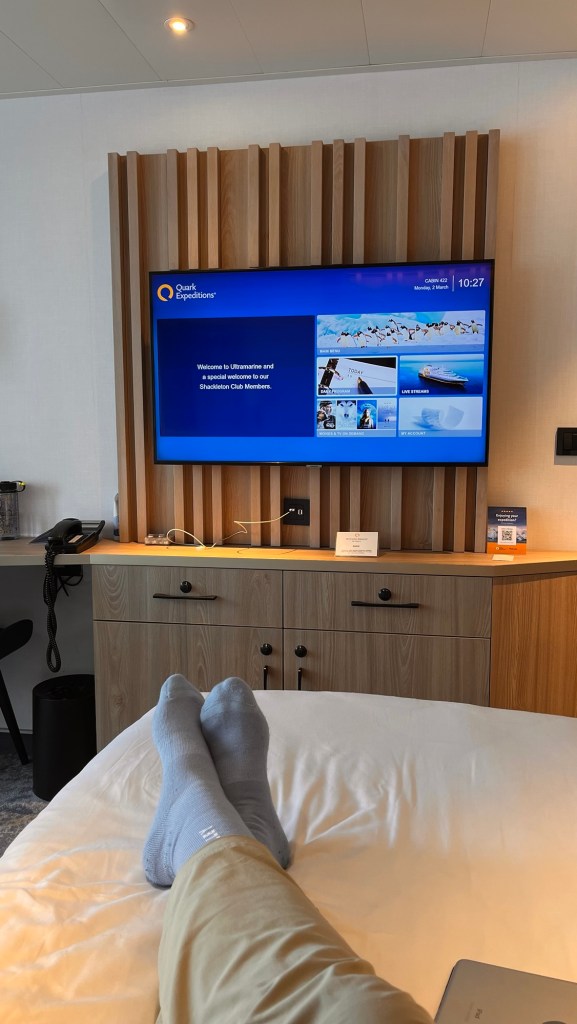
    I appreciated the TV in the cabin . I thought it was a stupid idea at first  but since they livestream all the presentations I did not miss out. Found out about the helicopters, hotel operations, ship operations and even the commissioning of the ship.
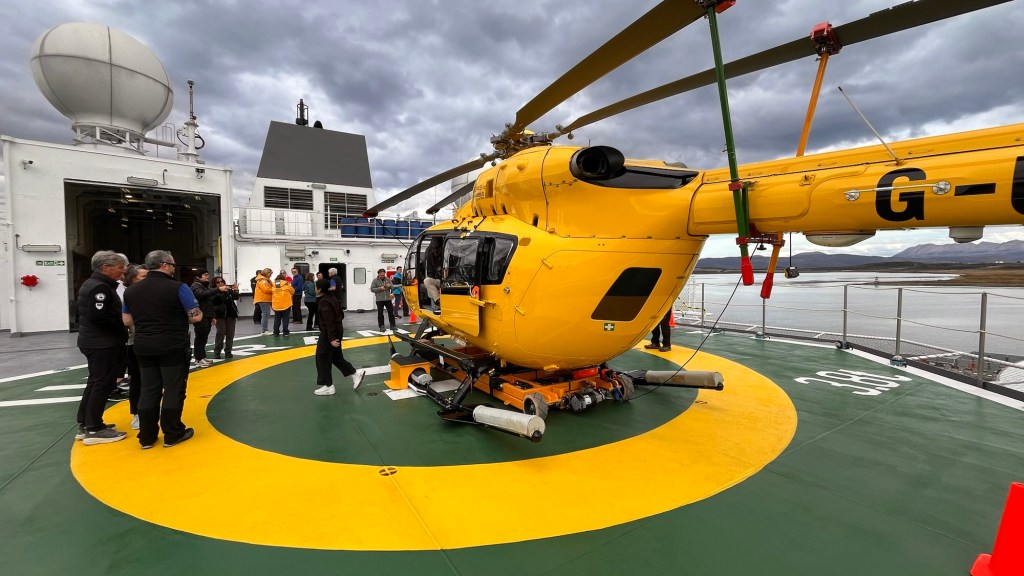
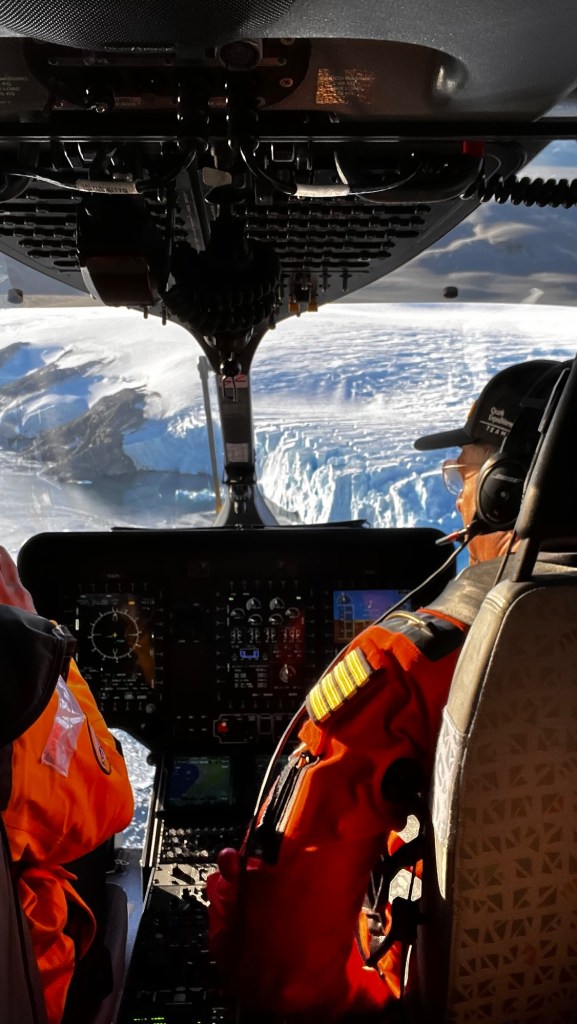
    The helicopters they use cost around 10,000,000 EUR and cost about 800,000 EUR for annual maintenance and inspection. They have 2 helicopters, 2 pilots, an engineer and la mechanic. Helicopters are stored in dedicated hangars on the 8th level to protect them from exposure to salt. They are moved in and out with trolleys when needed. When operating, all rear decks are closed and at least 2 zodiacs are in the water on stand by in case of emergency. The pilots are only allowed to fly for 3 1/2 hours without a break. When doing heli-landings, the number of people at the landing spot is restricted by the amount of emergency shelter and food carried.  

    Hotel side, most of the staff are Filipino – and very efficient ones at that! Although there was one husband and wife couple, most are away from home for most of the year. They get a 4-6 week break in spring/fall while the boat repositions to the opposite polar area and under goes maintenance.

    Service and food quality were exceptional and without all the silly chef-y affectations. They source only sustainable seafood so no salmon but plenty of swordfish. One thing everyone appreciated was the display of dinner dishes laid out in the buffet in the evening. 
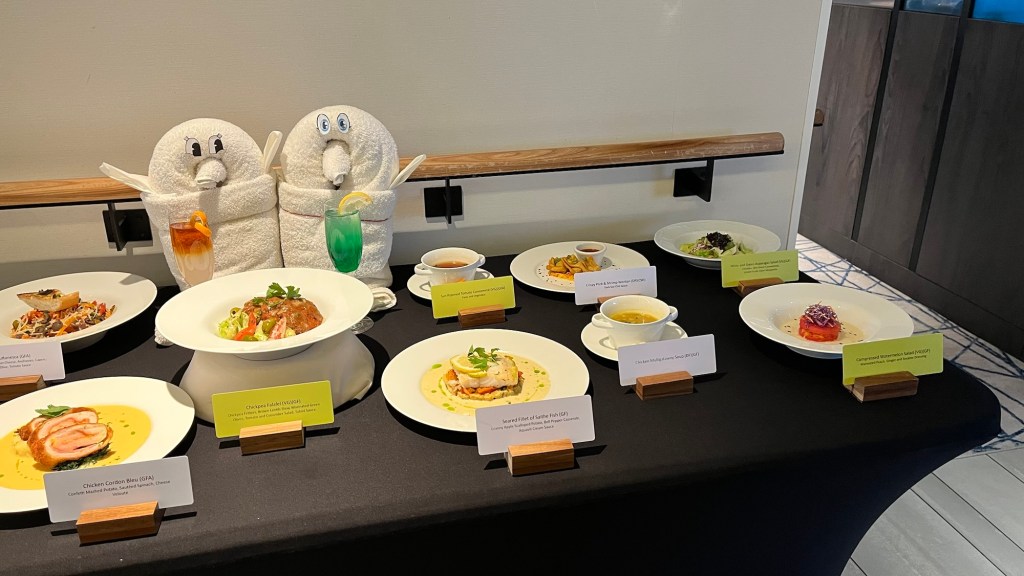
    Darron the Hotel manager was on hand to answer questions – he also seemed to have memorized everyone’s name.

    Apparently, our expedition used a lot less toilet paper than anticipated.

    Ship fun facts:

    • They process both black water and grey water and release it at appointed places at sea cleaner than when they started.
    • A reverse osmosis process for desalinating sea water is used.
    • Garbage and “recycling” is put through a micro auto gasification system. The process reduces it to biochar while producing heat – a scrubber is used so emissions are clean-er.
    • Recaptured heat from the generators heats the interior.
    • The hull has a special coating to discourage sea life from latching on – part of the seasonal maintenance is cleaning and re-coating.
    • Generators use low sulphur diesel.
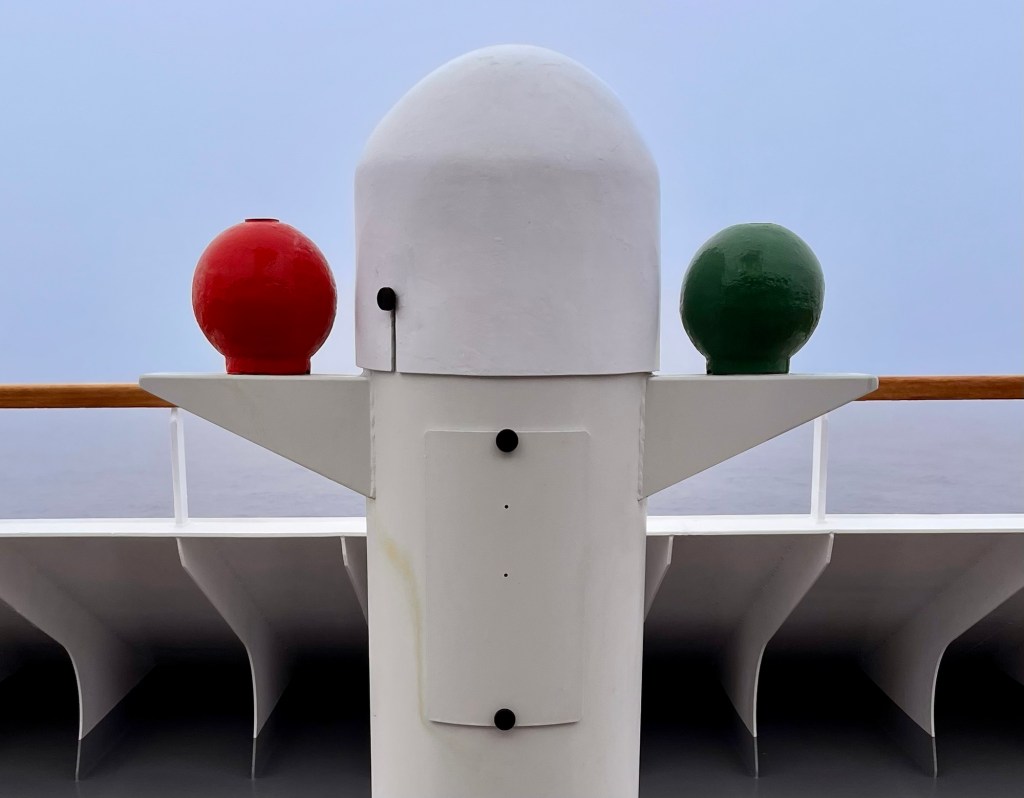
    • They use green lights around the deck at night to reduced bird strikes.
    • They treat ballast water with UV light to discourage algae growth.
    • The ships base cost (that was publicly released) not including the full fit out was 180,000,000 EUR – they didn’t share the final price with us.

    The ship was built in Split Croatia – Jake our expedition leader was involved in the final fit out and commissioning with all the typical challenges and frustrations that you would find in an architectural project – all during covid. Captain Oboychuck was also involved early on as a consultant before becoming captain. They certainly seem to have a great deal of pride for, and emotional attachment to, the Ultramarine.

    The last livestream was a fundraiser auction to benefit a non-native mouse eradication project in one of the sub-antarctic islands in the Indian Ocean. The mice are eating eggs and even adult birds to extinction – death by a 1000 nips. They raised over $11,000 USD from an audience of 181.

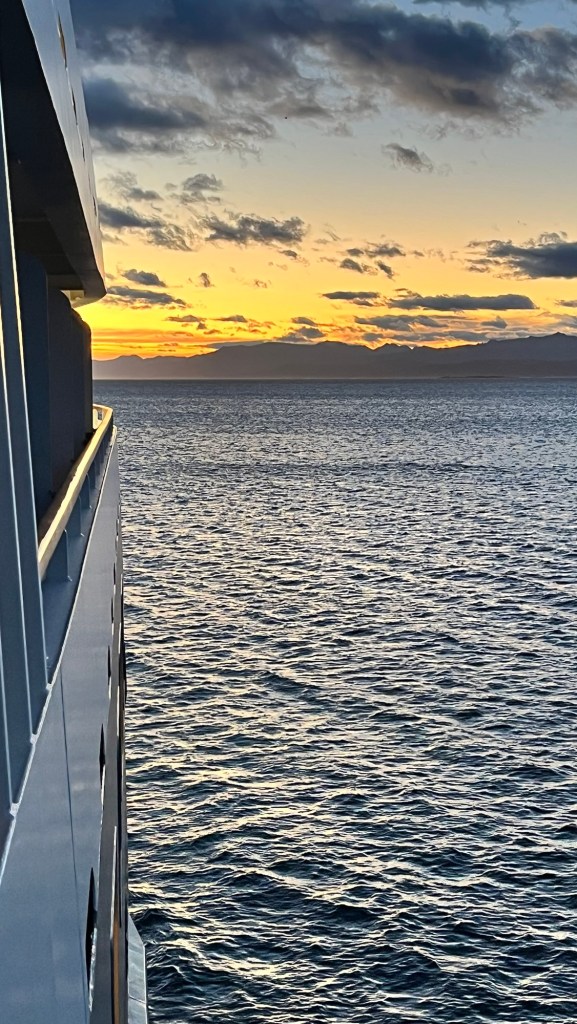
    It was sad to say goodbye this morning.
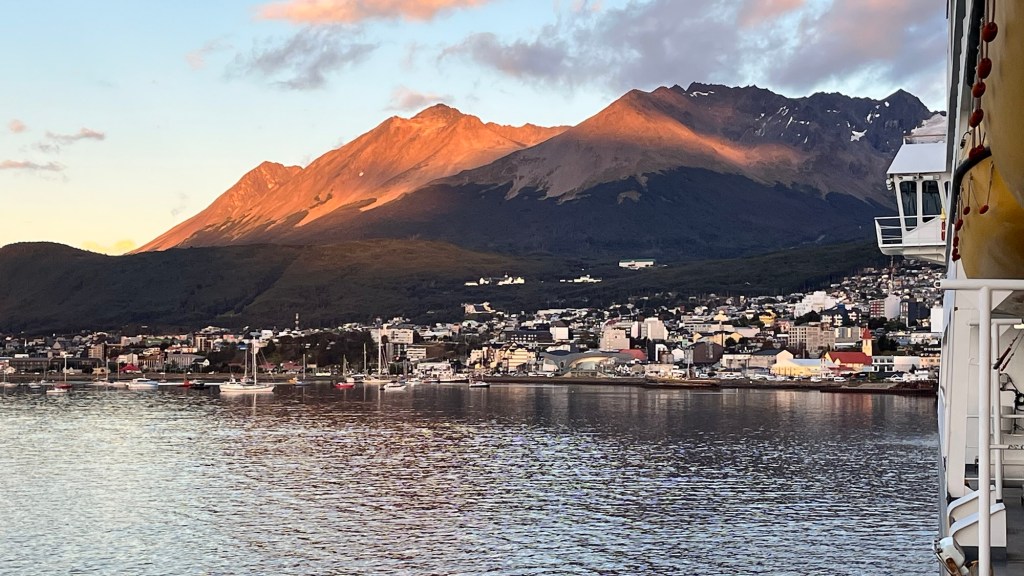
    We had a few hours to tour the Fin del Mundo national park before heading back to Buenos Aires.
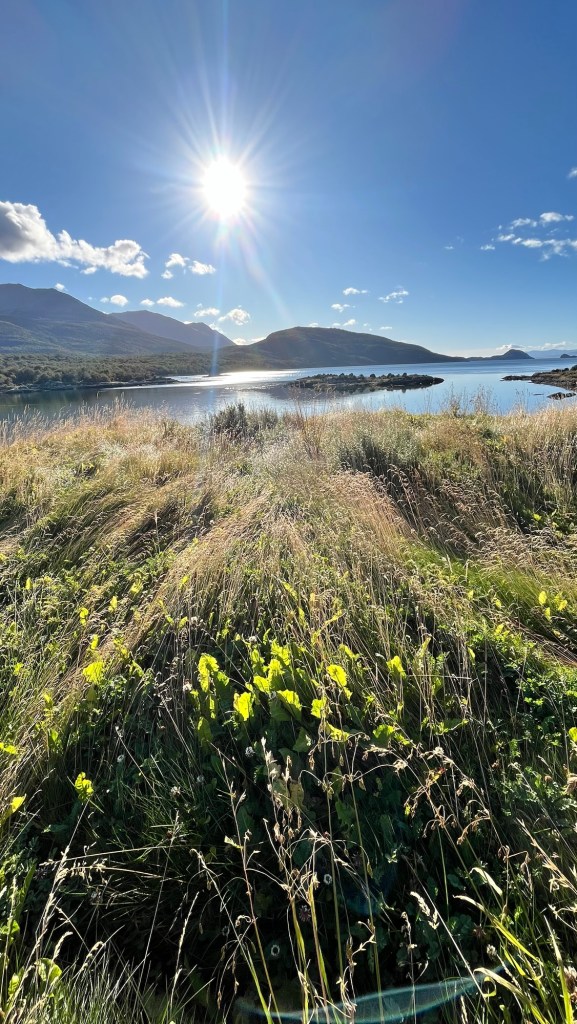
    Beautiful scenery and home to another “cane toad” disaster. In 1941 someone imported 25 breeding pairs of Canadian beavers with the hope of scoring big on the sale of pelts. However, the temperature in this area hovers around 0C through the winter – it’s not cold enough for beavers to develop thick sellable pelts. So today, with no Canadian predators in the mix, there are over 200,000 beavers in  Tierra del Fuego (and more on the Chilean side of the island.) Also they have devastated 200+ year old trees that really struggle to grow due to ferocious winds at the end of the earth. Watercourses have been affected as well because, well, beavers!
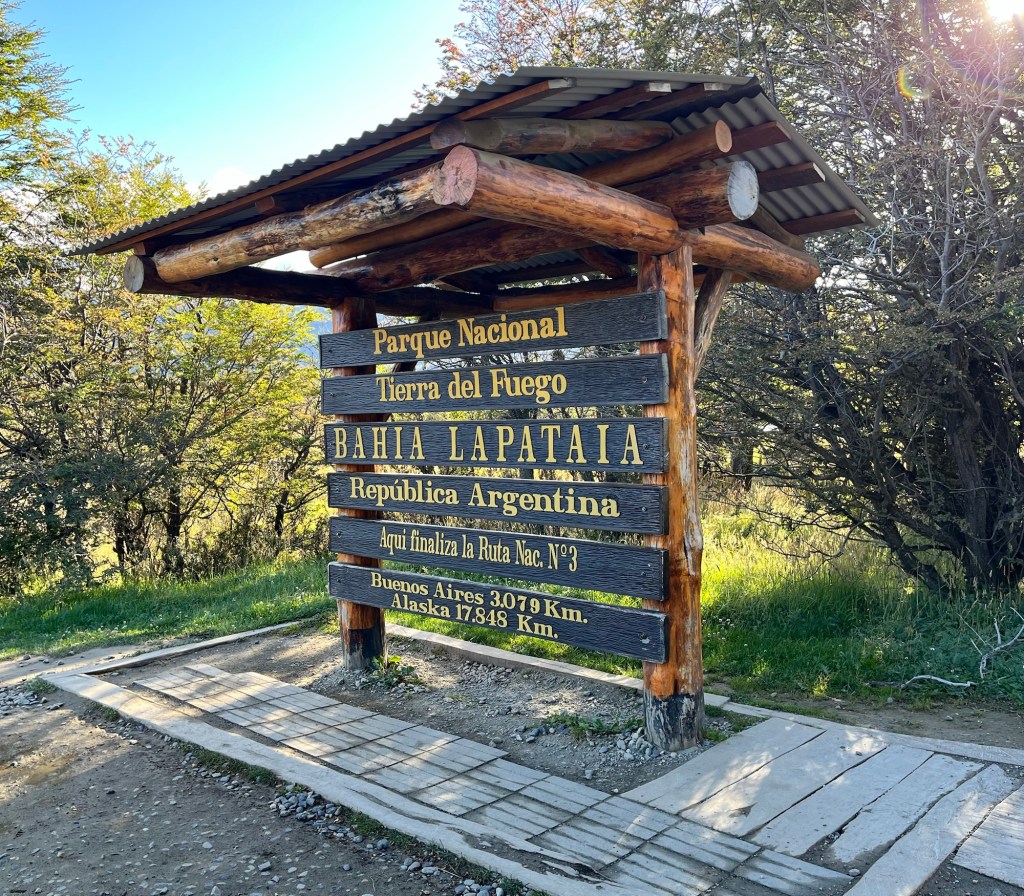
    End of the road…or the beginning!


  • Deception Island, Hannah Point

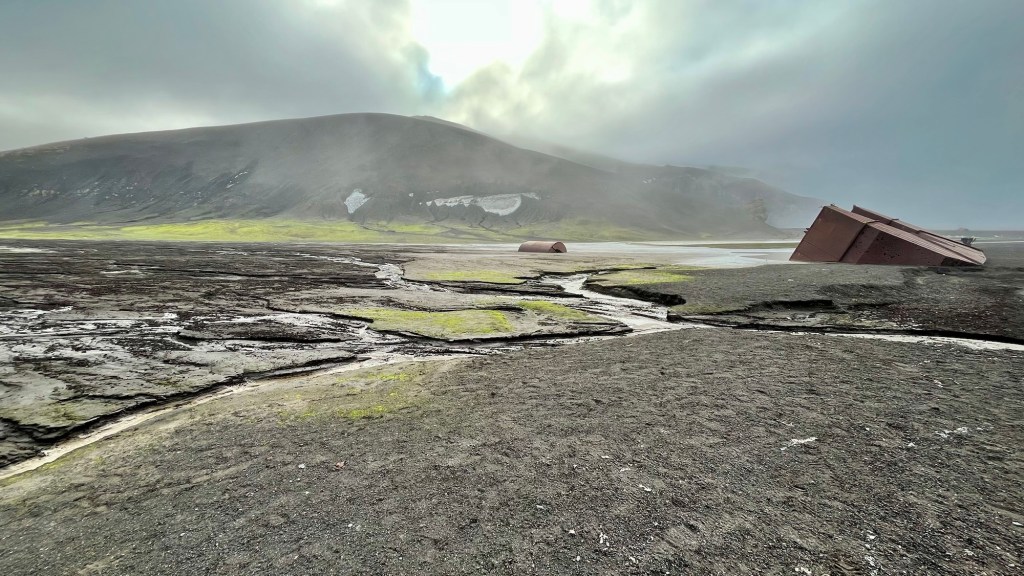
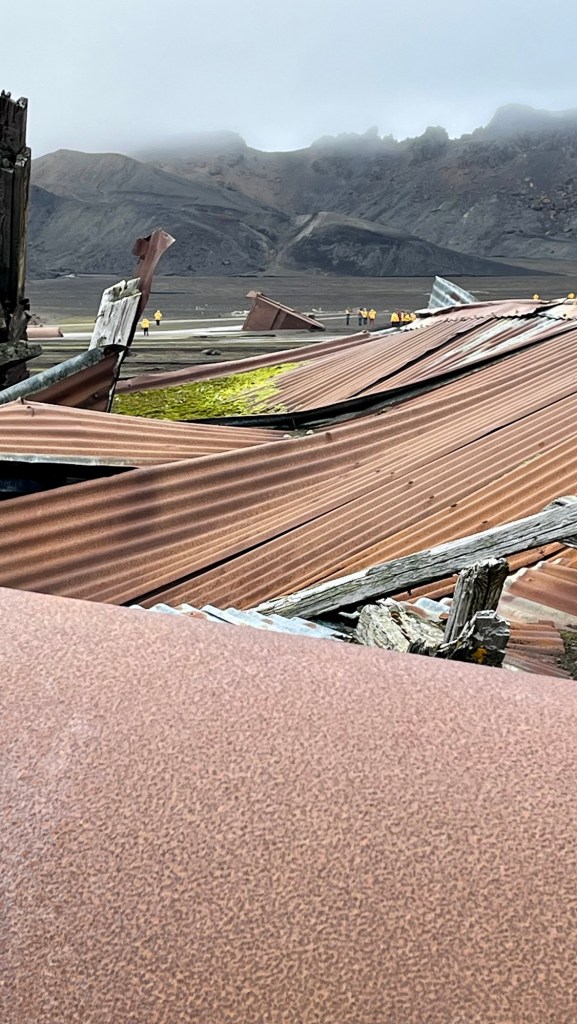
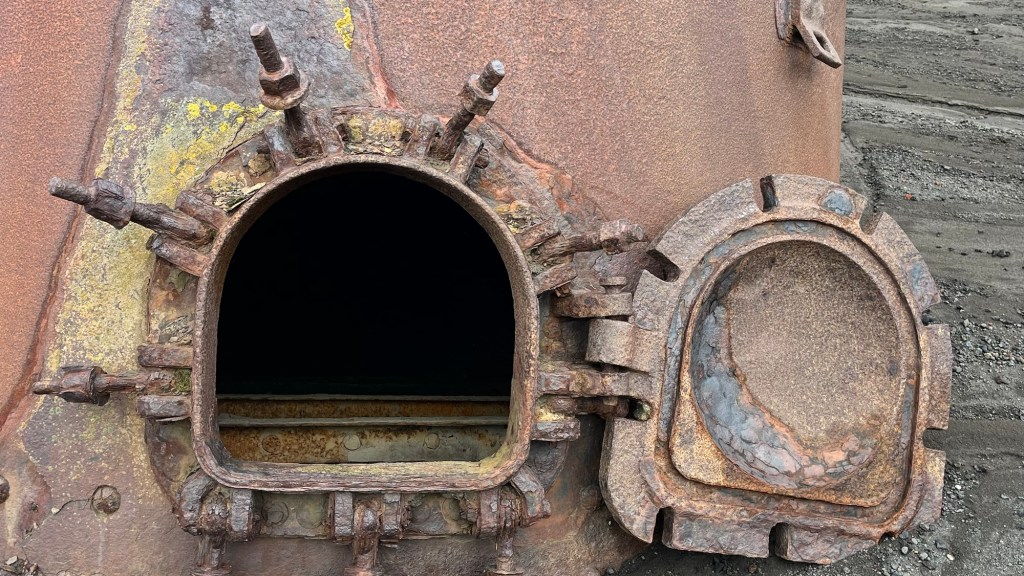
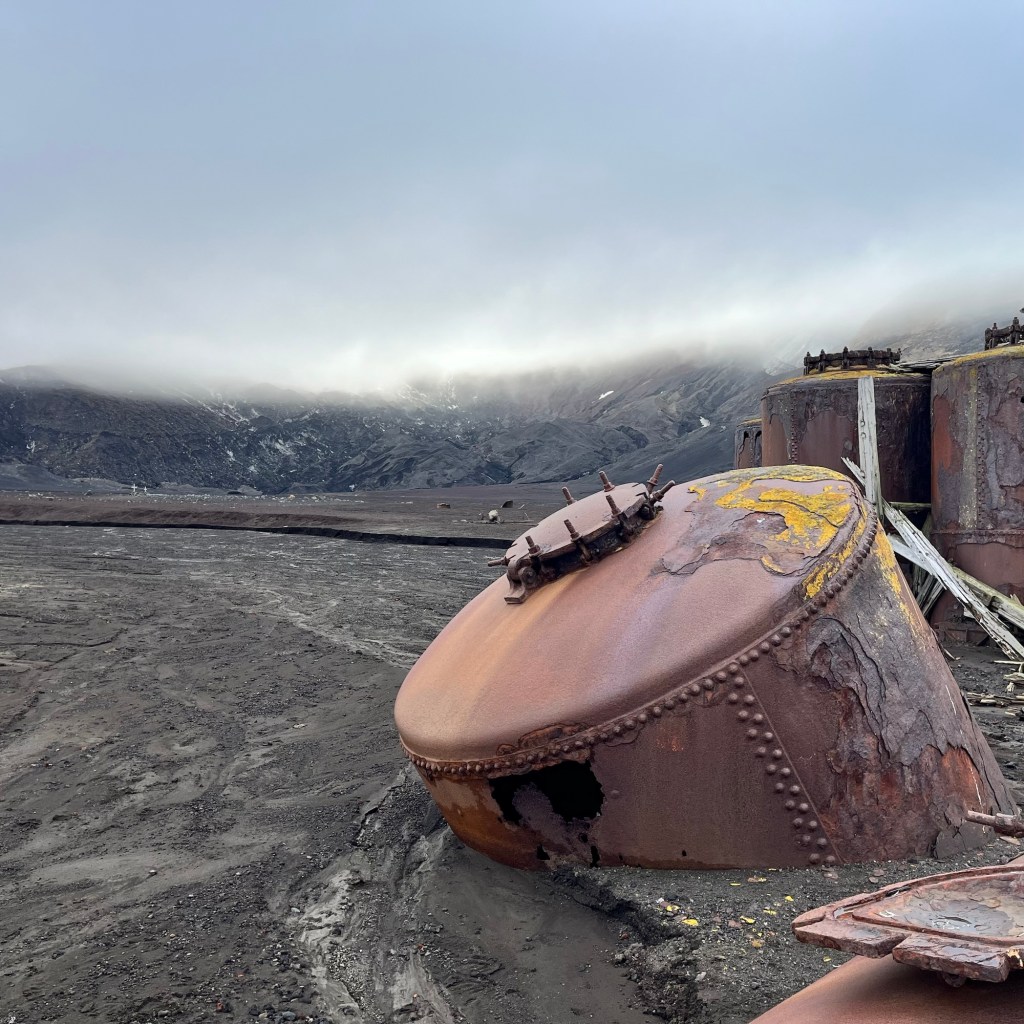
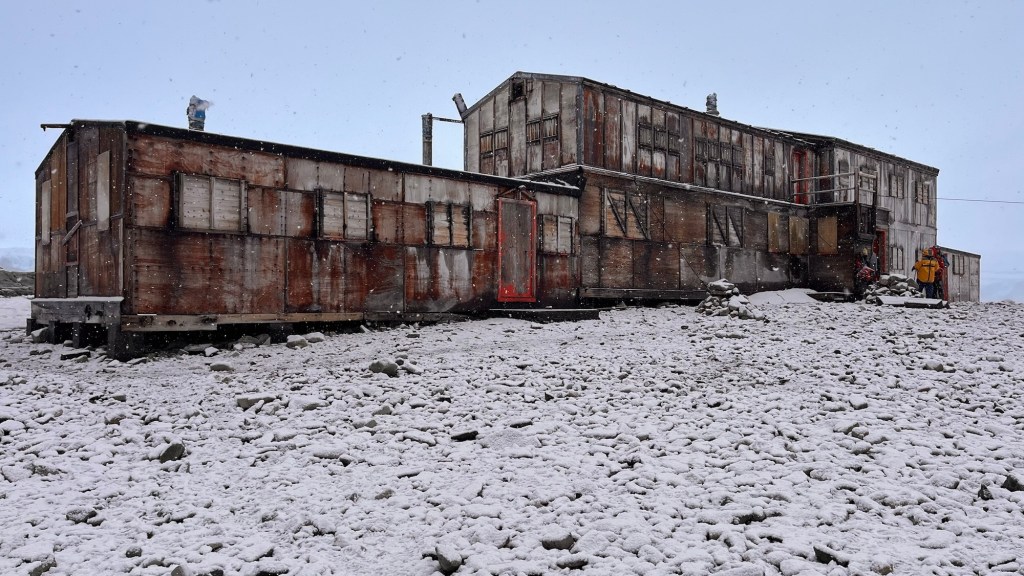
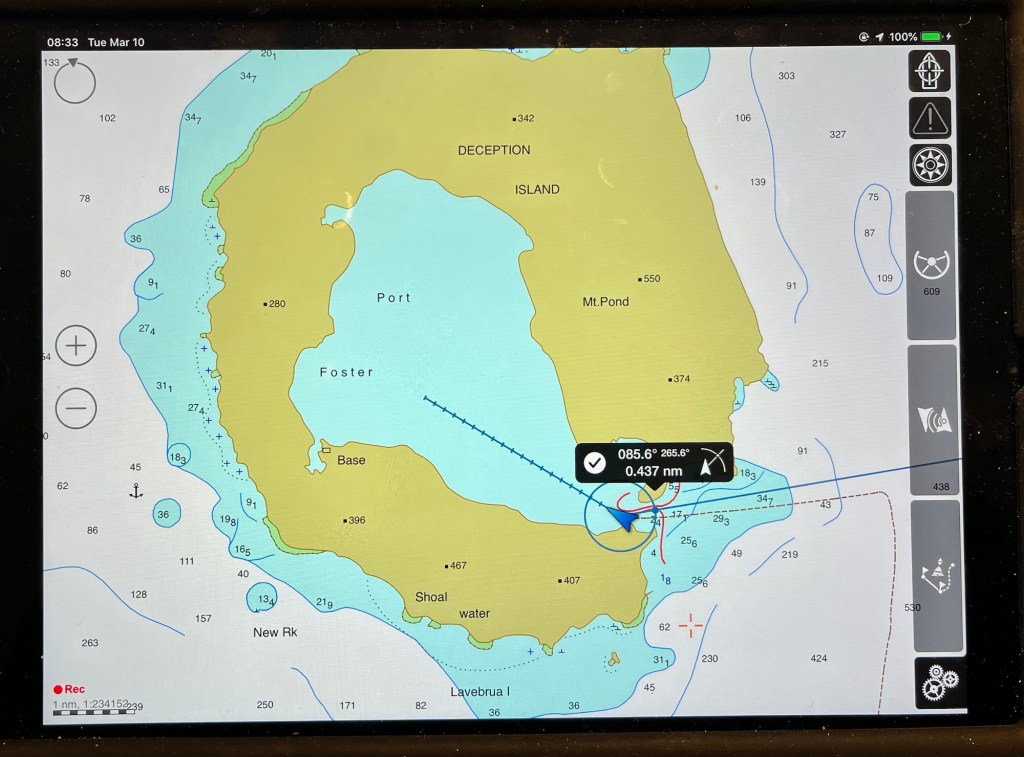
    My first rerun visit on the cruise was this morning at Deception Island. A narrow passage allows ships to enter the caldera of a sunken volcano – last time we just did a sail around in the caldera, today we got to land. It was formerly a seal & whaling station similar to Gritvyken on South Georgia Island then used as a military post. In 1967/69 an eruption put an end to occupation but traces of whale processing remain.

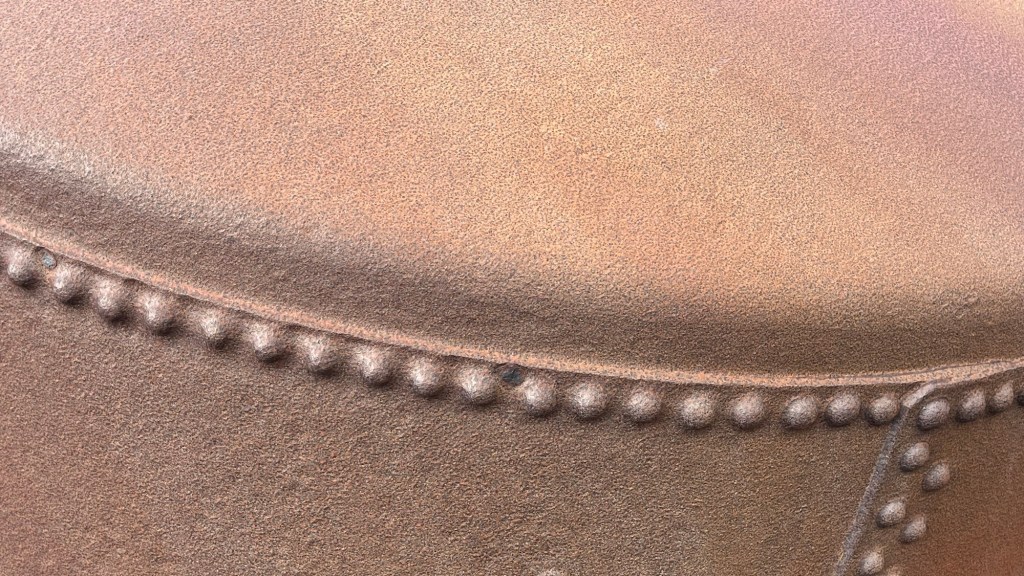
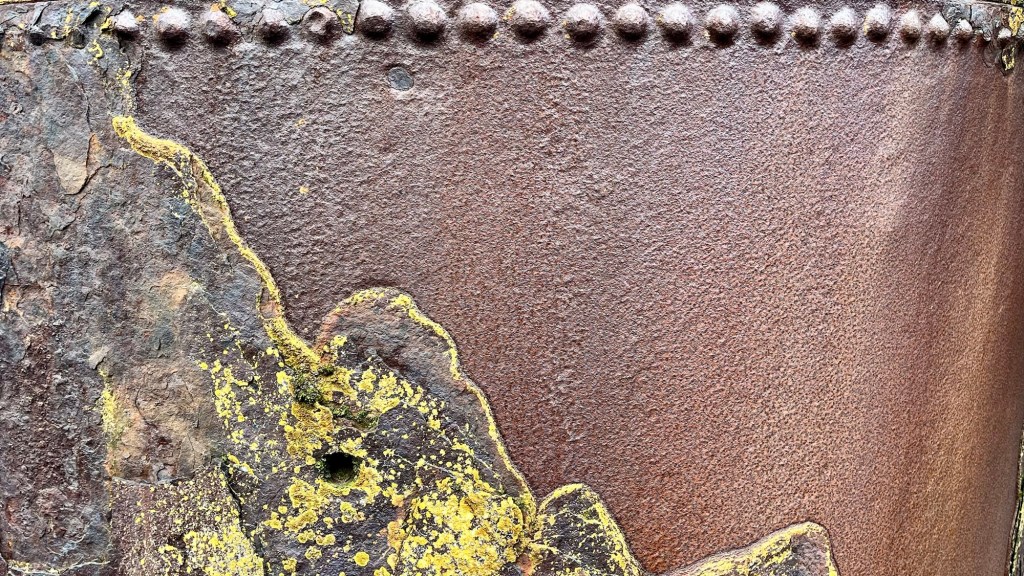
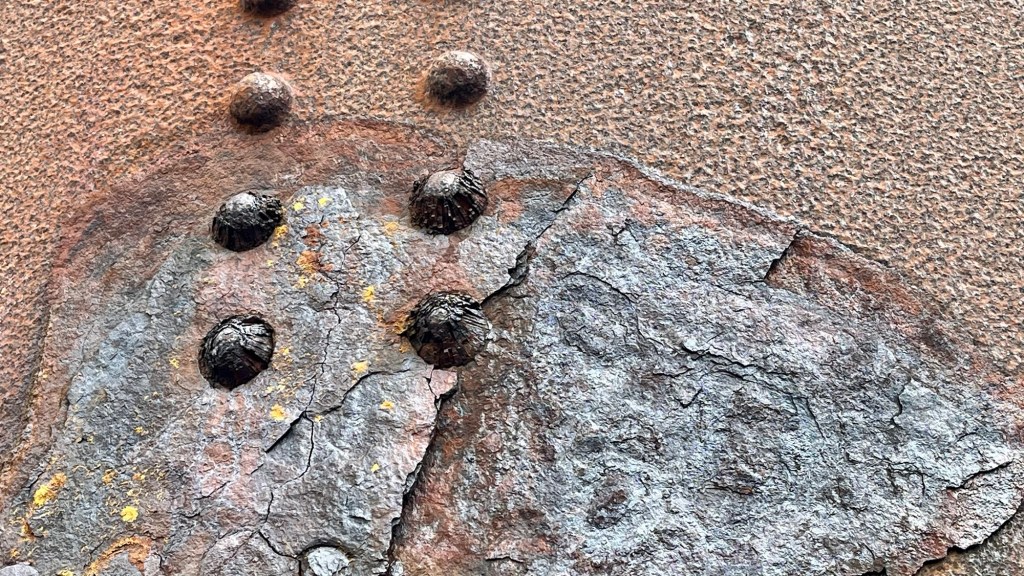
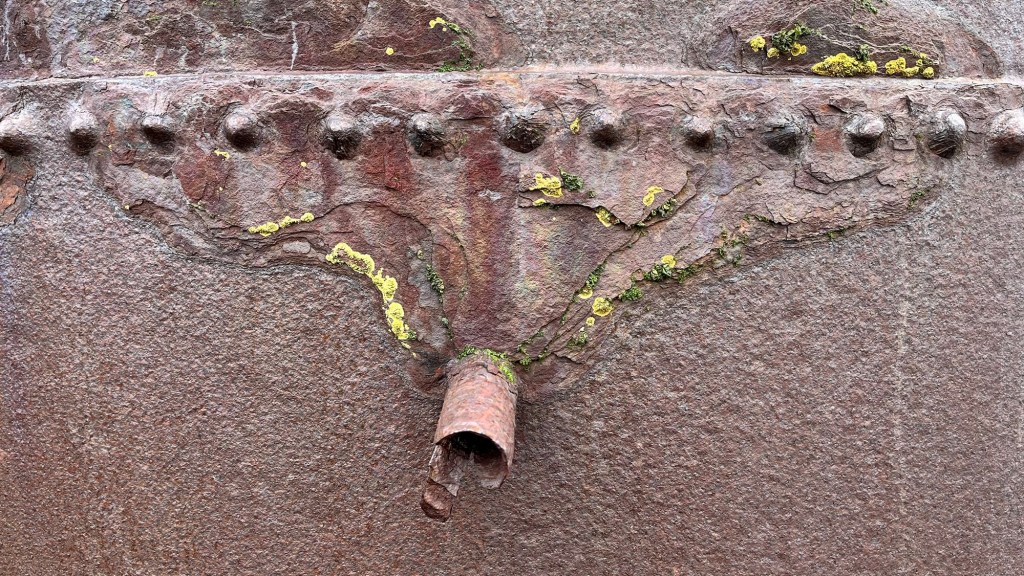
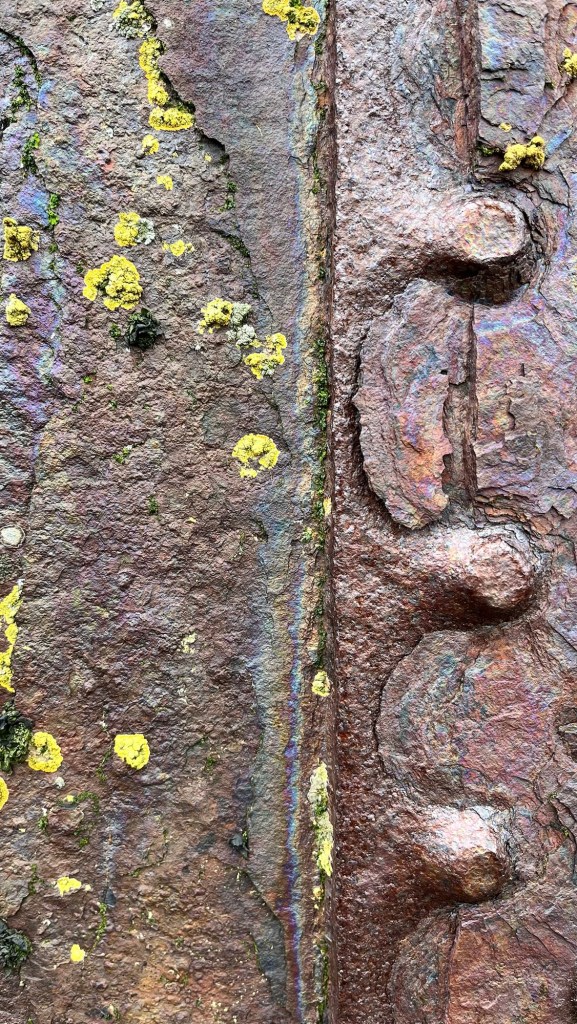
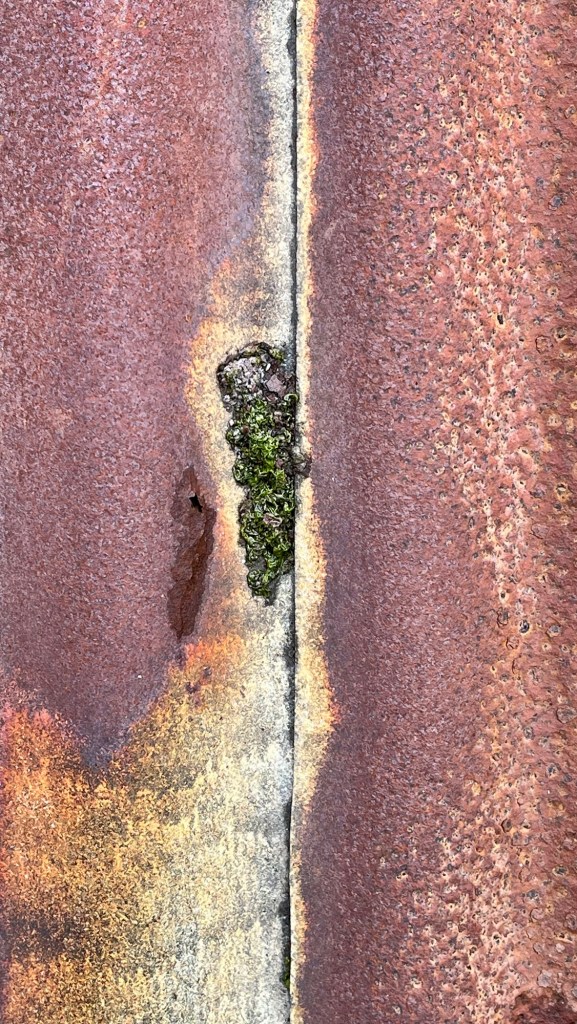
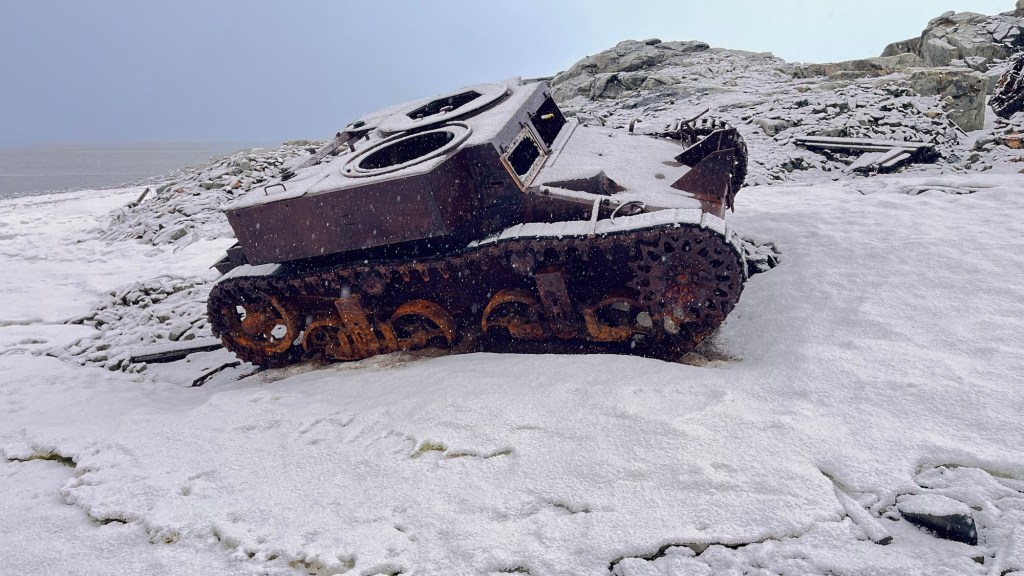
    I spent the entire landing time taking pics of the rusted tanks, some with beautiful bright green moss. It’s a bit warmer here so green things can thrive if protected from the wind.

    At our lunch recap we were, amongst other things, tantalized with a $1,500 discount on a future trip, educated on the mechanics of whale feeding and, best of all, Fabrice talked about penguin poo. Red = krill diet, white = fish diet, green = no diet or bile. This is deposited by the pengies when they are on land moulting and not eating. He then shared an amusing selection of poo pics that were worthy of Jackson Pollock and cropped them to fit in a frame hanging in a designer living room pic.  I think Fabrice is everyone’s favourite lecturer.

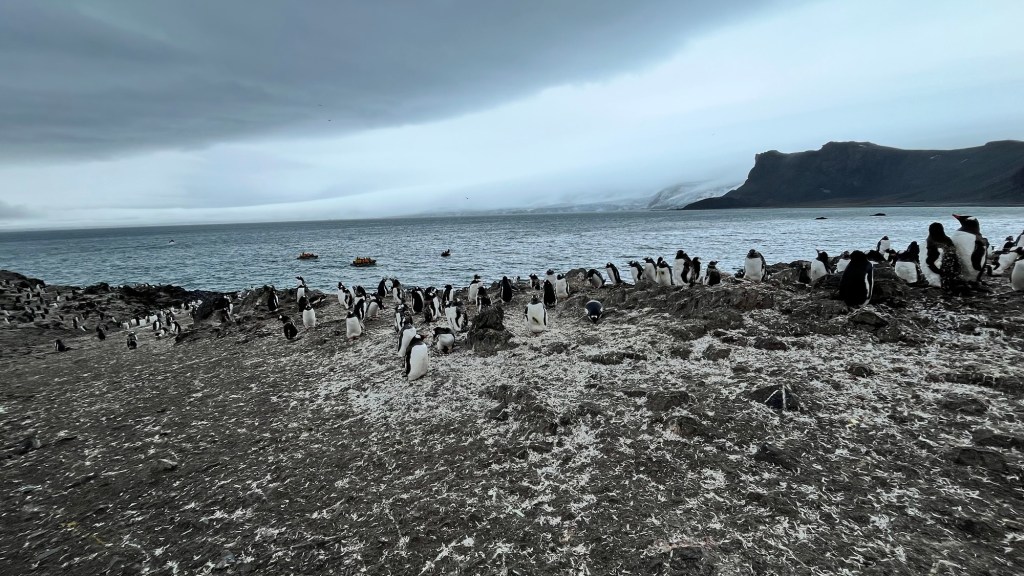
    Final, sadly, landing was at Hannah Point on Livingstone Island.

    We are fortunate to access this island as it is of bounds in the first half of the season – wildlife is too dense to tolerate humans. Also, mating elephant seals should always be avoided.

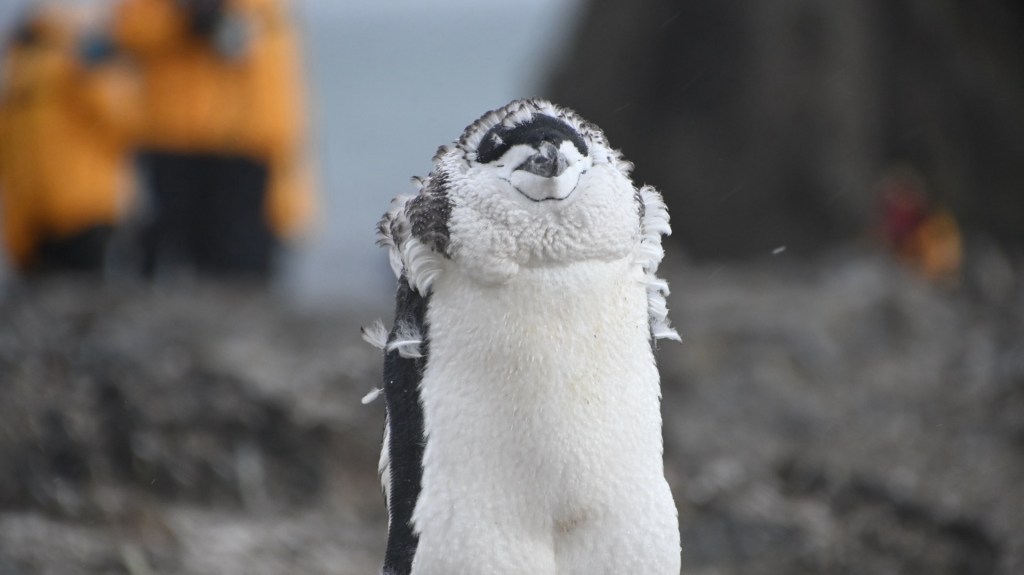
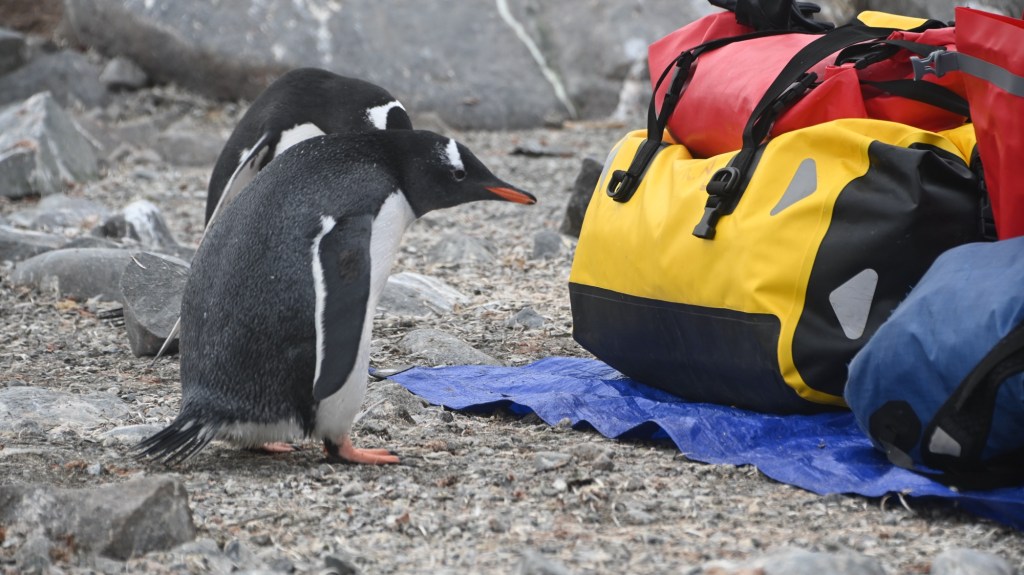
    Chinstraps, gentoos, petrel chicks as big as a turkeys and elephant seals. Chinstraps are definitely the least attractive moulters!
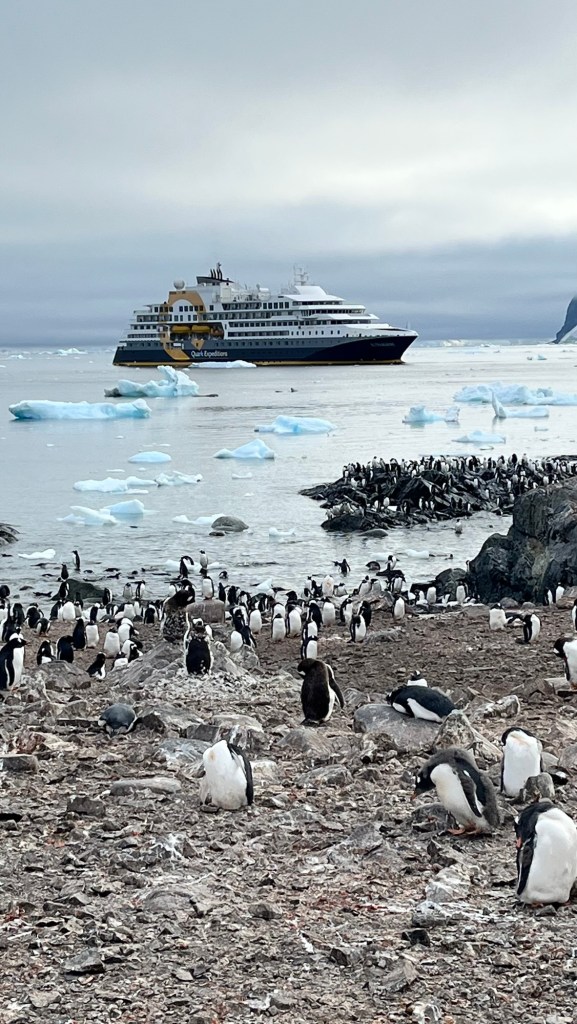
    A penguin only a mother could love

    …also saw some fin whale (second largest whales) spouts en route to Livingstone Island.

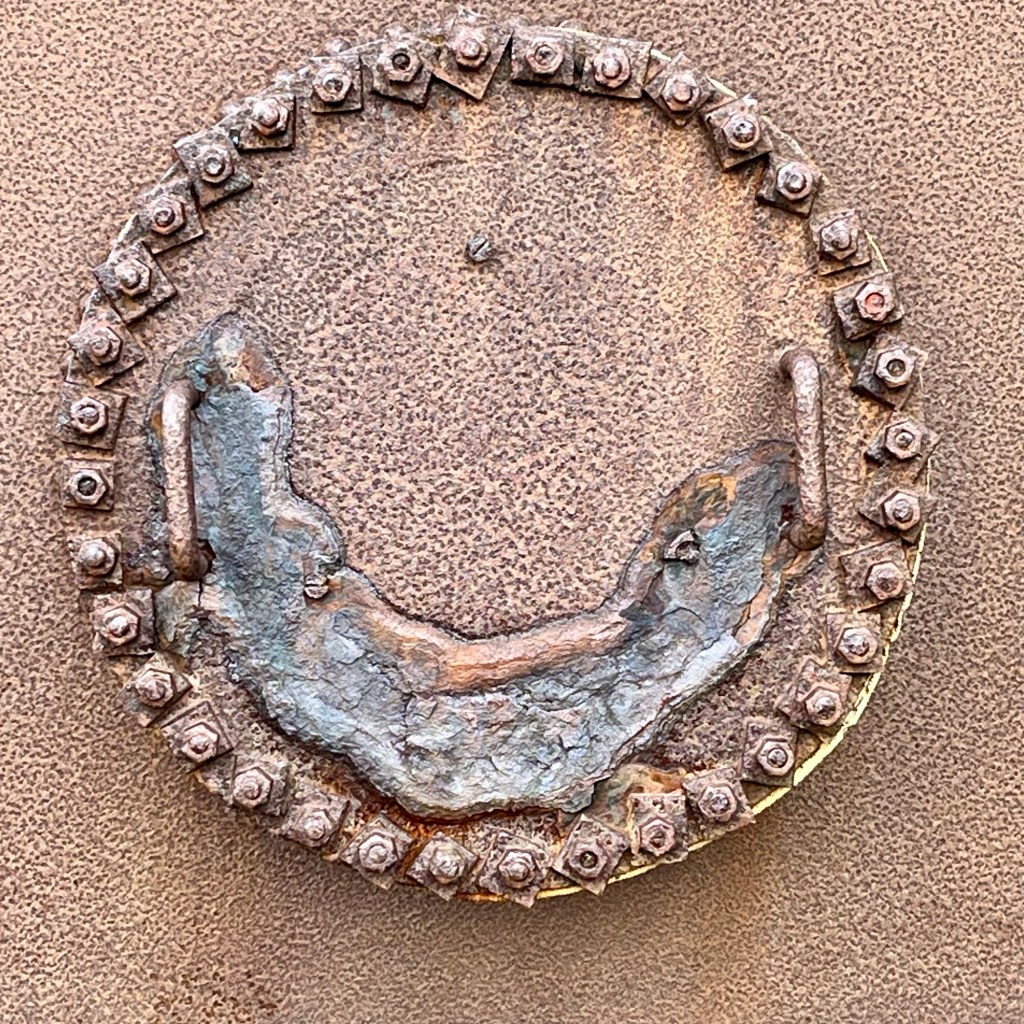
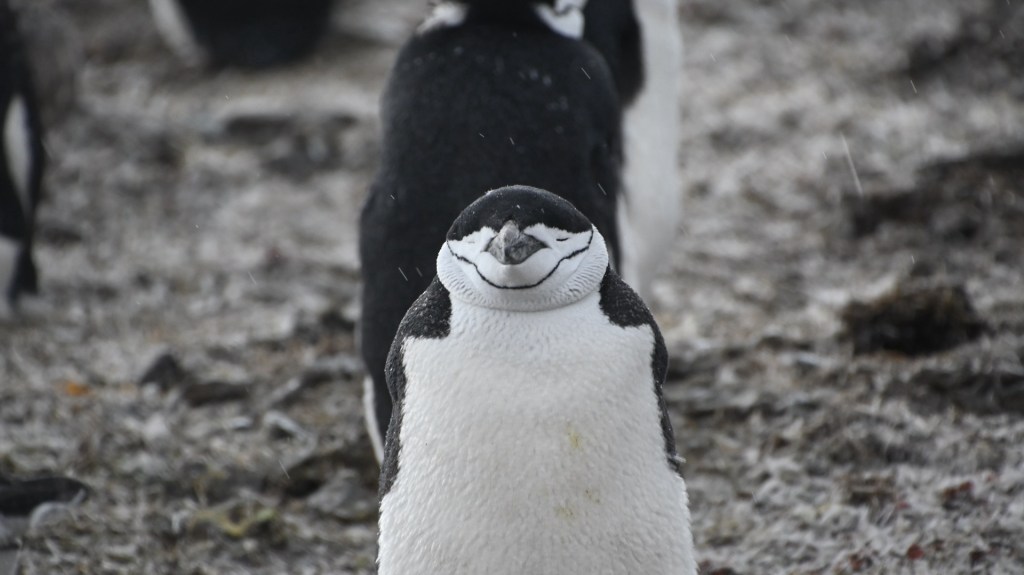
    I can’t un-see  the cartoon dog/ snowman in this full frontal view.

    Front elevation – smiling dog?
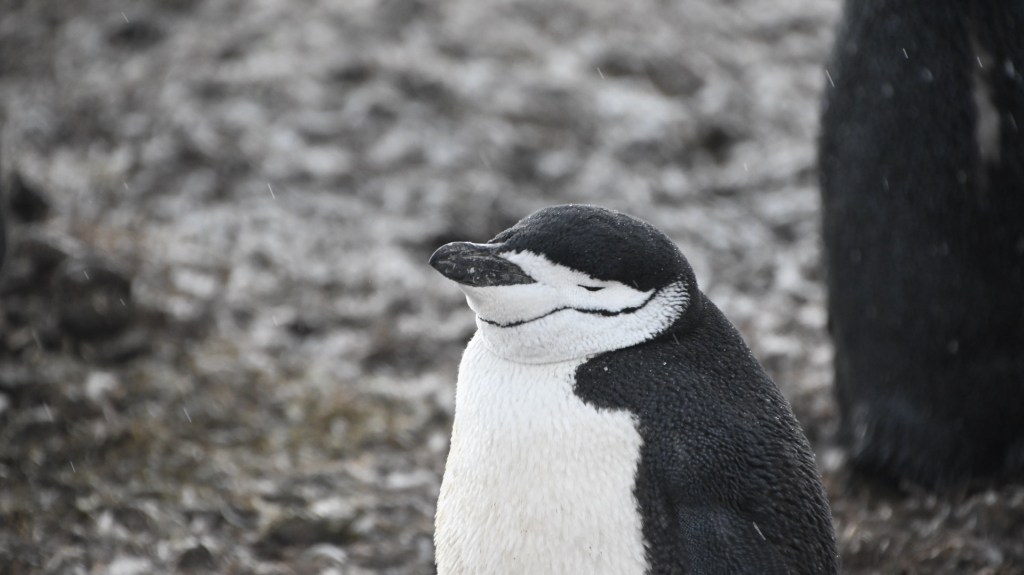
    Side elevation – definitely penguin

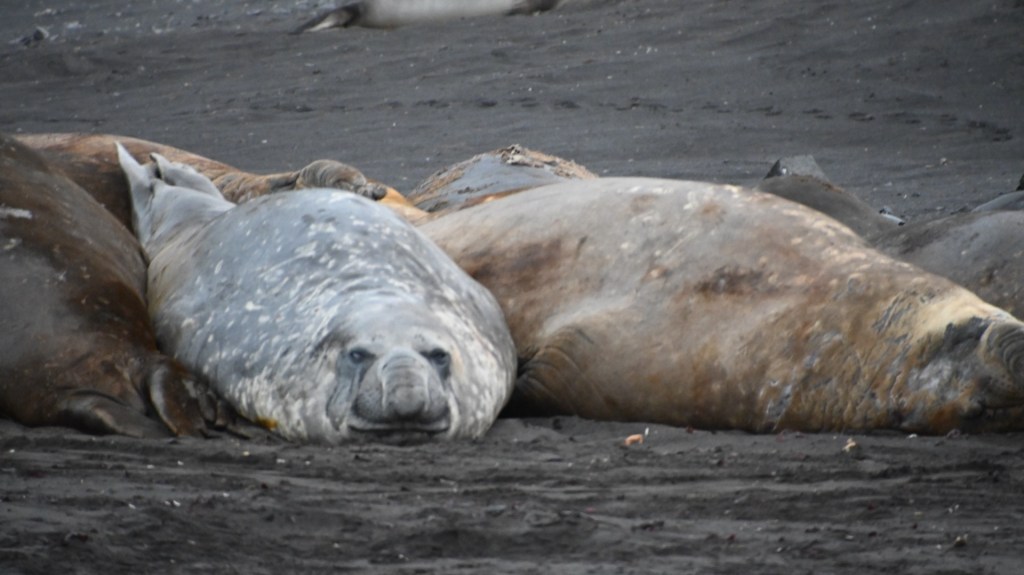
    We had a shortish last zodiac ride back to the ship that took in some immense juvenile elephant seals. They are a curious animals – the males fight fiercely for the right to mate every spring but after that’s out of the way they all cuddle up together on the beach like a giant blob.

    And with that, we head back to Ushuaia – wonder what the Drake has in store for us.

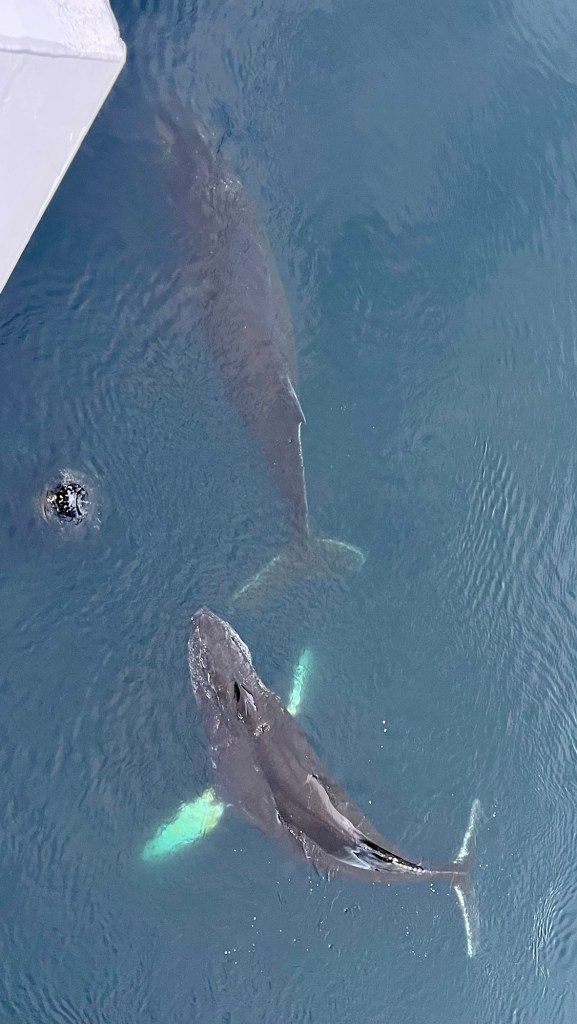
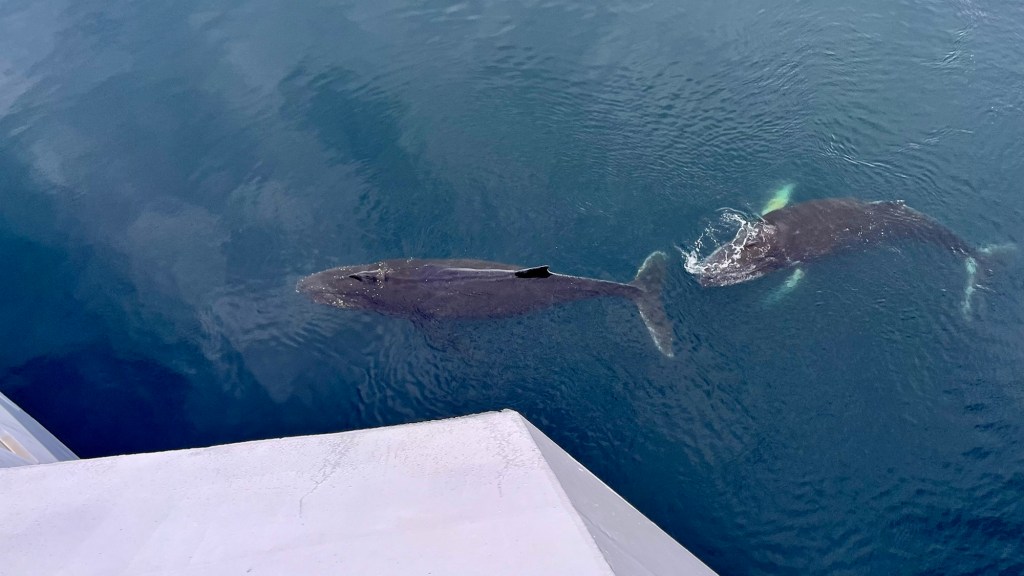
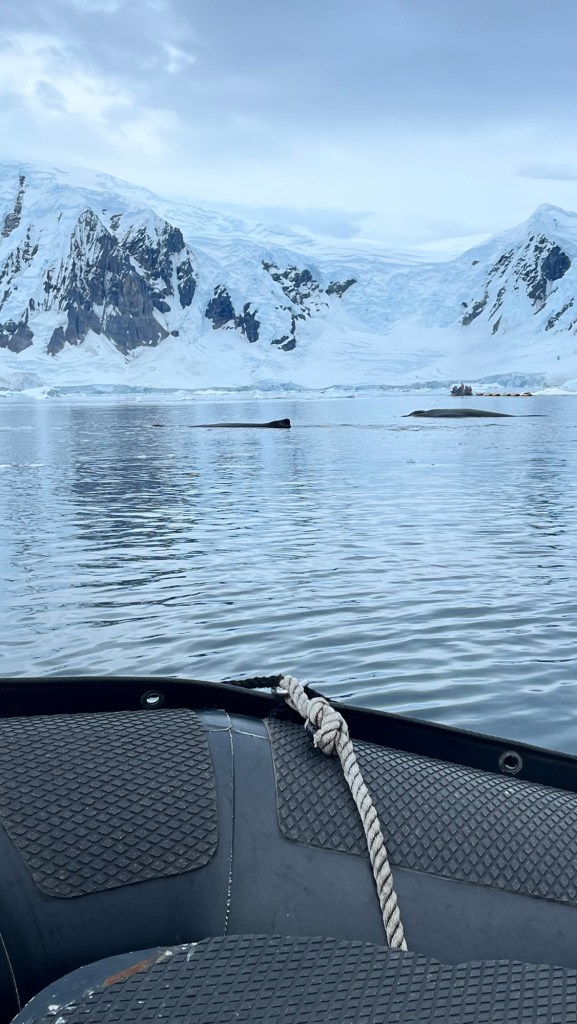
  • Woke to a beautiful sunrise and about 100 humpback whales.

    They were very curious, swimming among the waiting zodiacs and up close to the ship. All the ship’s staff were out on deck and even the long time expedition staff were amazed.

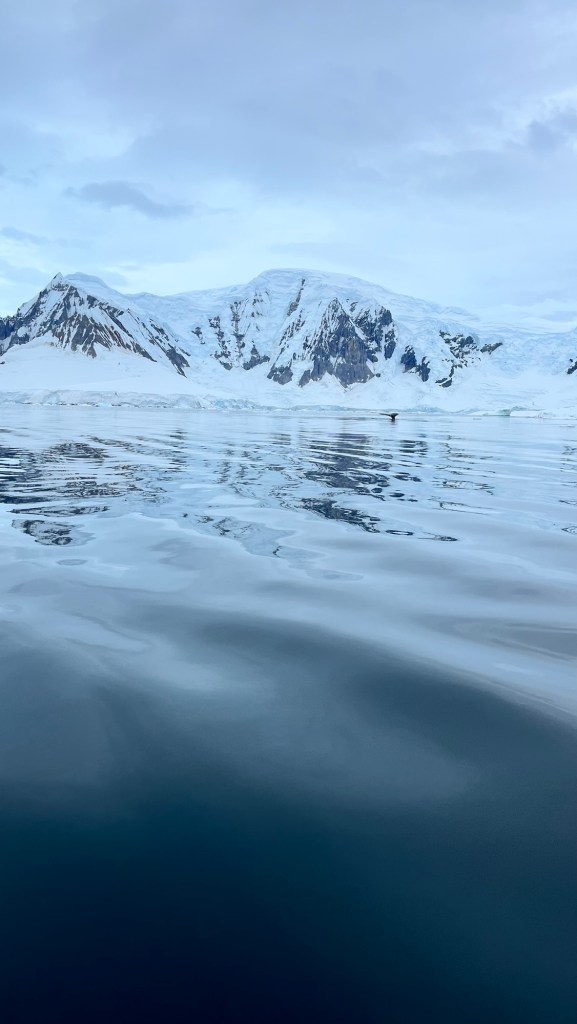
    On our morning zodiac ride we we surrounded. The whales were sleeping after a big morning feed – its peak krill season – and every few minutes one would let out a big deafening breath.

    Spot the tail

    The weather was ideal for the heli landing!

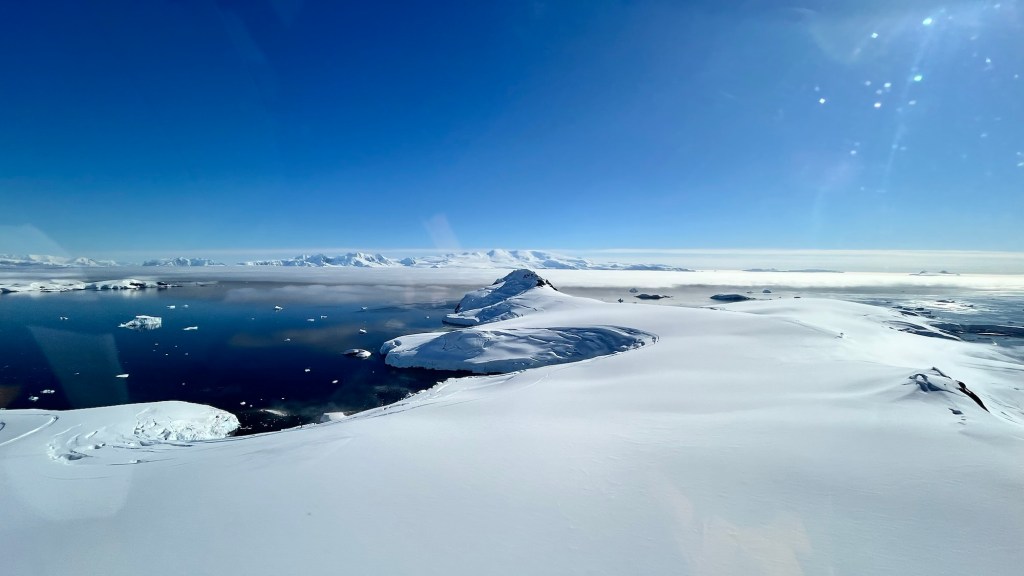
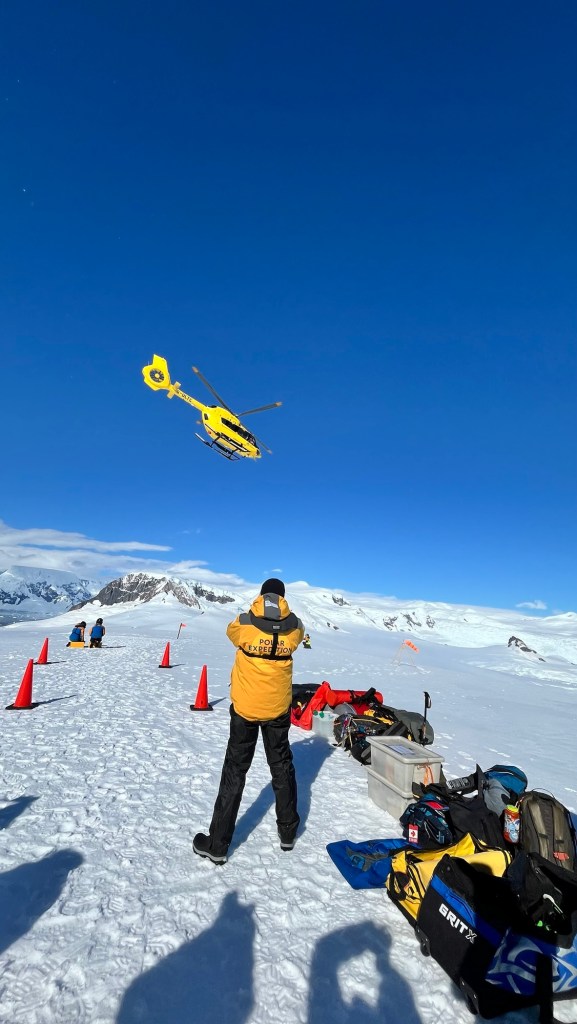
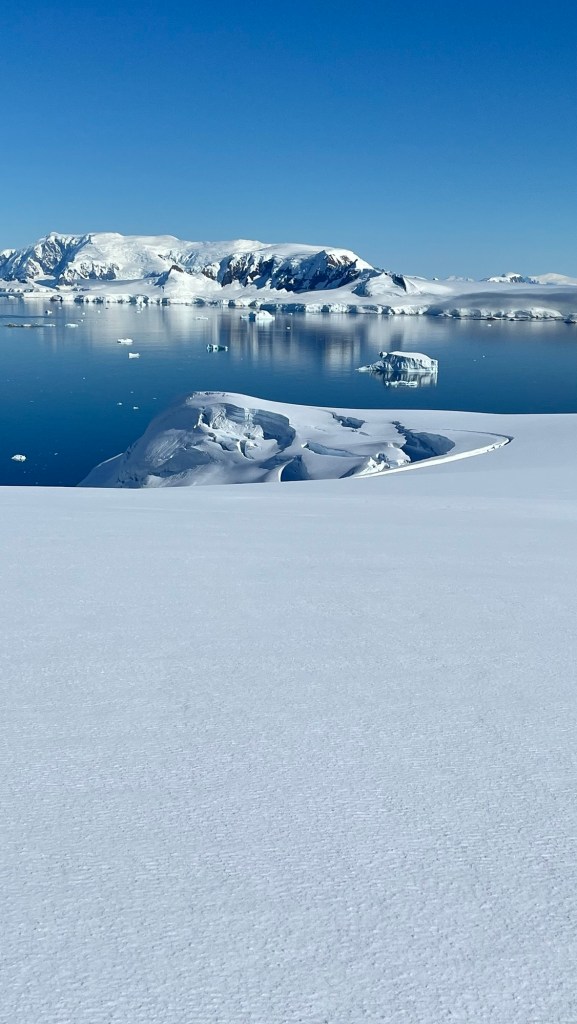
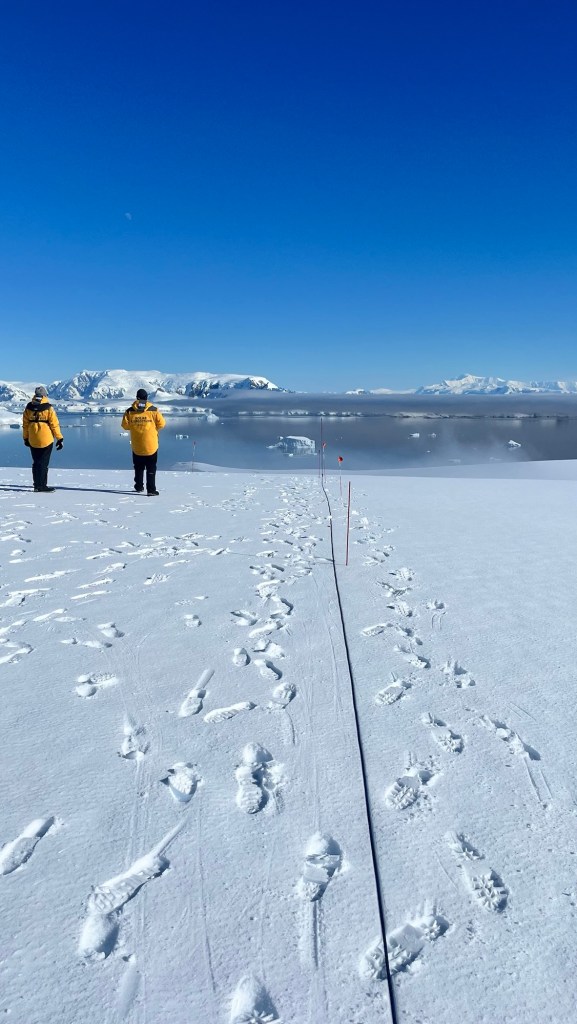
    Five groups of six got flown up to a pristine snow dome…
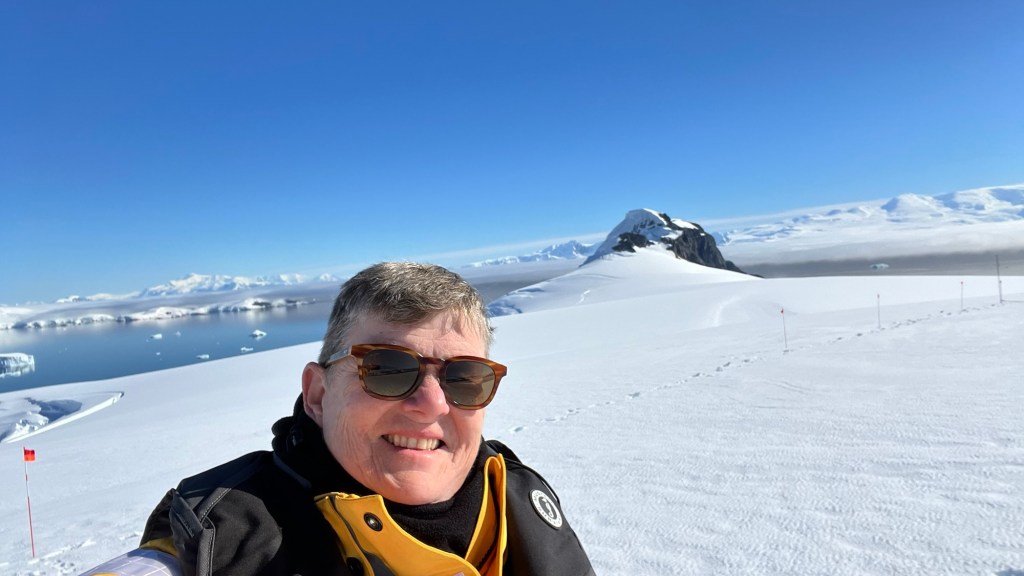
    …and spent a jaw dropping hour admiring the view.
    Demarcated, of course!
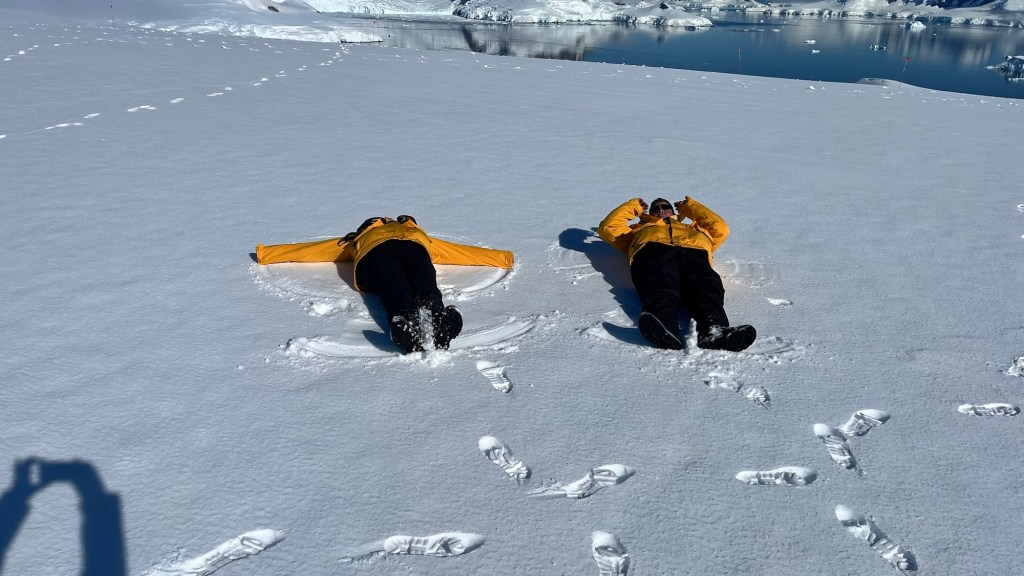
    Some Aussies attempted snow angels for the first time
    Fastest hour of my life.

    This was also the first day for folks to step foot on the continent proper, at a closer to sea level if you didn’t heli. Because I was in the first heli group I had time for a bonus landing.

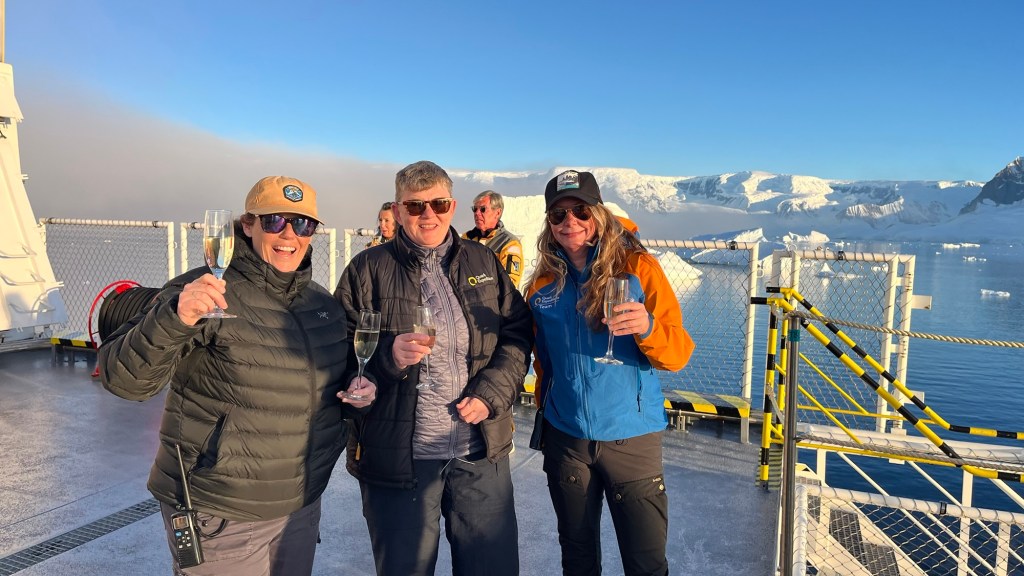
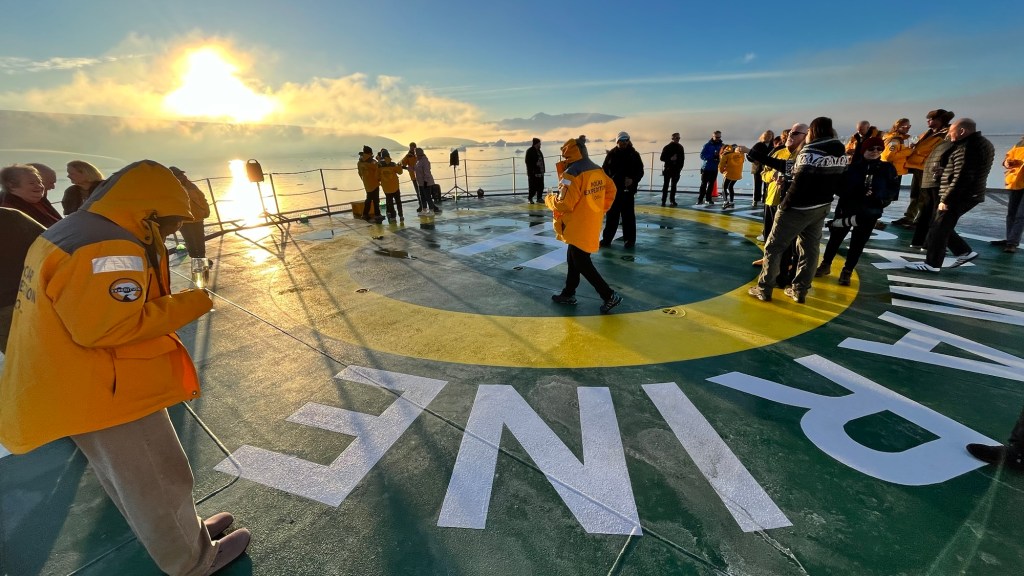
    Ended the day with some champagne on the the heli deck – group photo is pending
  • Cuverville, Damoy, Lockroy

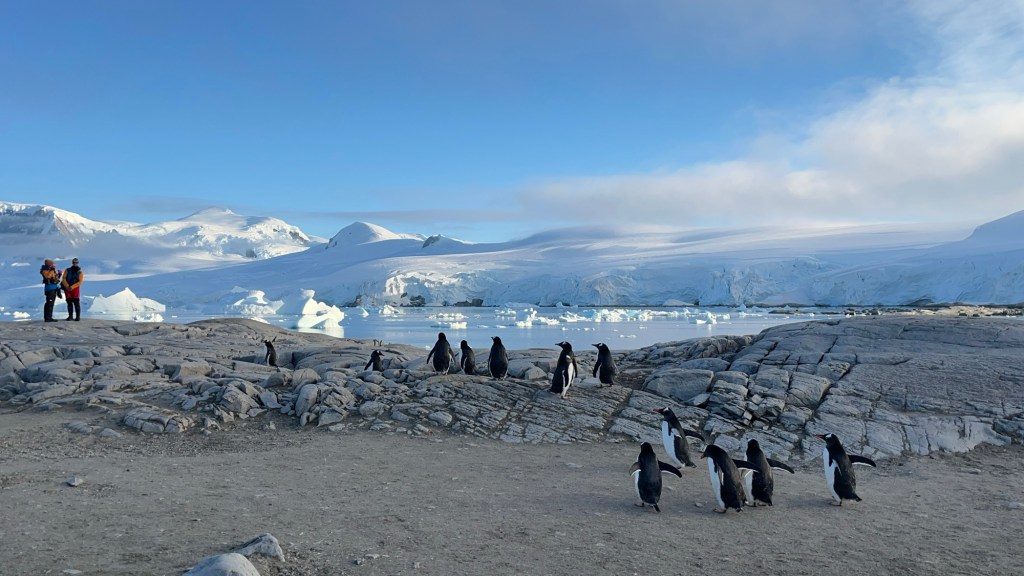
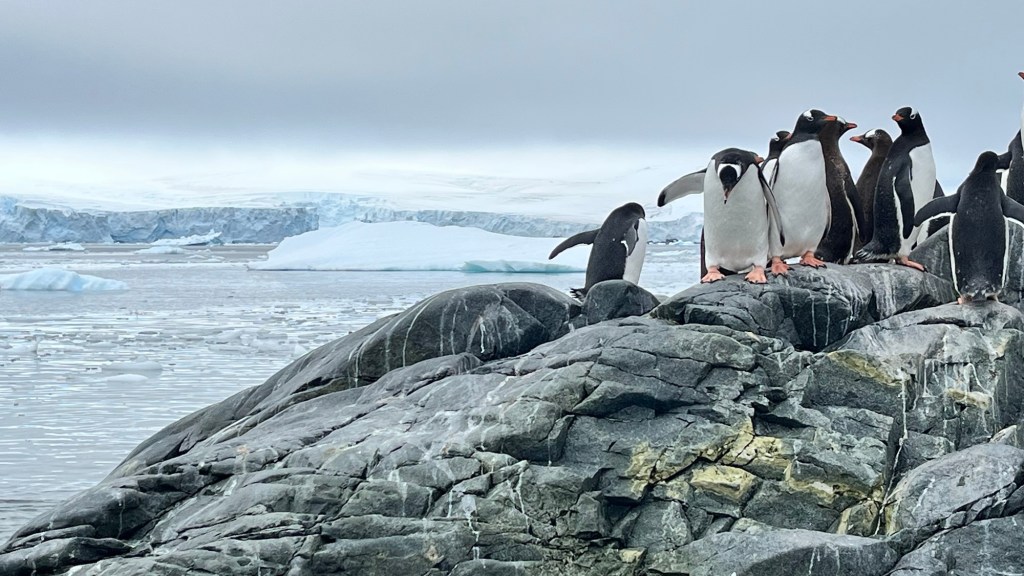
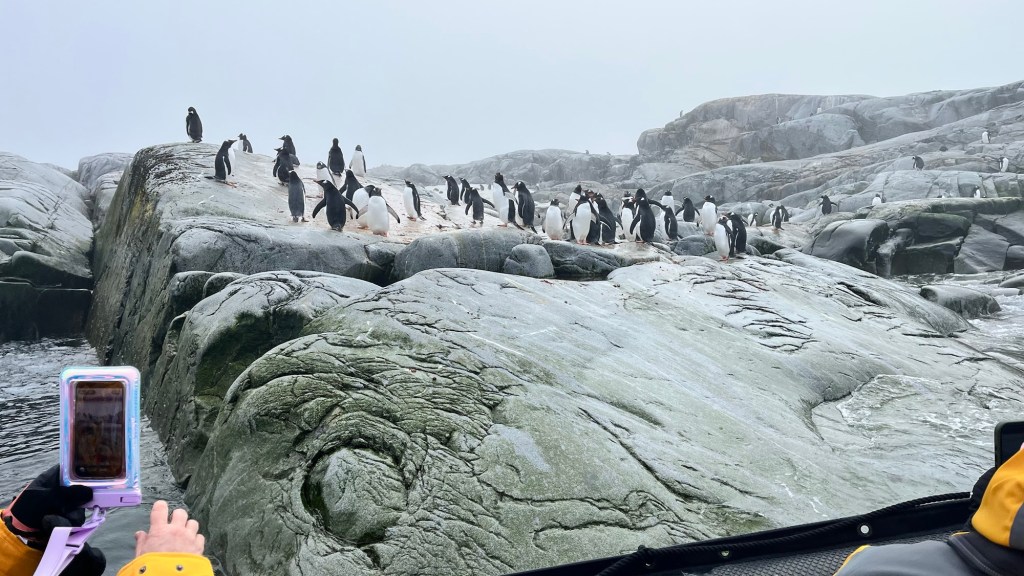
    Another day, another penguin colony…at Cuverville Island.

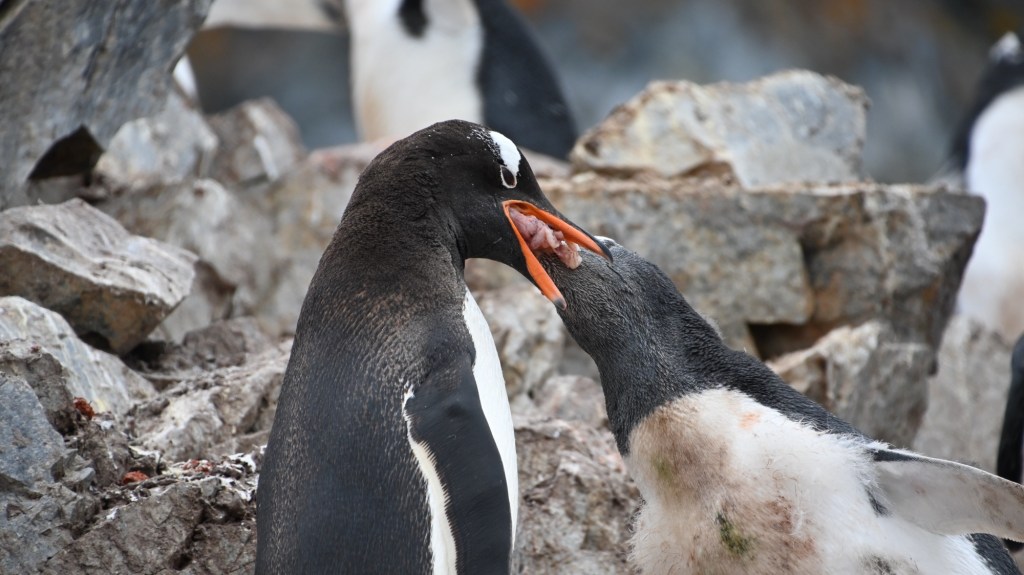
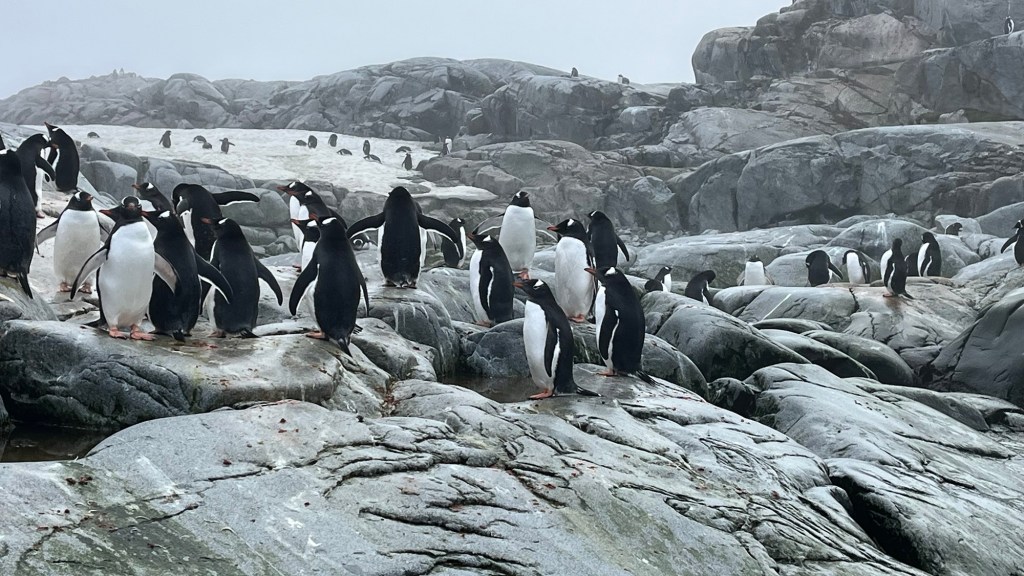
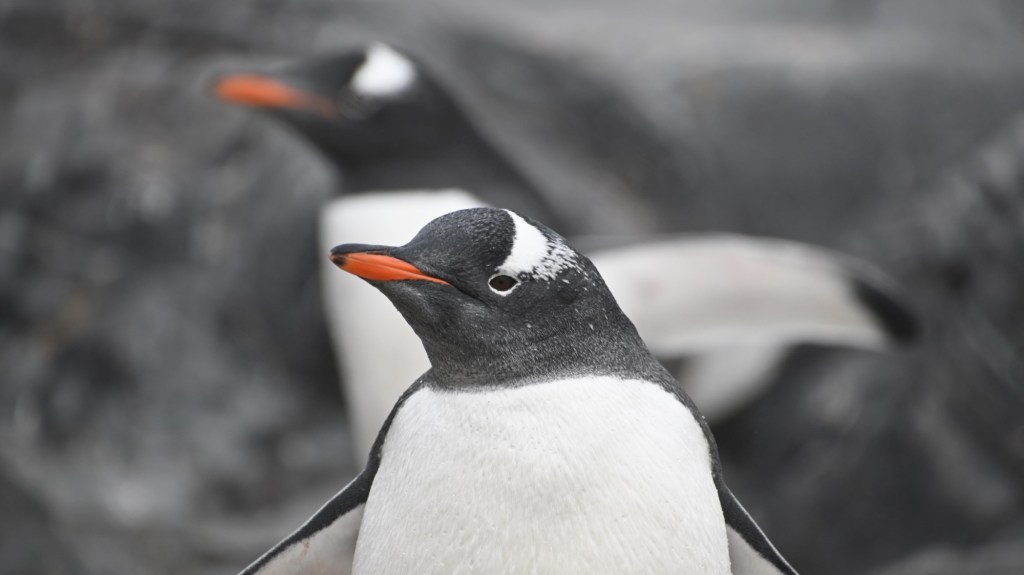
    The gentoo penguins are faring better than other species of penguins since they have a flexible diet of krill, crab and fish. They can adapt better as the food chain fluctuates. Niko says there is a third nesting area that has expanded since last season.

    Yum yum!
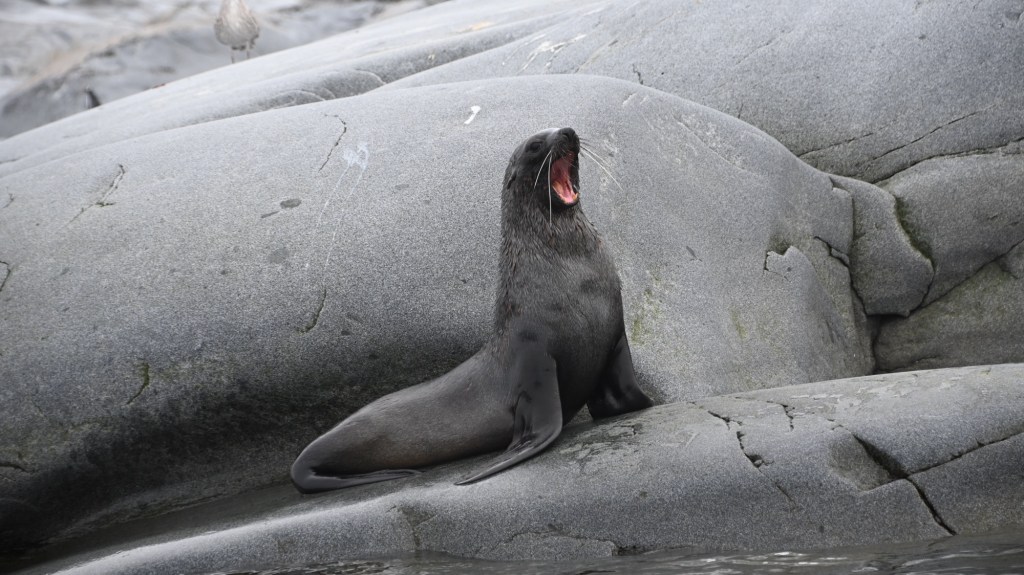
    Antarctic fur seal

    Then a post-penguin cruise…

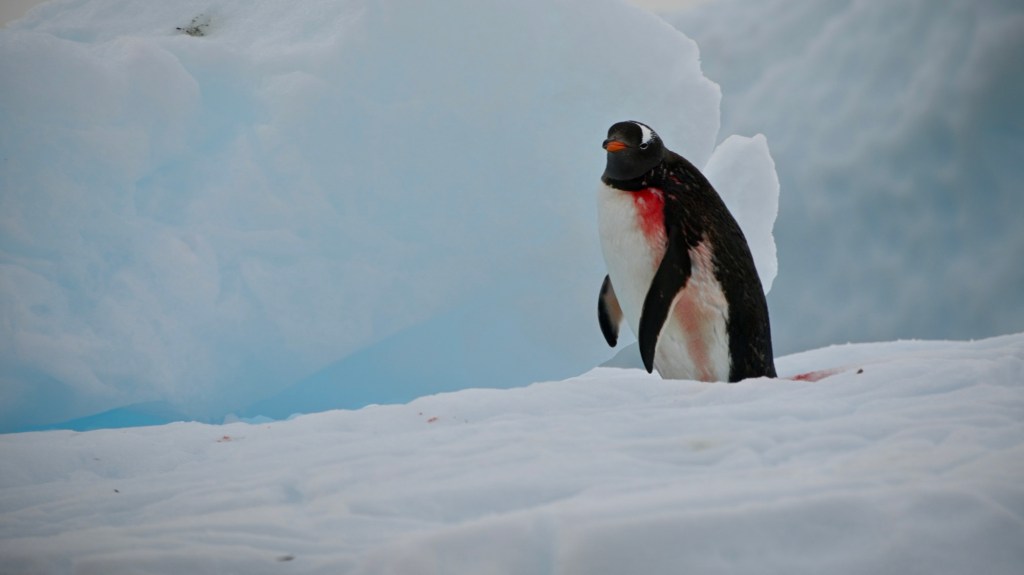
    Never a good sign: bloody penguin
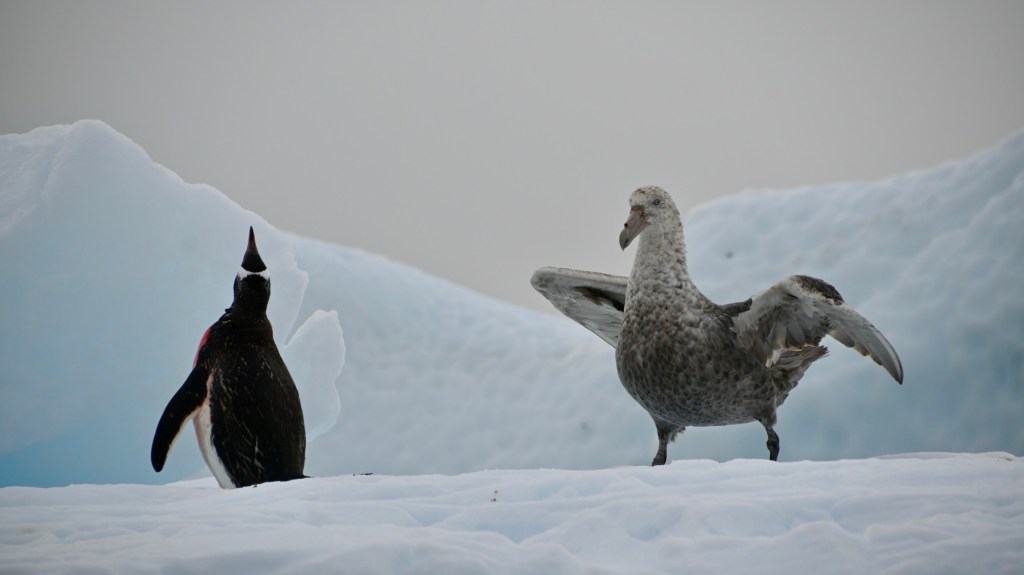
    Always a bad sign: skua
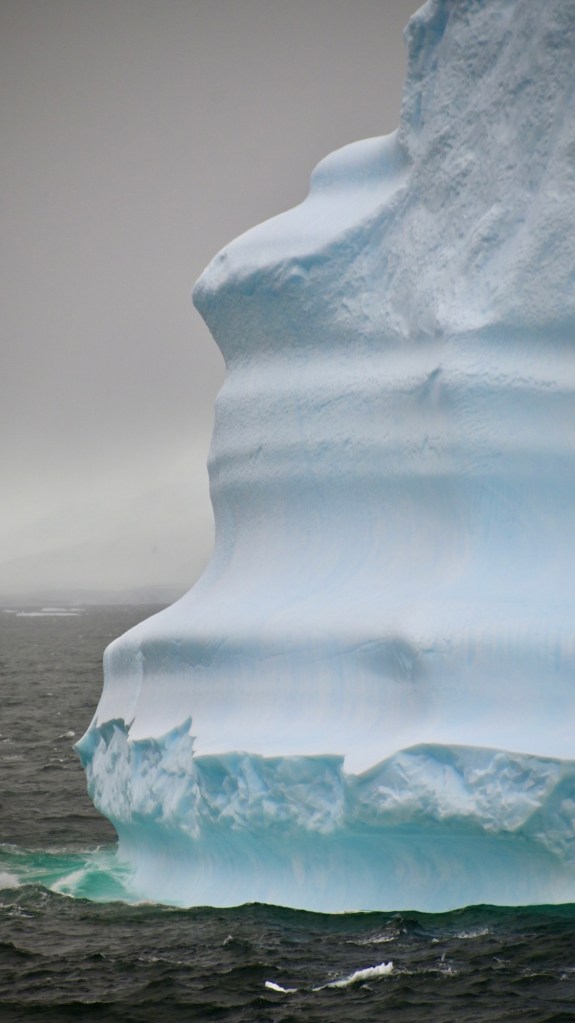
    Ice

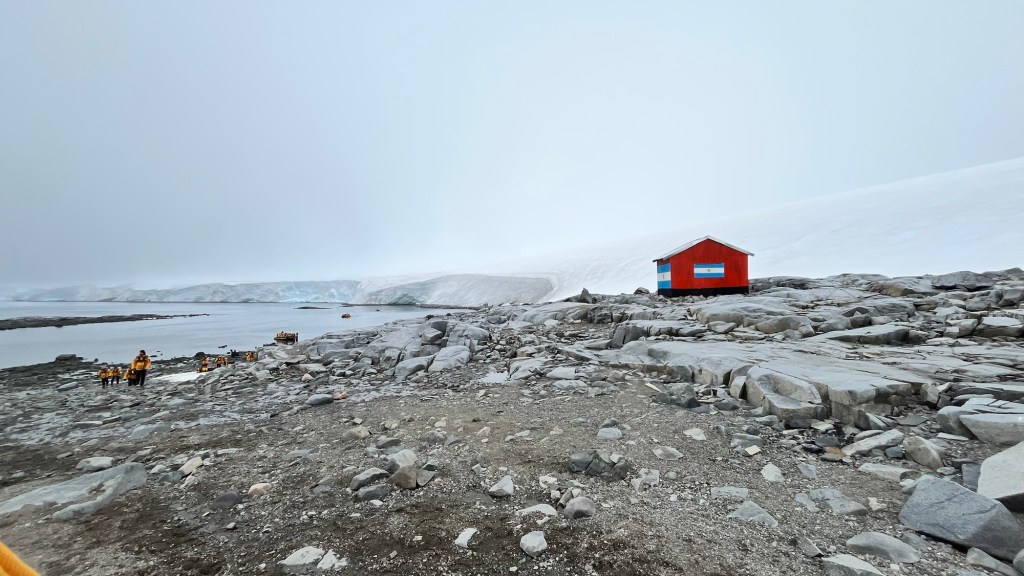
    A hike at Danoy Point on Wiencke Island in the afternoon…

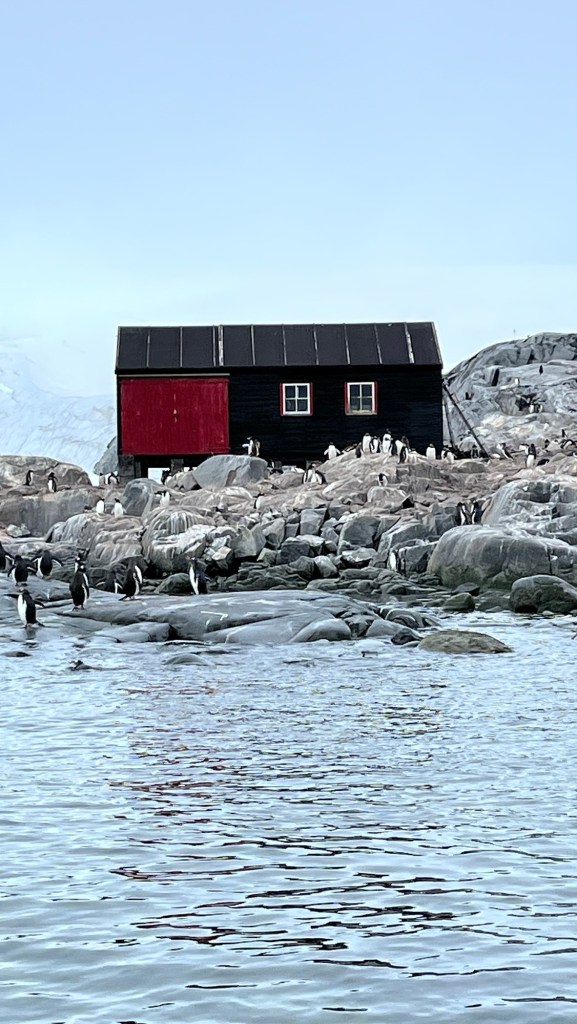
    Argentinian refuge hut
    Gentoo Penguins

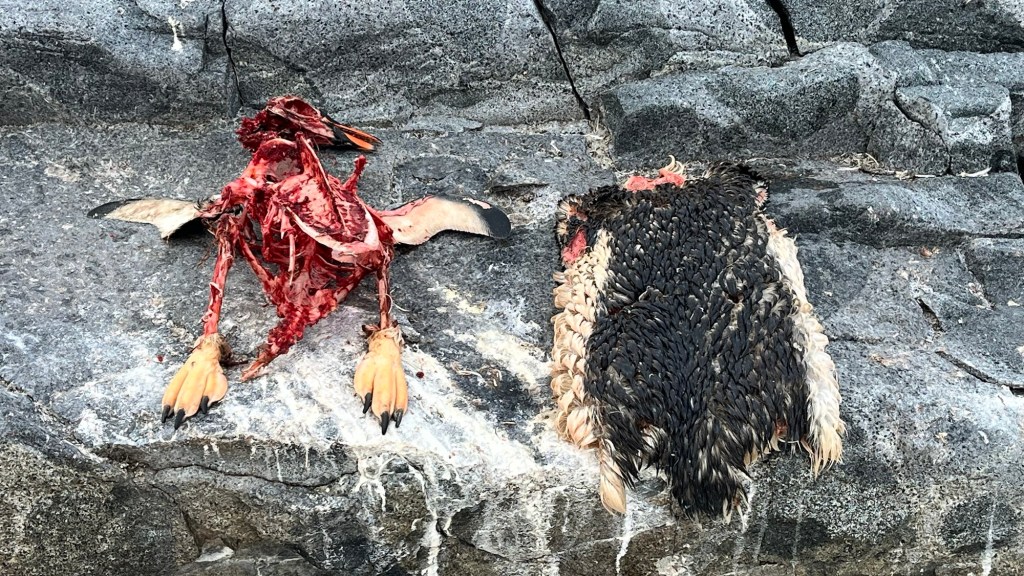
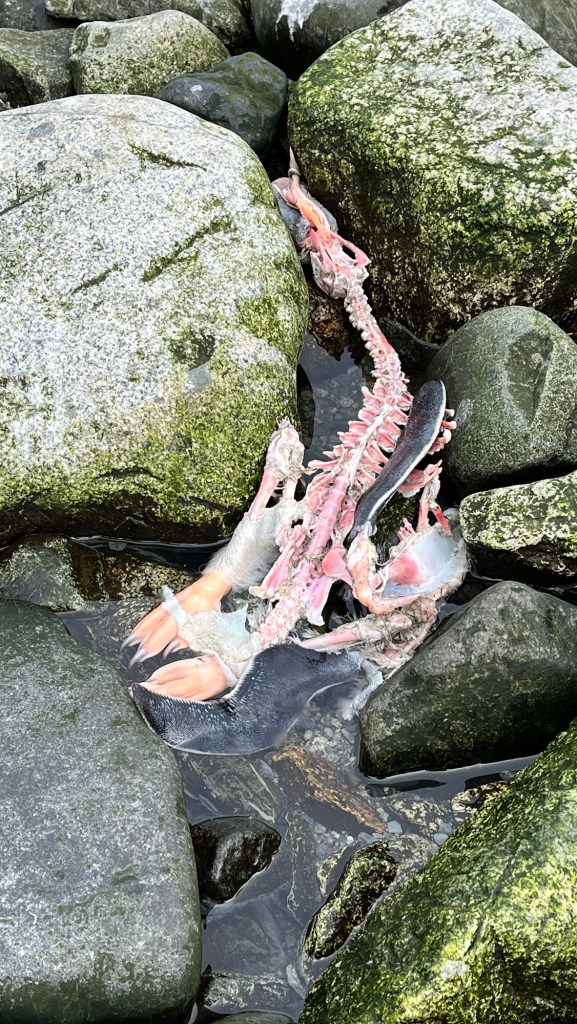
    Fabrice gave an impromptu anatomy lesson with a freshly dead penguin. He found it up on this rocky hill and stripped it with a pocket knife and his bare hands. The leopard seal had pounded all the flesh out of the carcass and the birds cleaned up the rest – nothing but skin and bones left.

    Anatomy lesson

    The zodiac cruise around Wiencke Island was whale-filled. Some curious minke whales swam right by the boats.

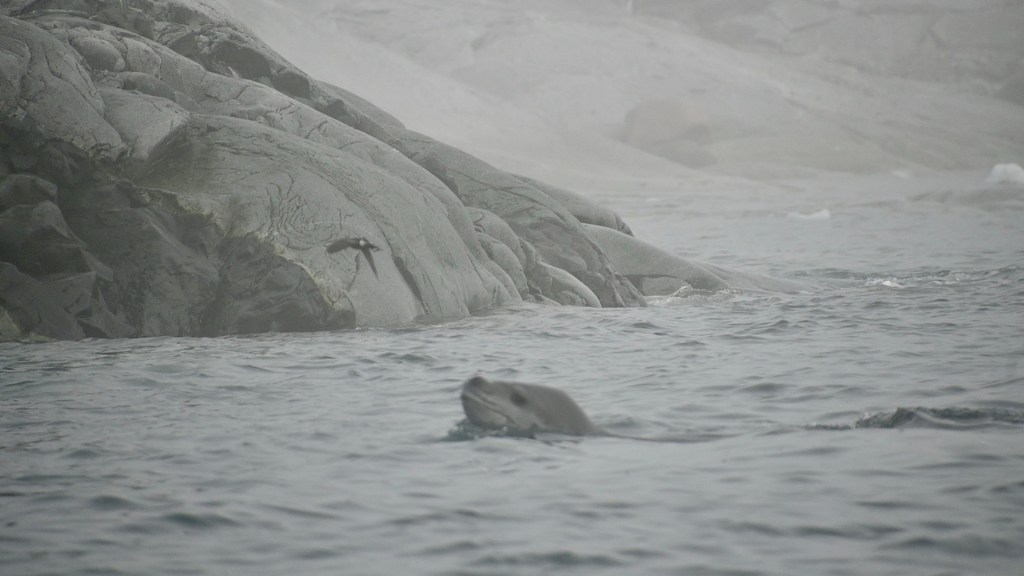
    A leopard seal was hanging out here…
    The most southerly post office at Port Lockroy

    Port Lockroy post office on Wiencke Island was advertising a job. It was a 5 month contract, includes room, board and warm outer clothes but no running water. Every week you could probably go on a cruise ship to take a shower. Not a whole lot to do in your spare time but you would process about 80,000 pieces of mail. Oh, and it’s a vegetarian base…and you have to be a UK citizen.

  • Petermann & Penleau Islands

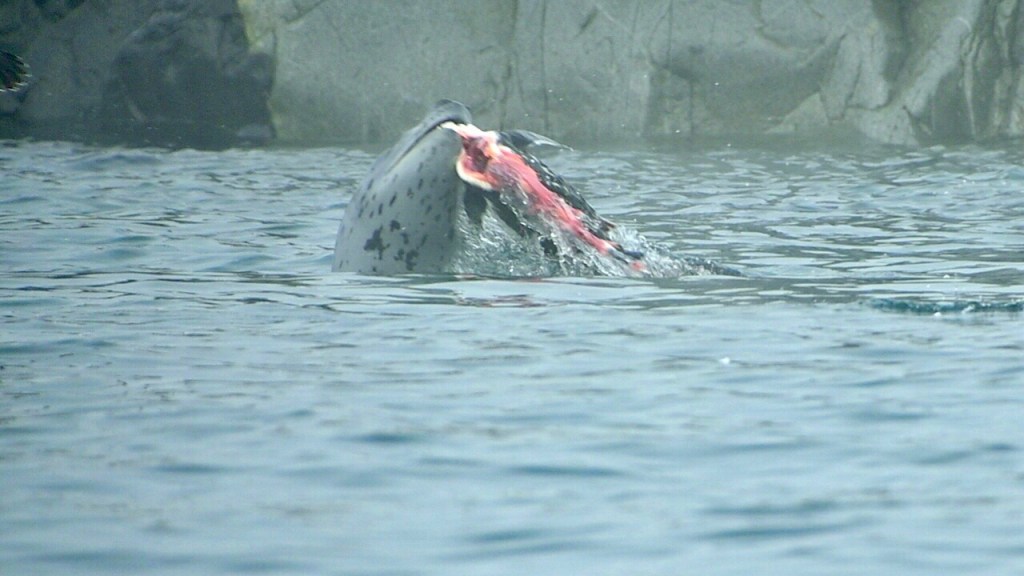
    Started the day of off with a Movement and Mindfulness class then watched a leopard seal eat a penguin.

    It was a calm but overcast cruise to Peterman Island to commune with some Gentoo penguins when disaster struck for one young pengy. A leopard seal had the penguins head trapped in its monstrous jaws and was slapping side to side on the surface of the water in order to de-glove the skin.

    Apparently the leopard seals eat about half the penguin population every year – they feed on the young chicks who have yet to develop swimming skills. The seals each eat up to twenty penguins a day. Many of the women in the zodiac were in dismay but I’m more “circle of life” about it all.

    When the breakfast cruise ended, penguins and more penguins.

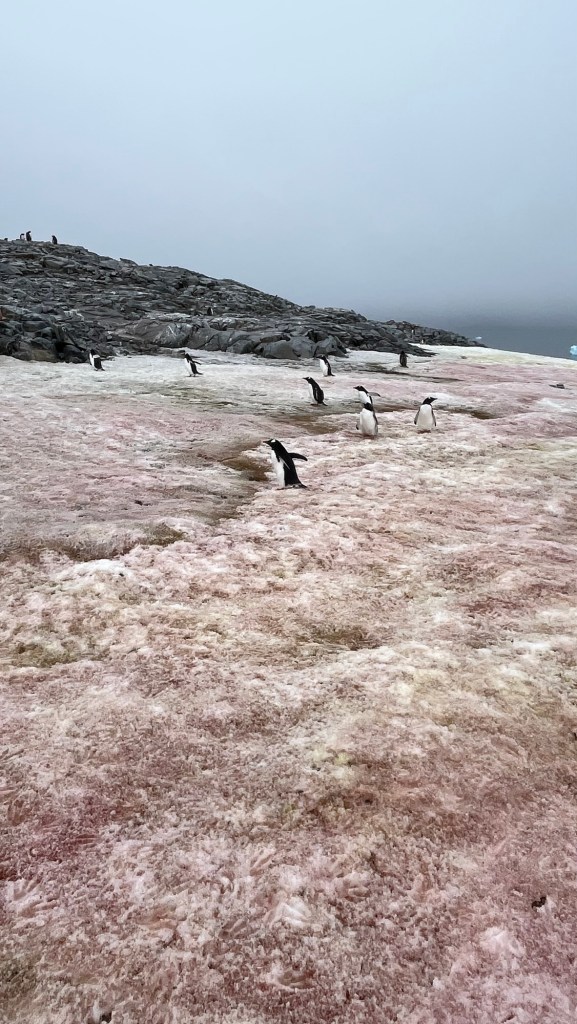
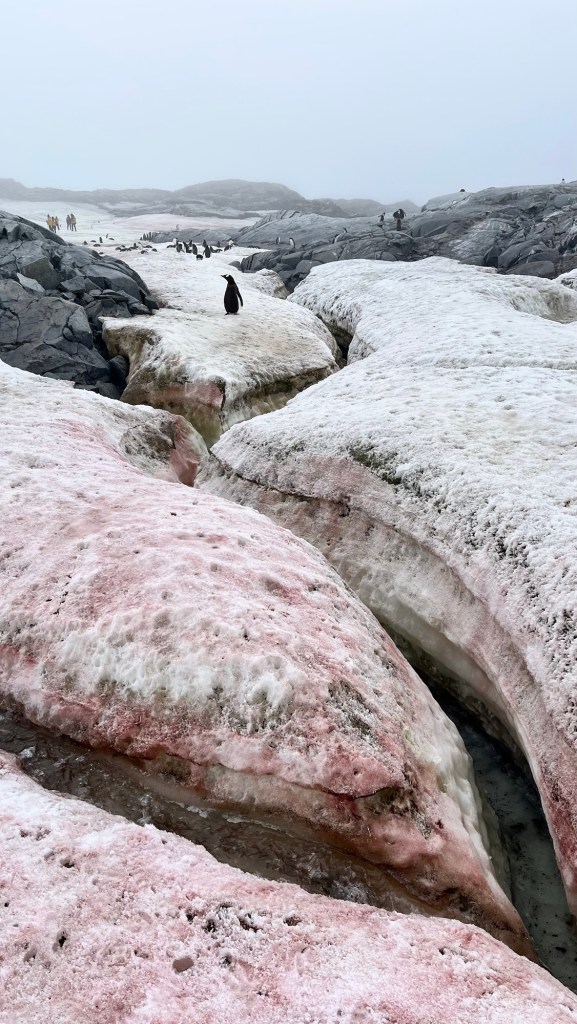
    Red algae not blood

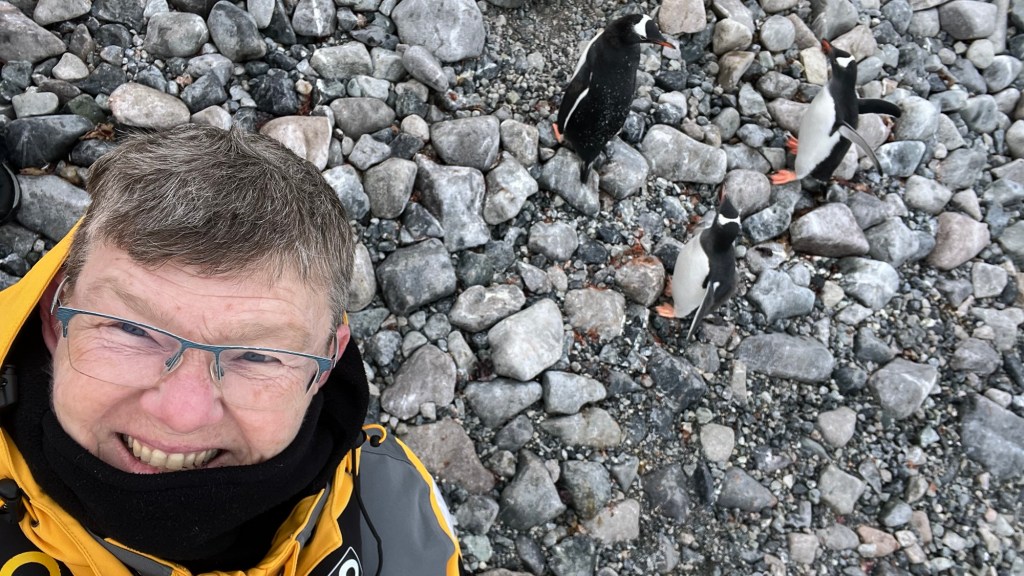
    They have no land predators so they have no fear of humans. We have to step lightly and keep a 5 meter distance. This is hard to do since they are so curious!

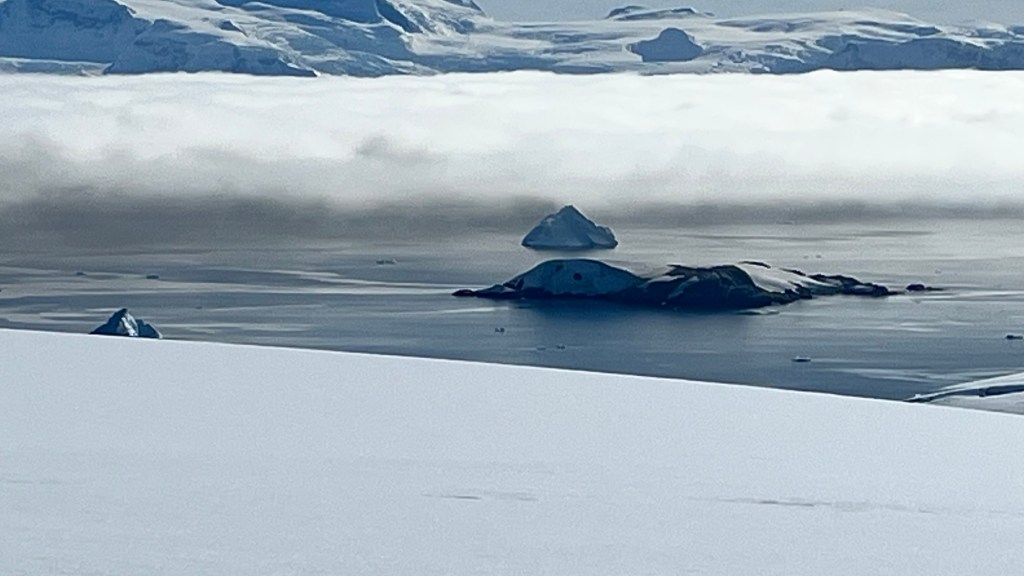
    In the afternoon, it was whale and iceberg watching around Penleau Island.

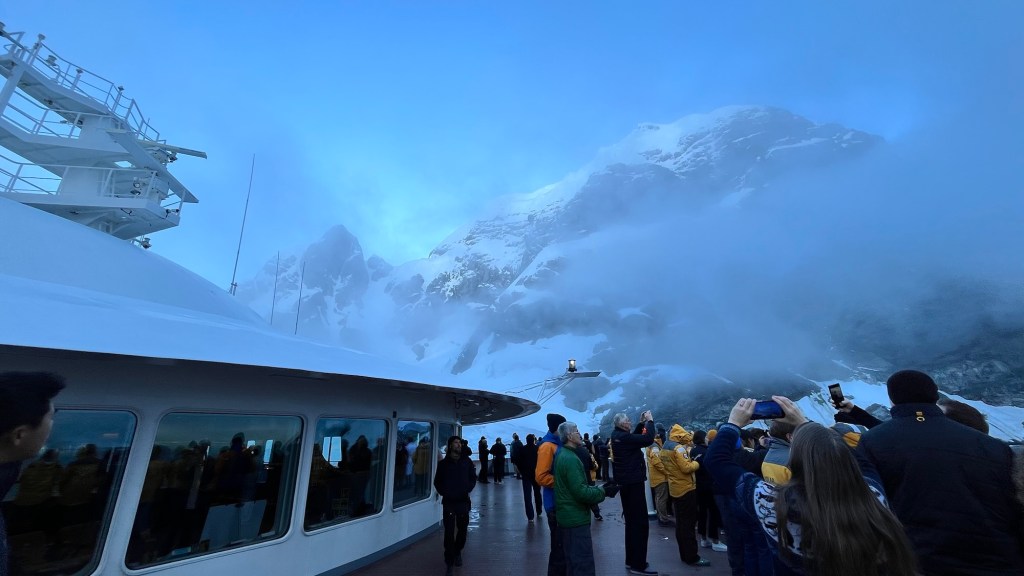
    Late afternoon, the picturesque Lemaire Channel. Eleven kilometres of beauty under pretty dramatic lighting conditions!

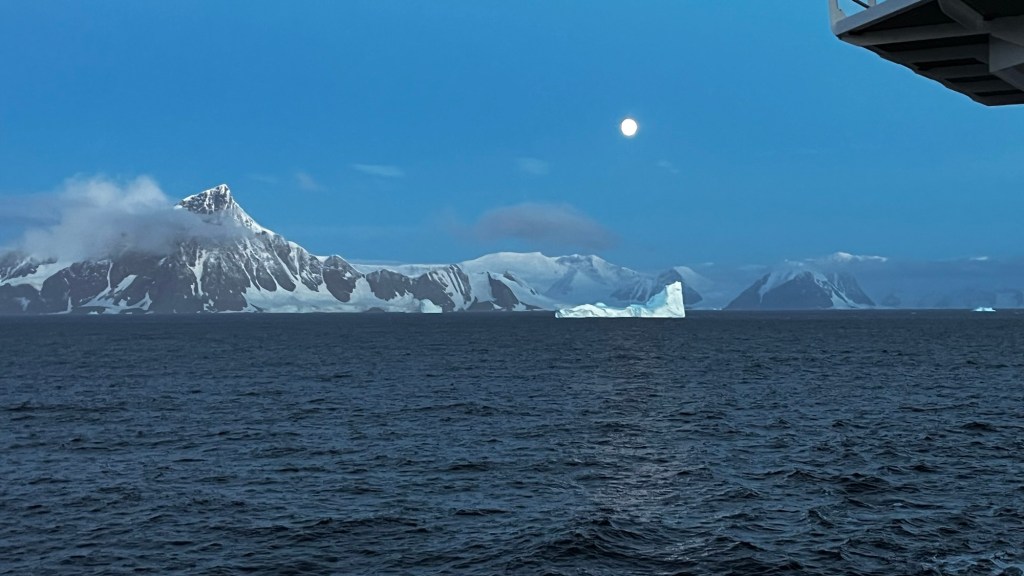
  • Beautiful fullish moon last night – was up around 2:30 as we retraced our steps thru The (narrow) Gulch. 

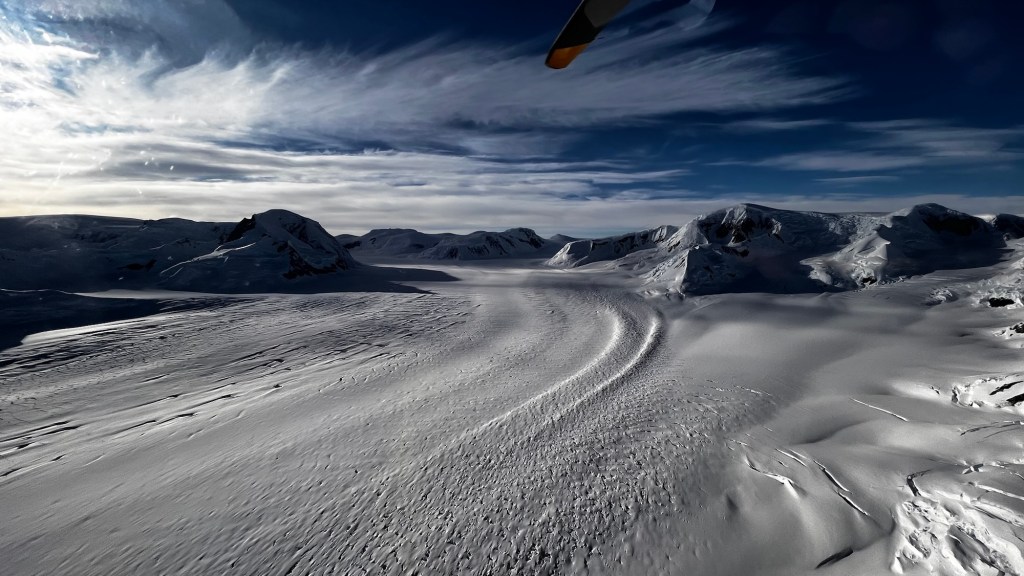
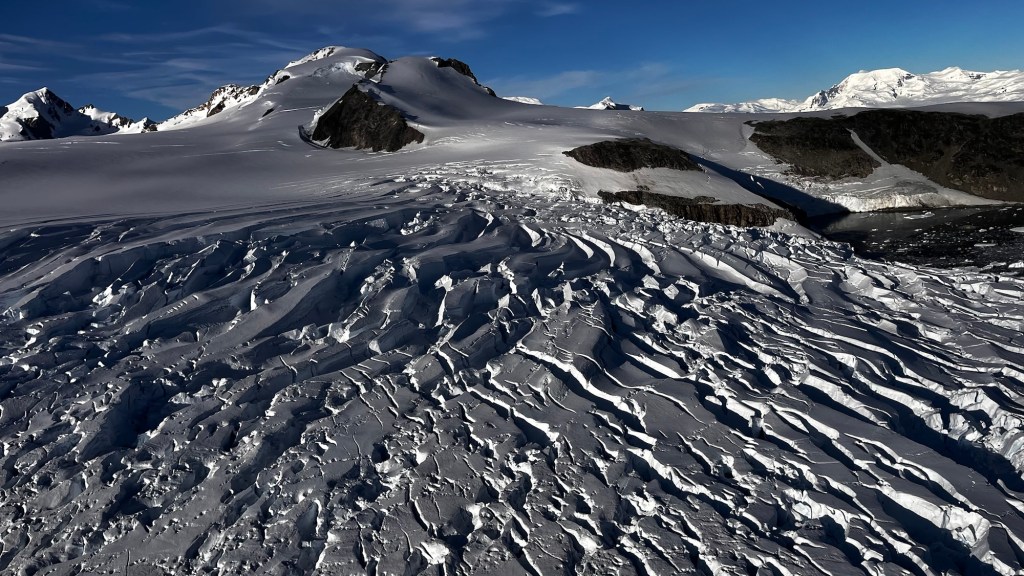
    Stunning weather all day for flight-seeing and zodiac cruising.

    Very impressed with operations side of this company and after today, the trip seems like a bargain rather than an extravagance.

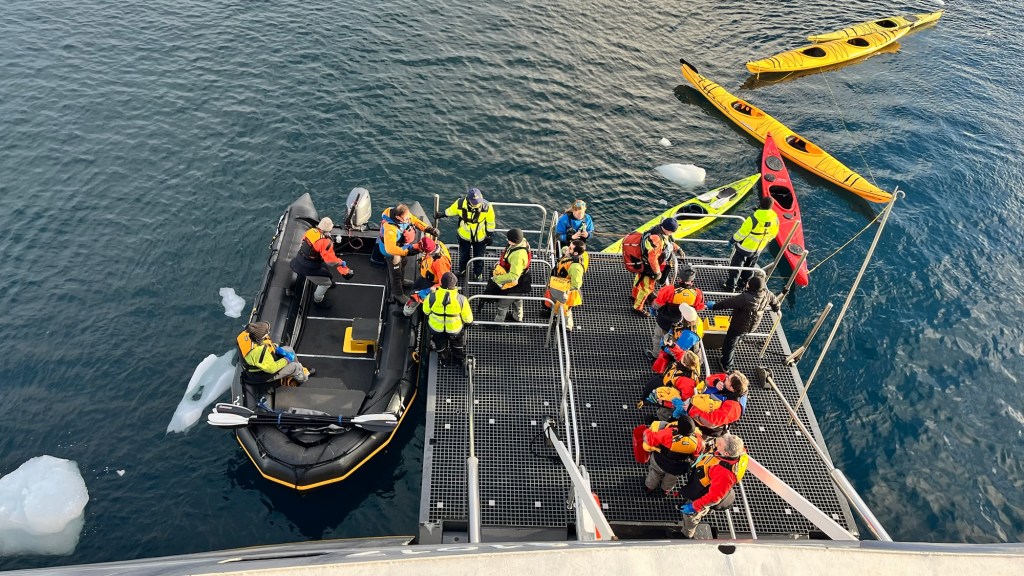
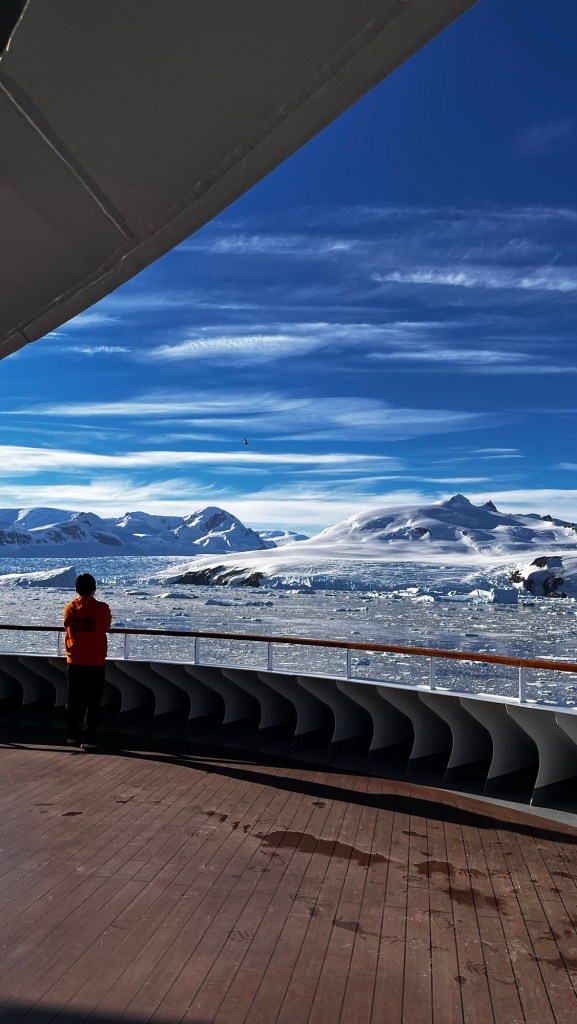
    They pulled into the iceberg littered bay in front of gorgeous mountains and glaciers this morning – weather was sunny and cloudless. They set up helicopter, zodiac and sea kayak operations and managed, in turn, to get all 185 passengers in the sky and on the water throughout the day. 

    I was on the 4th flight of the day with Simon piloting the helicopter. It’s a 15 minute flight that everyone does as part of the expedition – fortunately I added an extra “heli-landing” tour when I booked two years ago so get another shot at this.

    After the flight there was anything to do for six hours except stare at the beauteous landscape.

    Late in the afternoon we hit the water with ornithologist Fabrice.

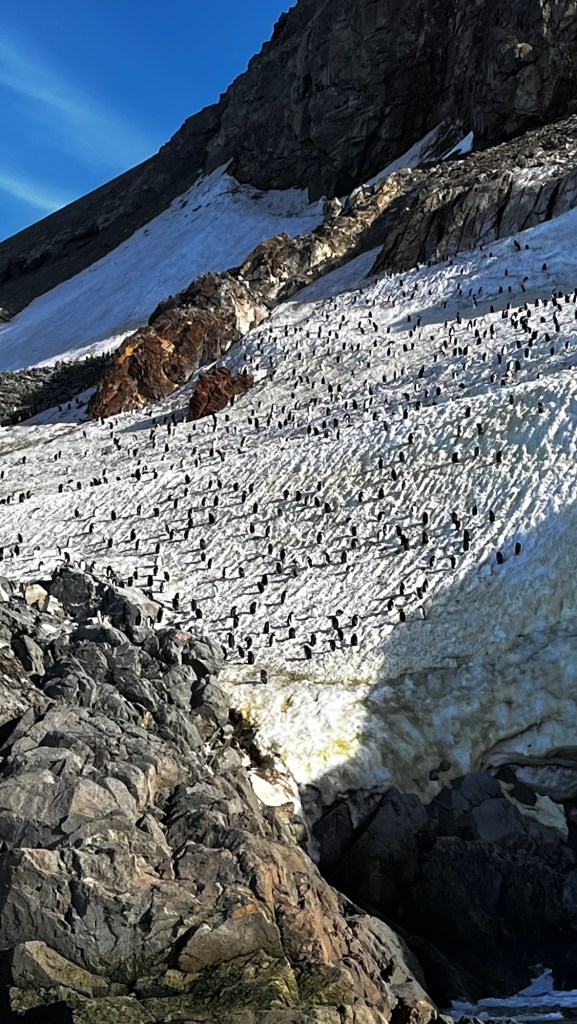
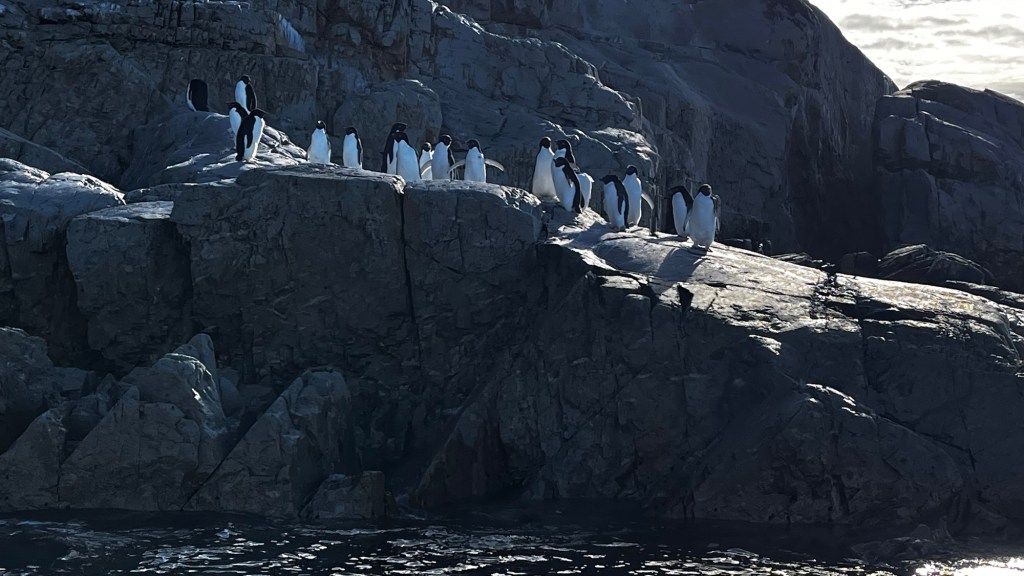
    The Adelie penguins only come to land to breed and moult – the rest of the year they are in the water or on ice floes. After the chicks leave the nest mom and dad fatten up so they can be safely on land while they moult. Moulting being the process of growing out a new set of feathers. Today we could see many ragged looking birds hanging about.

    Other wildlife sightings: humpback whales galore, shags, a lone chinstrap who turned his back on us and pooped in our direction, Antarctica fur seals, Weddell seals, petrels and skuas.

  • Stonington Island

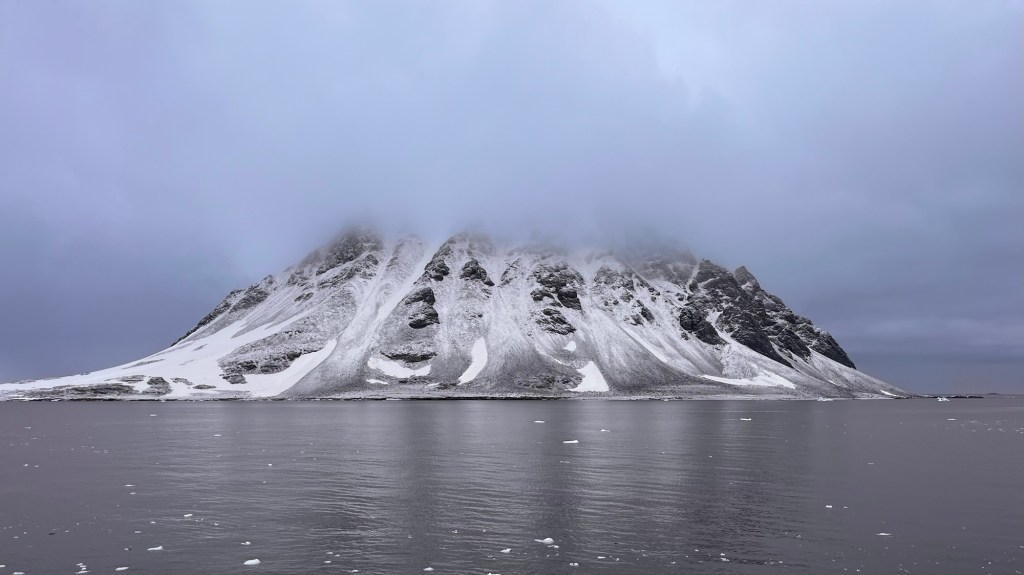
    There was snow-globe snow falling when I went to bed last night. It was partially responsible for the jaw dropping view above that I saw when I first woke up this morning.

    We made our way south overnight thru The Gullet passage to Stonington island at 68 degrees south where the water was practically glassy calm…in the morning. 

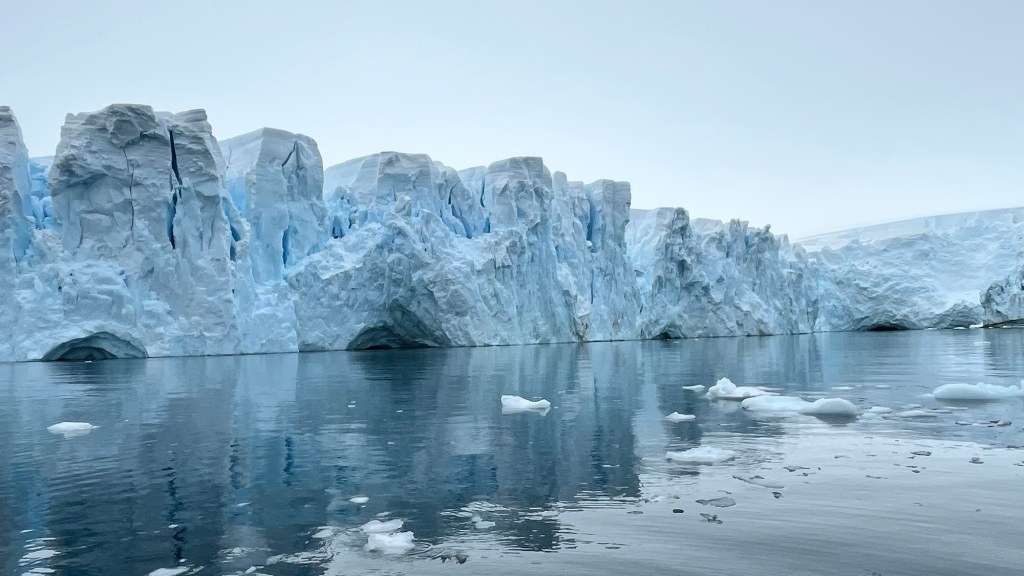
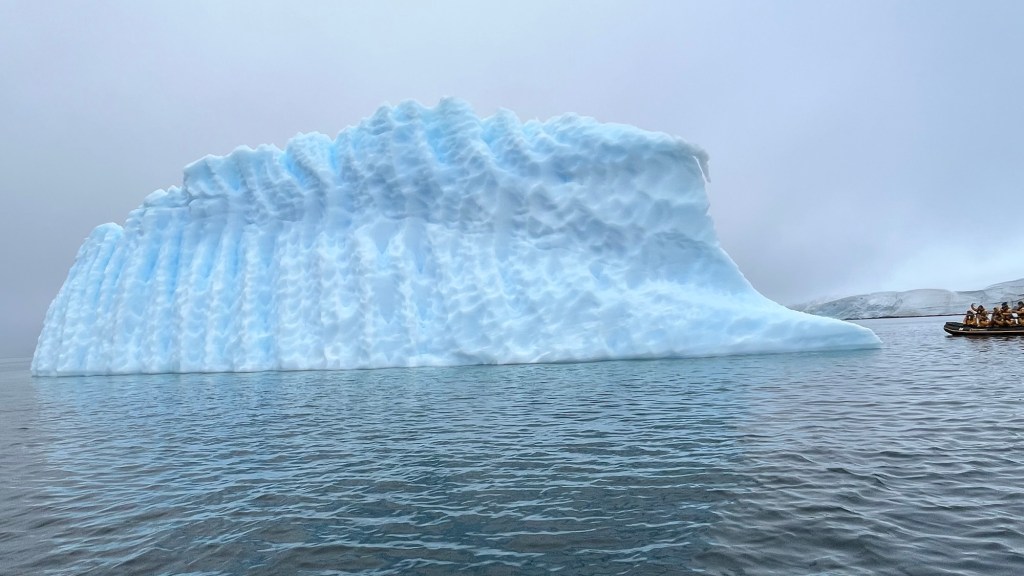
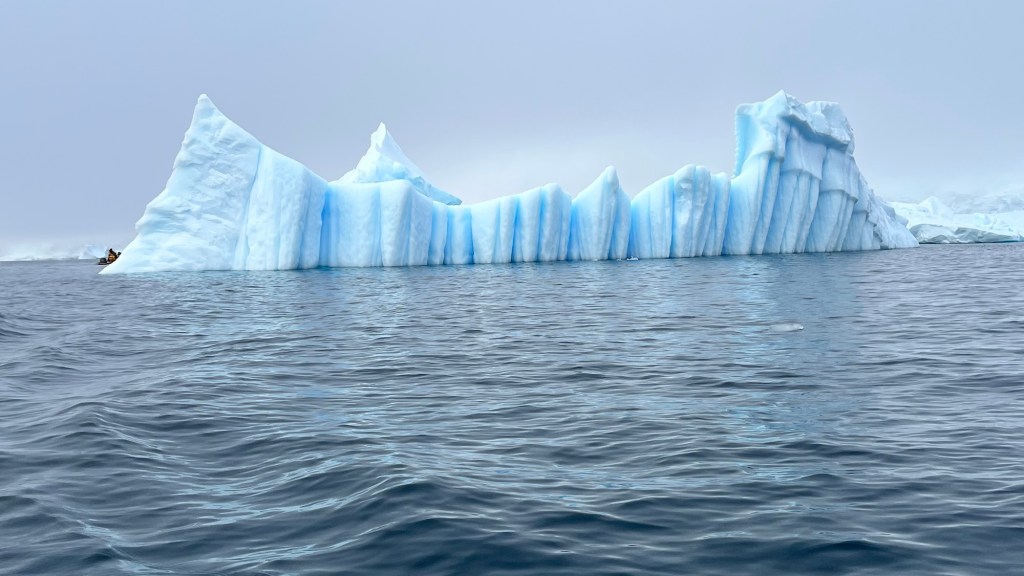
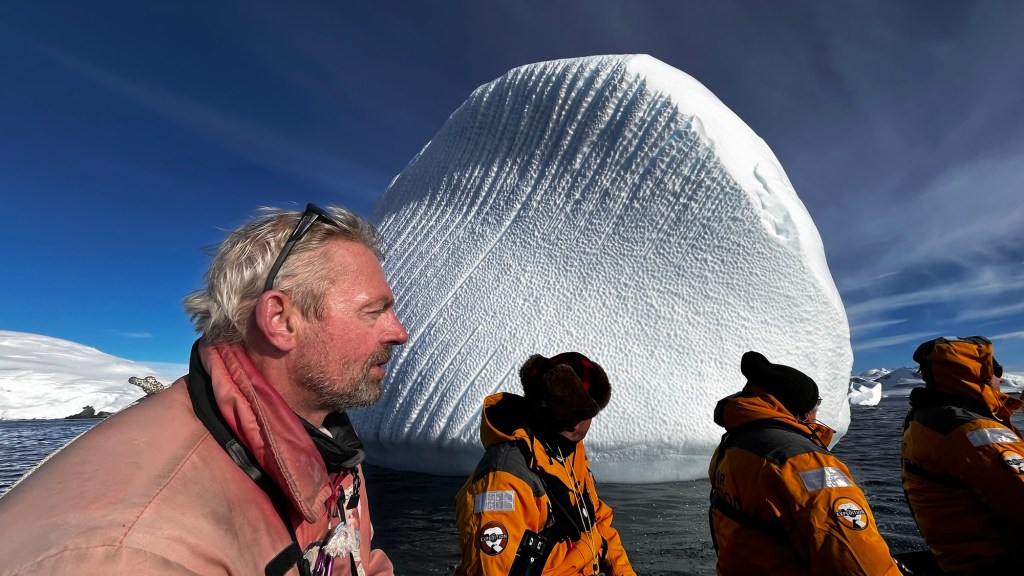
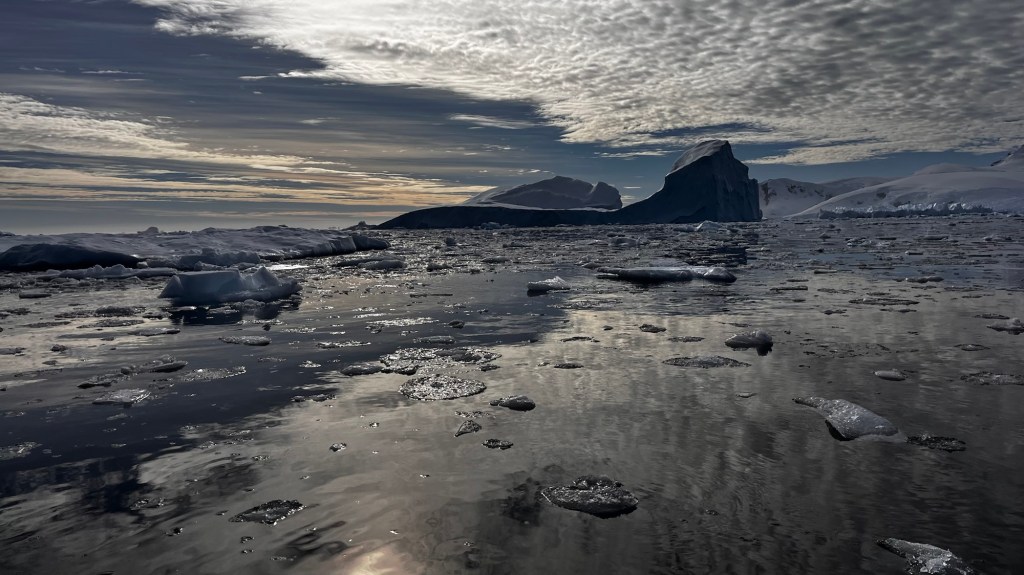
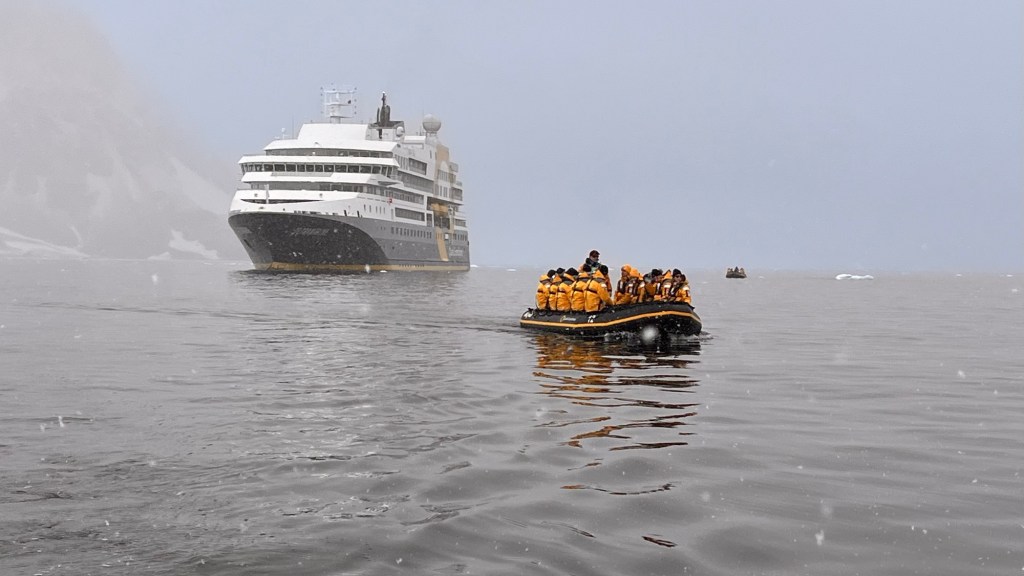
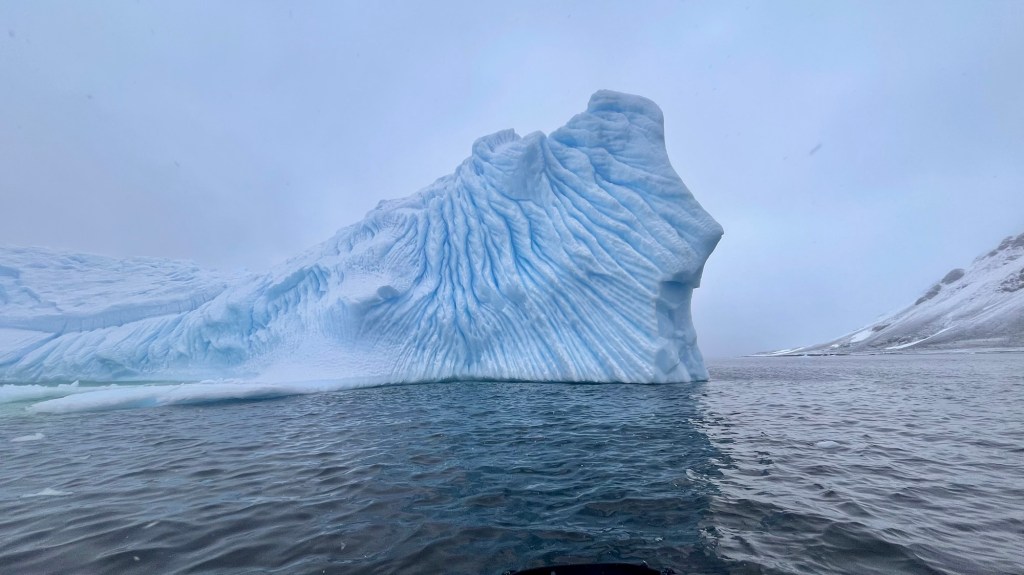
    This facilitated off boat activities: a hike on Stonington Island to explore US and UK historic research stations, followed by a zodiac cruise thru the iceberg sculpture garden that is Antarctica.

    Most notable:

    Stonington was where women first set foot on Antarctica. The leader of a private US research expedition in 1947 brought his wife, Jackie Ronne. This raised some concerns amongst the men about “a lone woman” so someone came up with the brilliant idea of bringing another woman – a pilot’s wife. The two women did not get along. Must have been a long year for all…and we never found out the name of the pilot’s wife.

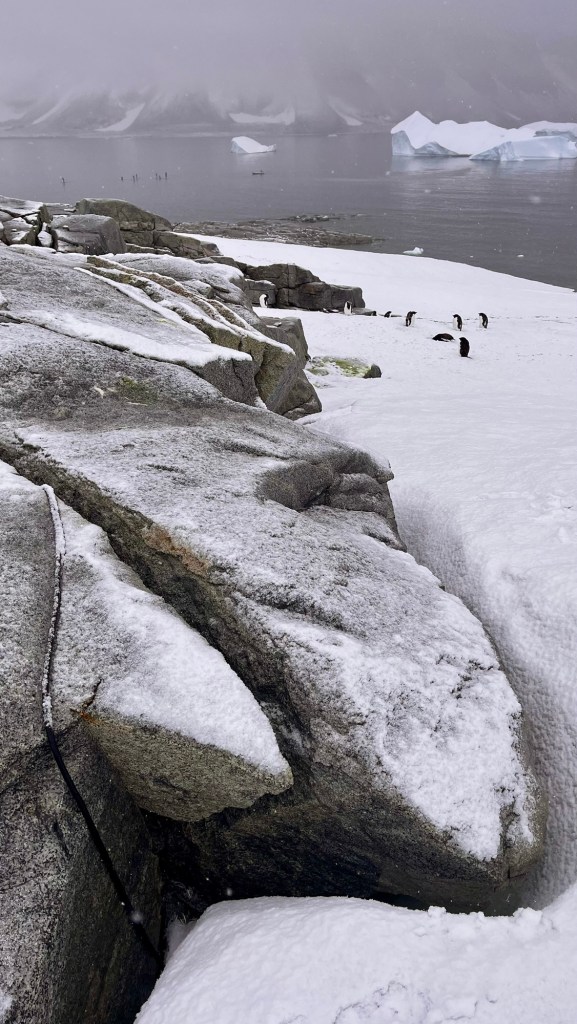
    Outside the Adelies were standing about moulting like grumpy old men.

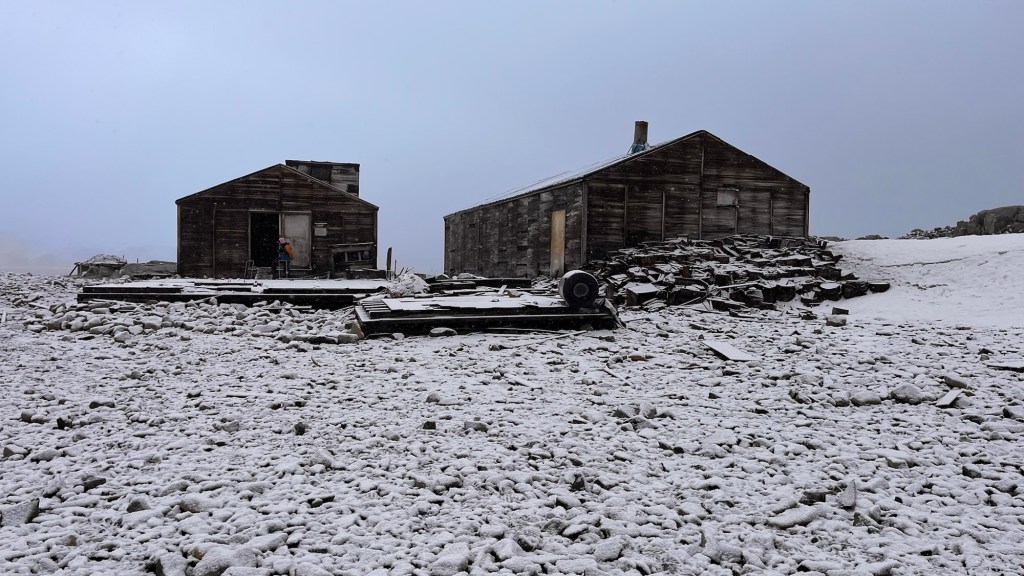
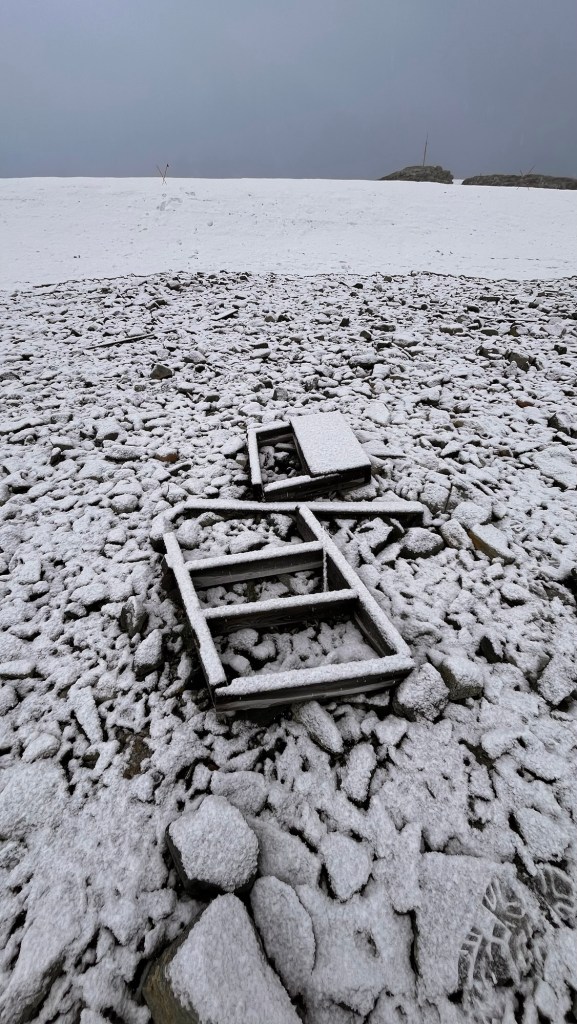
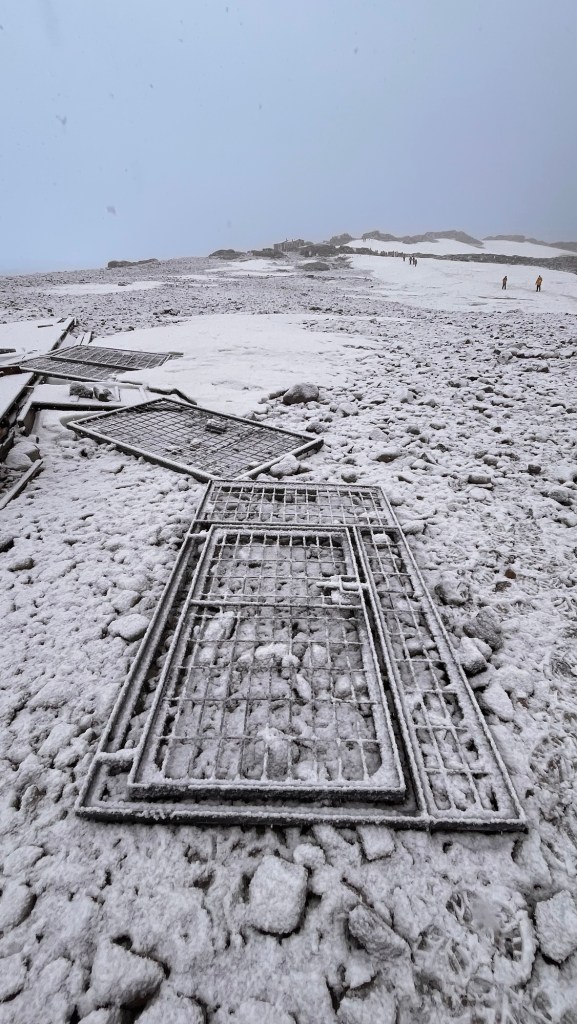
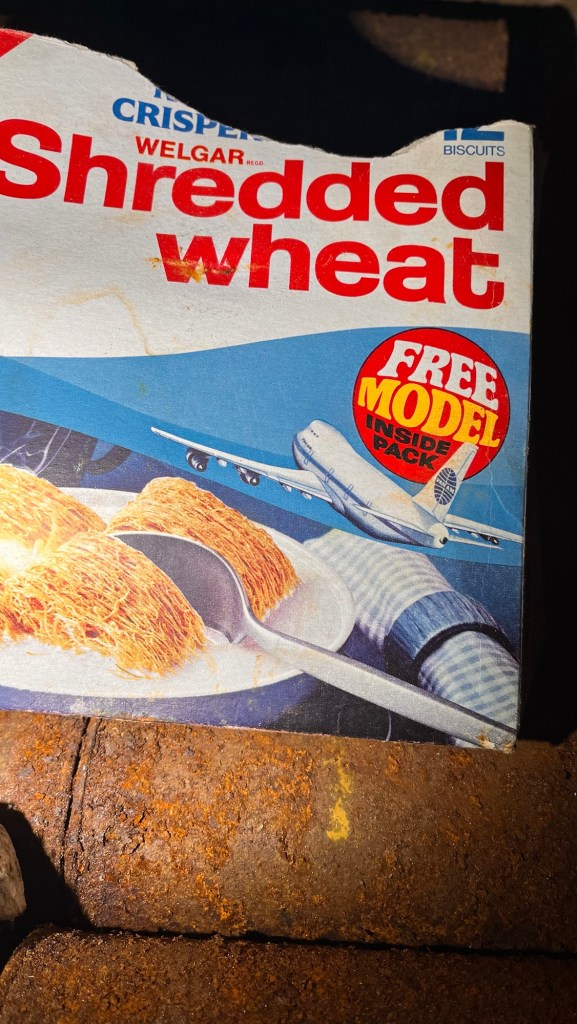
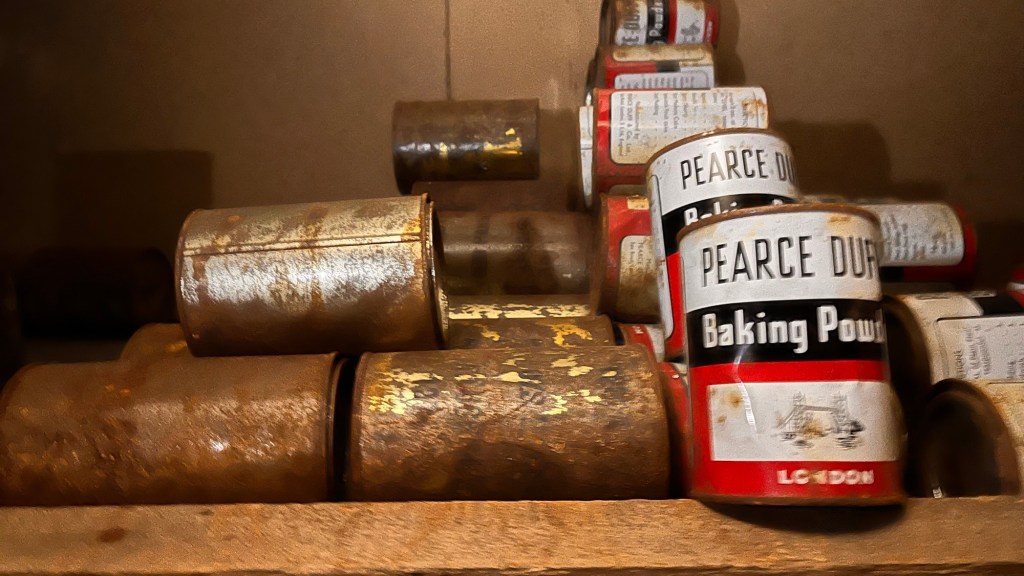
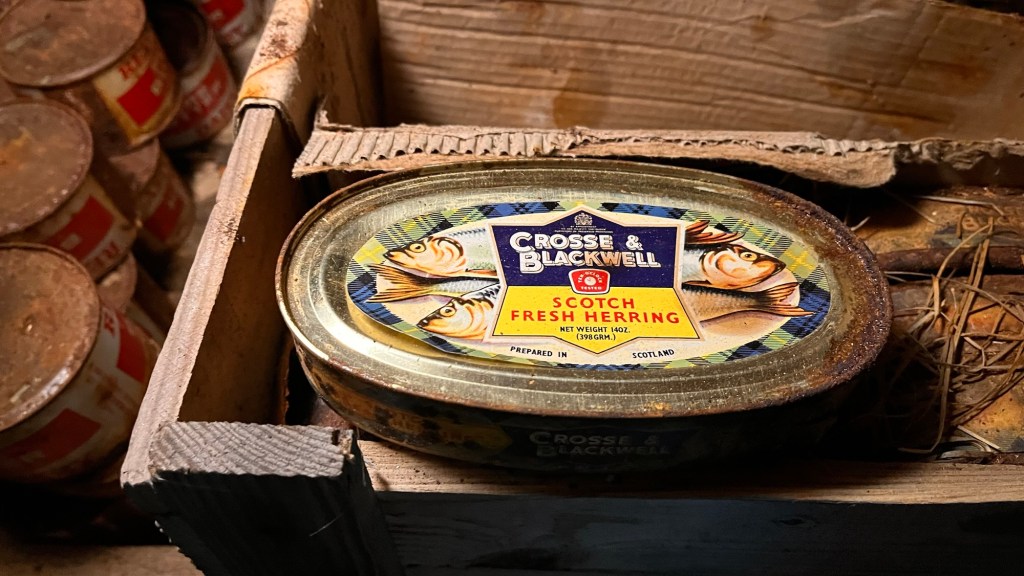
    A light dusting of snow softened the look of rusting detritus.

    The afternoon’s attempt to do a true continental landing at Red Rock Ridge just slightly south, was thwarted by rising winds.

    Ice art
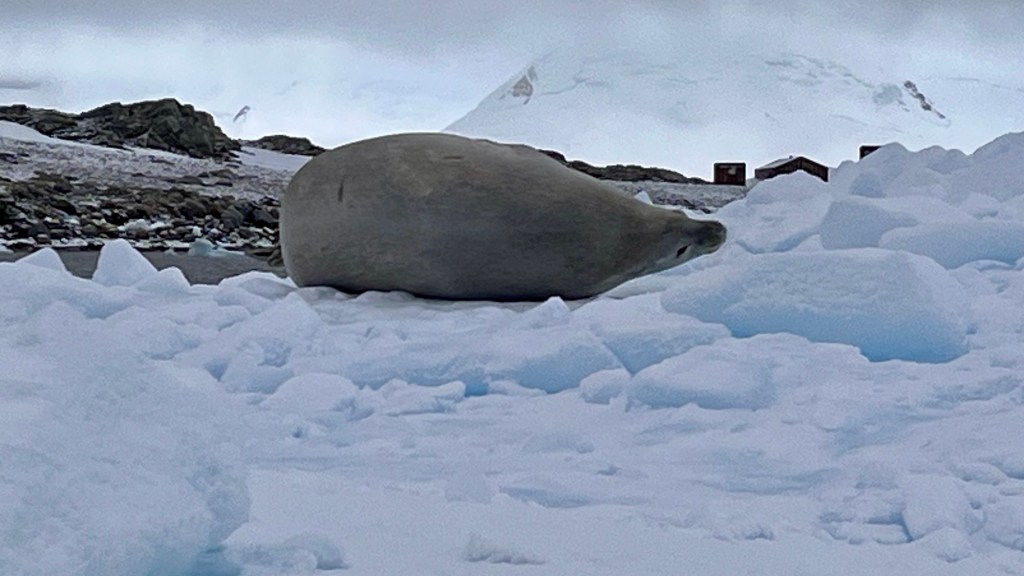
    Crab eater seal

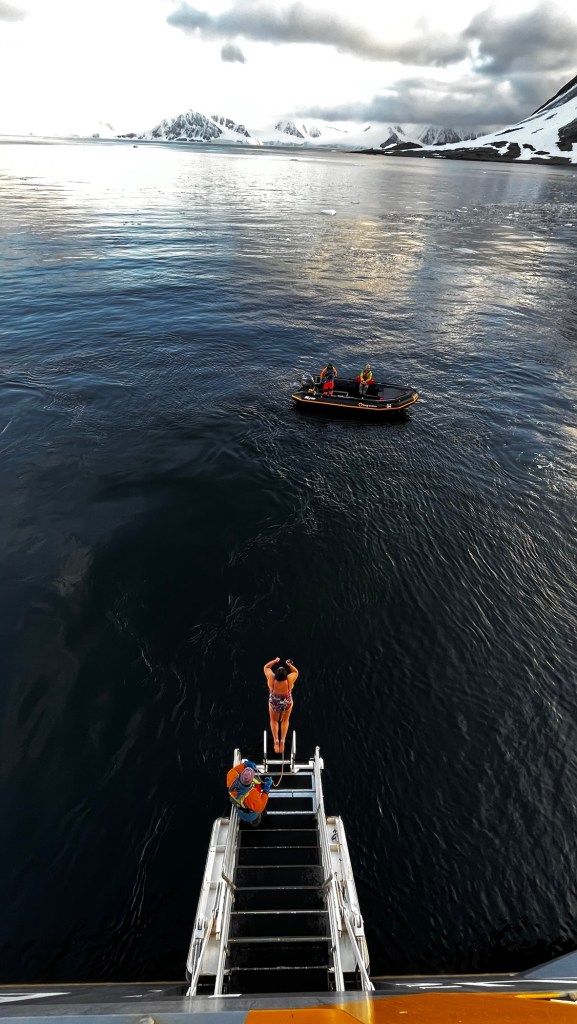
    Our boat retreated to the sheltered area near Stonington to undertake the polar plunge. I passed on this in spite of having my snorkelling kit with me. (They even said defibrillators were standing by (seriously!)) It was fun to watch though – our balcony was centered above the port side plunge-point.

    What a stunning setting for such  a crazy-assed thing!

    Prior to the plunge, JR put on a slide show chronicling his work over the past 25 years monitoring ice and rock movement  on the West Antarctica Ice Shelf. Lots of dicey flights over dodgy snow&ice. In recent summer seasons, rivers appeared on top of the ice. The data seems to point to a natural trend of warming accelerated by an unknown degree by human activity. He has fossils that he collected (before the ban on collecting) that date from when Antarctica was forested.

    The day’s recap – they are very good at disseminating information – followed another delicious dinner. Tomorrow, flight seeing!

  • Sixty Six Degrees South

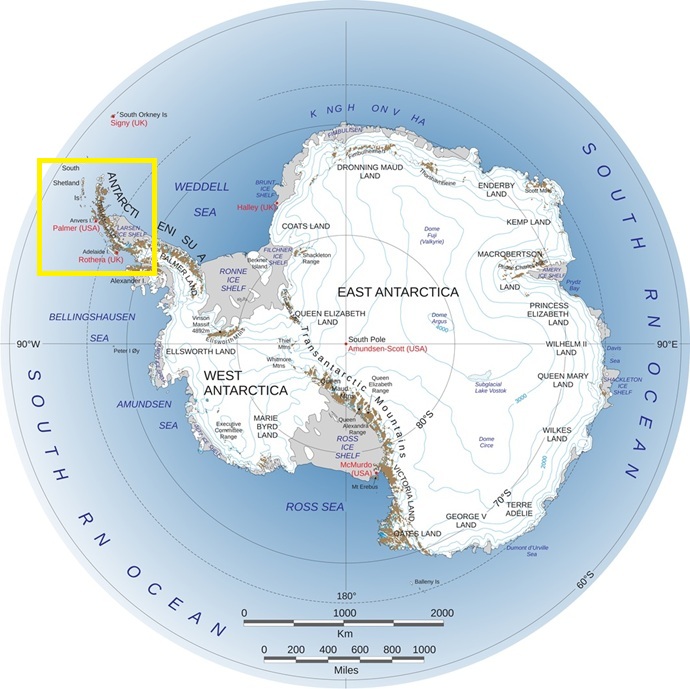
    In the night the ship pressed on south and we are hovering just above the Antarctic Circle. Next steps will be announced with the wake up call.

    Last night they had Solo Travellers Night at dinner – got to meet a few new folks. Lots of Brits and Aussies on board. Have been hanging out with my cabinmate Constance from Taiwan and Angie from California so far.

    Marcos Couch gave the Bar Talk last night which was a slide show of his team ascents of the two tallest peaks in Patagonia. Nice to see Kodachrome images again – sometimes digital photography is just too harsh.


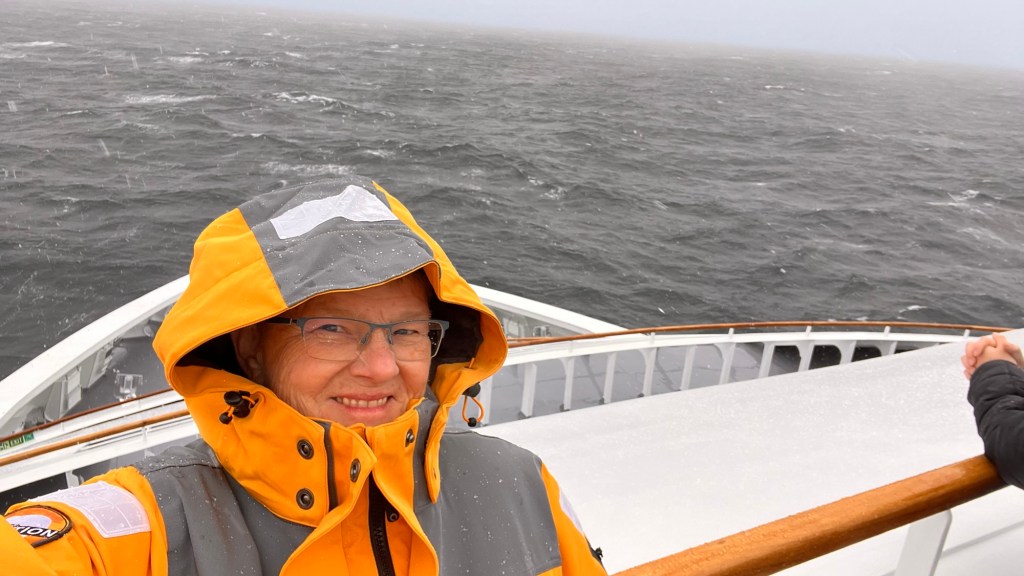
    This morning (Wednesday) winds have been in excess of 50 knots so it’s “no go” for zodiacs this morning. We’ll be pressing on to cross the circle sometime this afternoon. While waiting for the wind to let up, Sophia got us all learned up on Glaciers. If you move you are a glacier, if you don’t you are just ice.


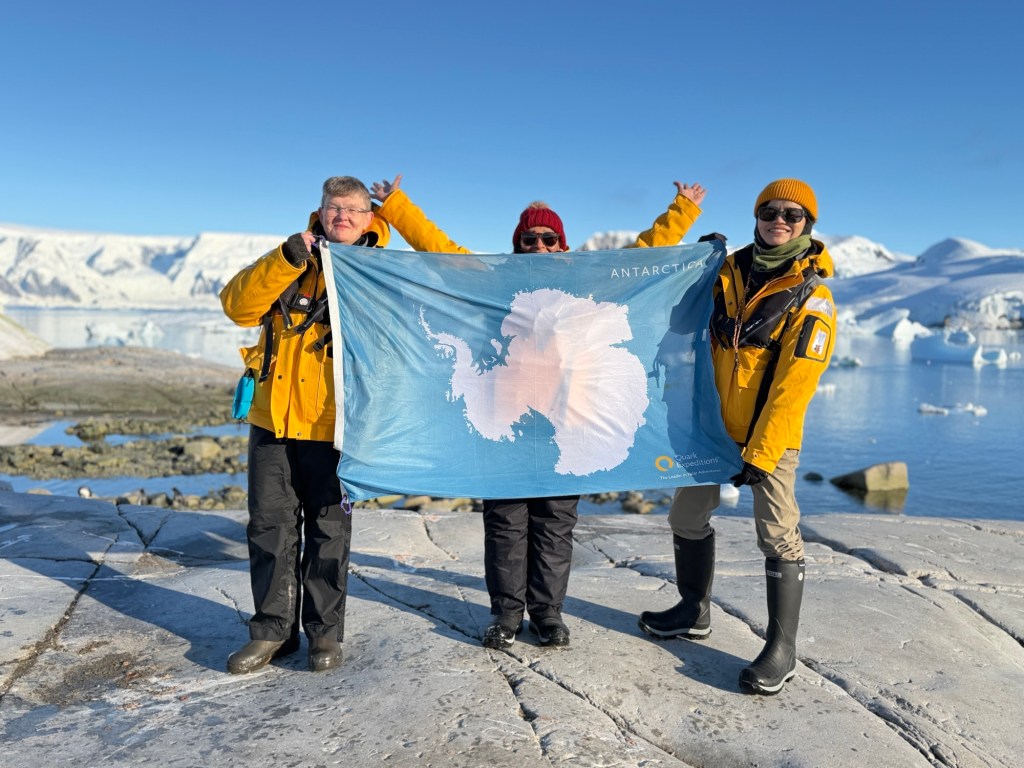
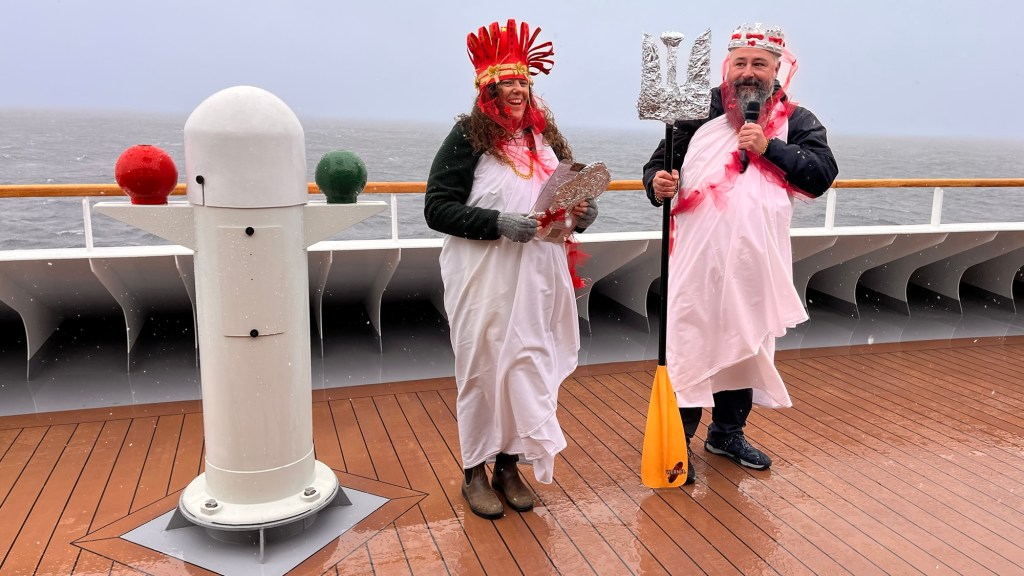
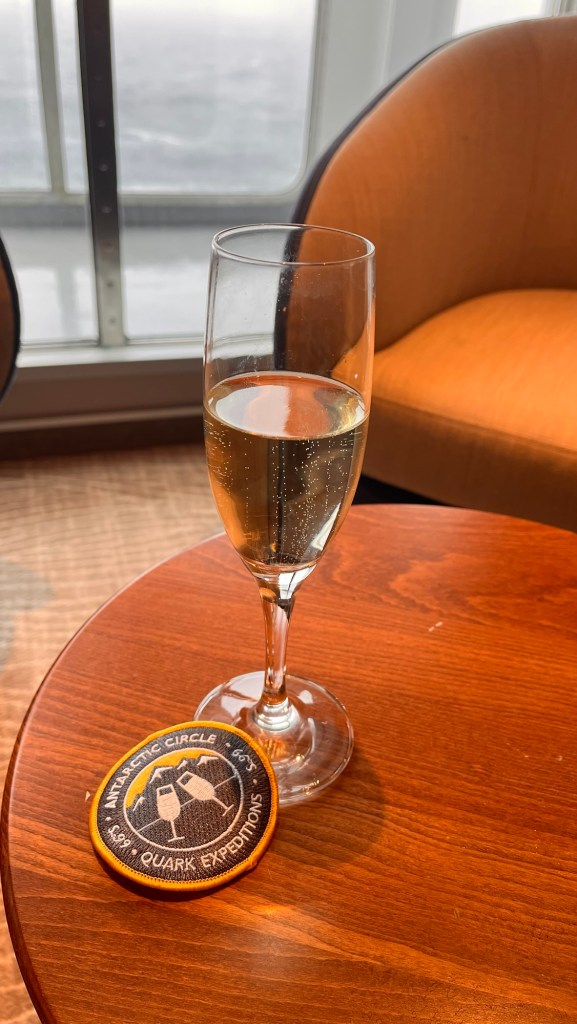
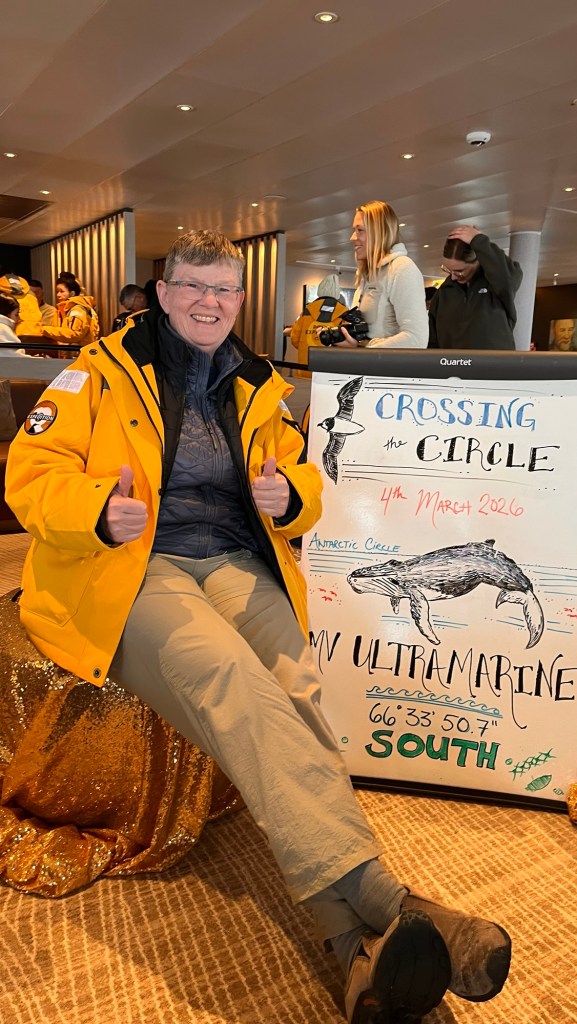
    Crossed the Antarctic circle with permission of Neptune and Salacia around 13:50 Argentina time!

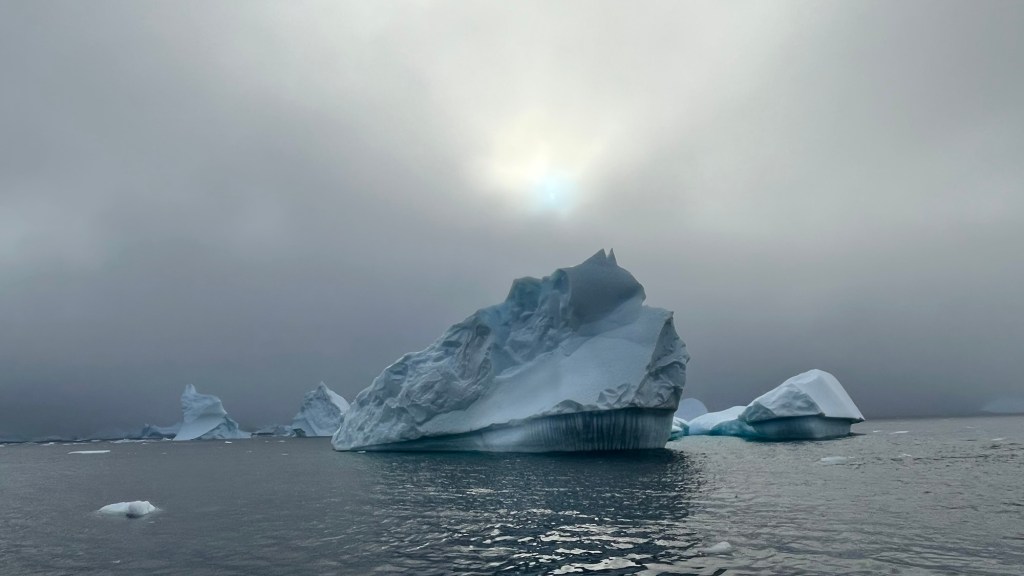
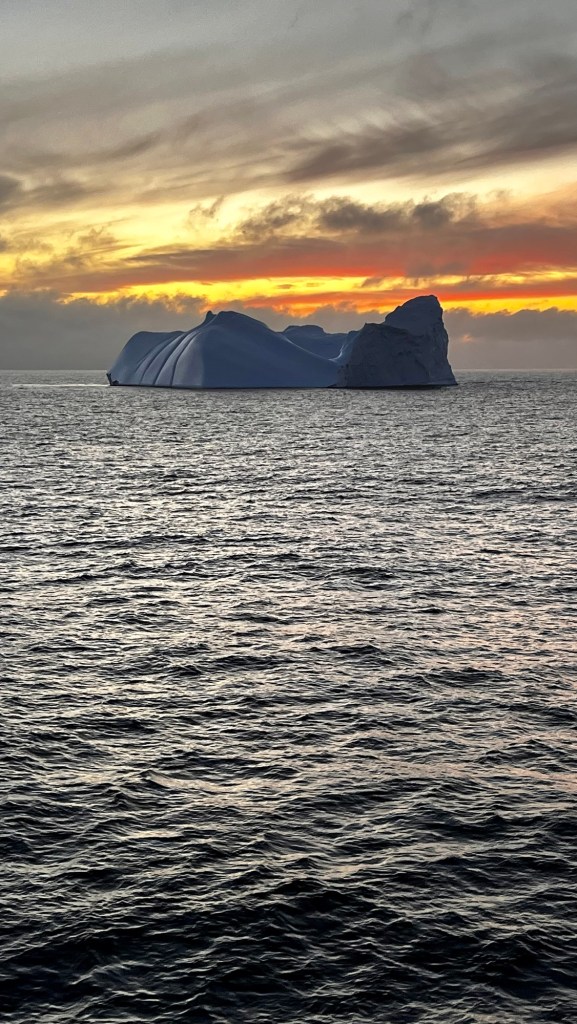
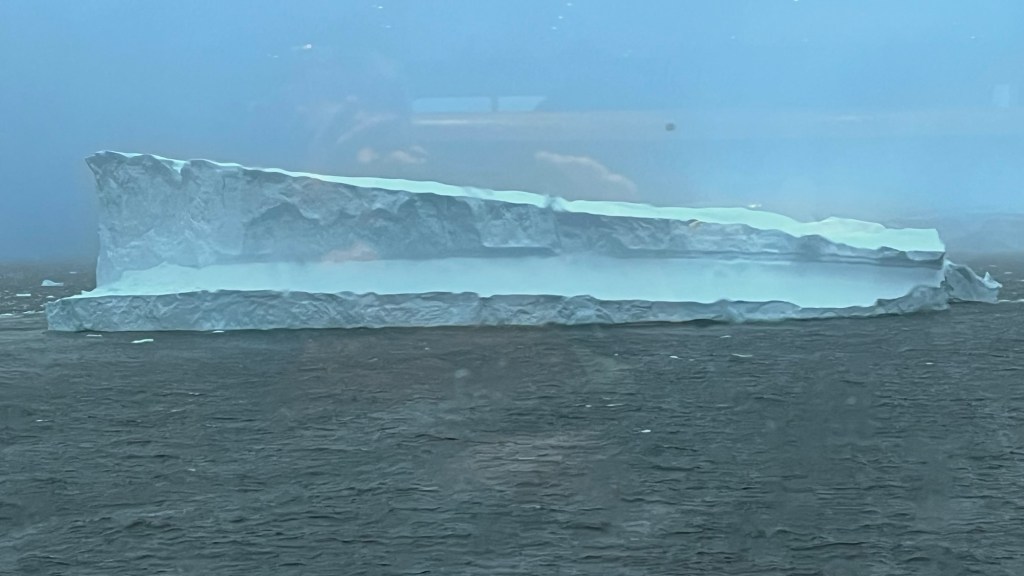
    Since the weather didn’t cooperate for either zodiac cruising or the polar plunge the rest of the afternoon was spent admiring icebergs with our new found knowledge of glacial movement and watching the many humpbacked whales.

    A venison dinner and a round of boat bingo completed the day.

    The winds and water have calmed, it is snow-globe snowing and I hear the occasional reverberation as the ship bumps into bergy bits. Life is good.

  • Drake II

    Yesterday was devoid of wildlife to my untrained eyes but after lunch today some petrels and albatrosses  put in an appearance.

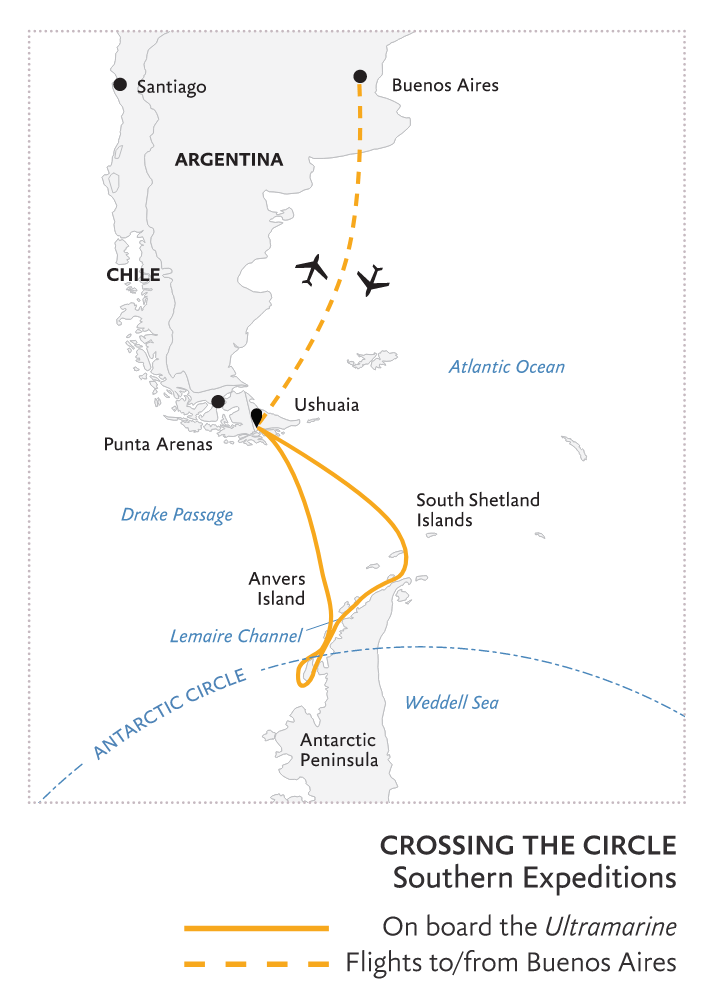
    Currently heading toward the west side the Antarctic peninsula that extends northward toward Cape Horn. The captain is taking advantage of another calm day today to press further south – tomorrow they are anticipating higher winds.

    This is the general route but it’s all down to the wind where we actually go

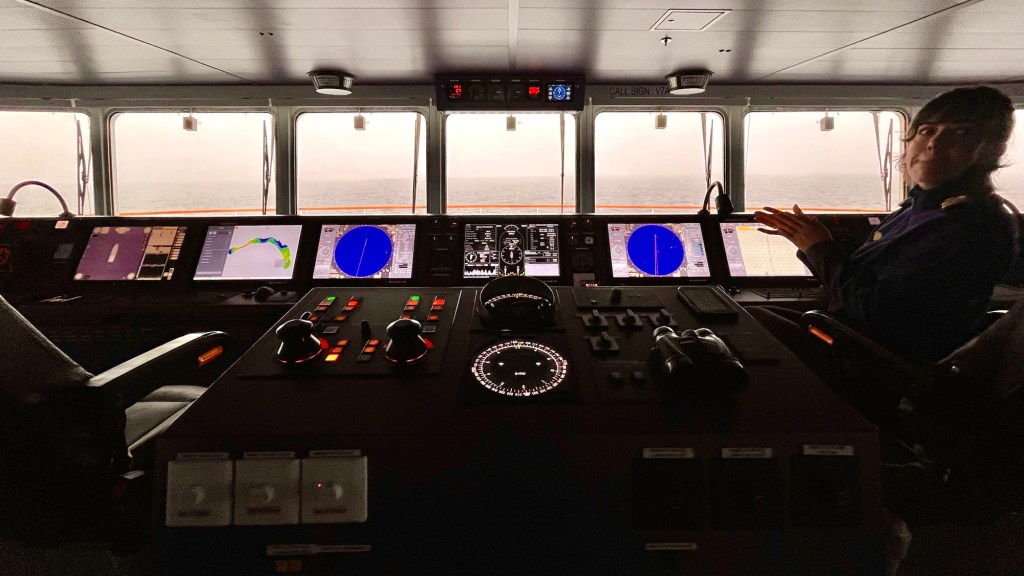
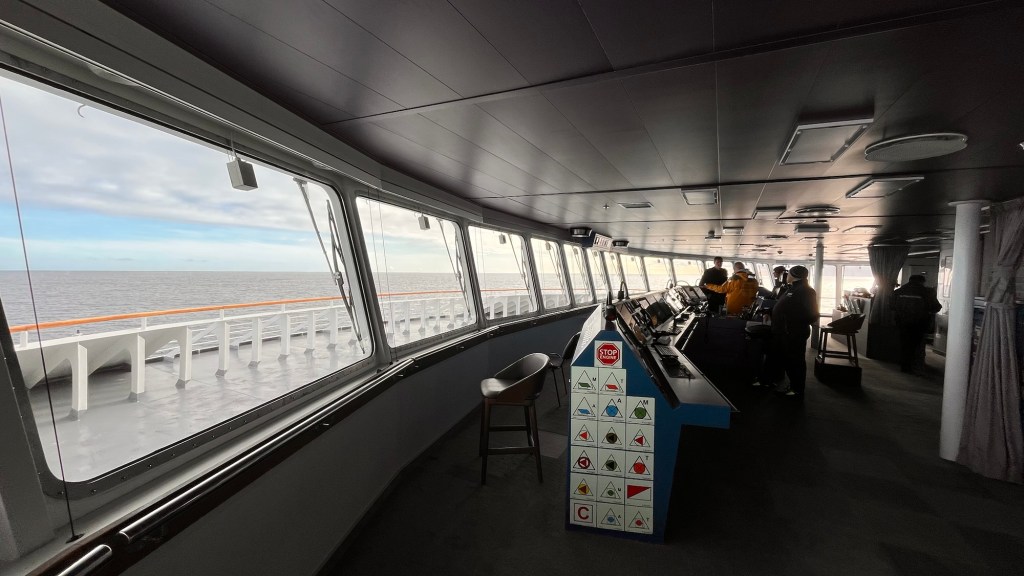
    Popped into the bridge this morning before breakfast – it was empty apart from the second in command lady.

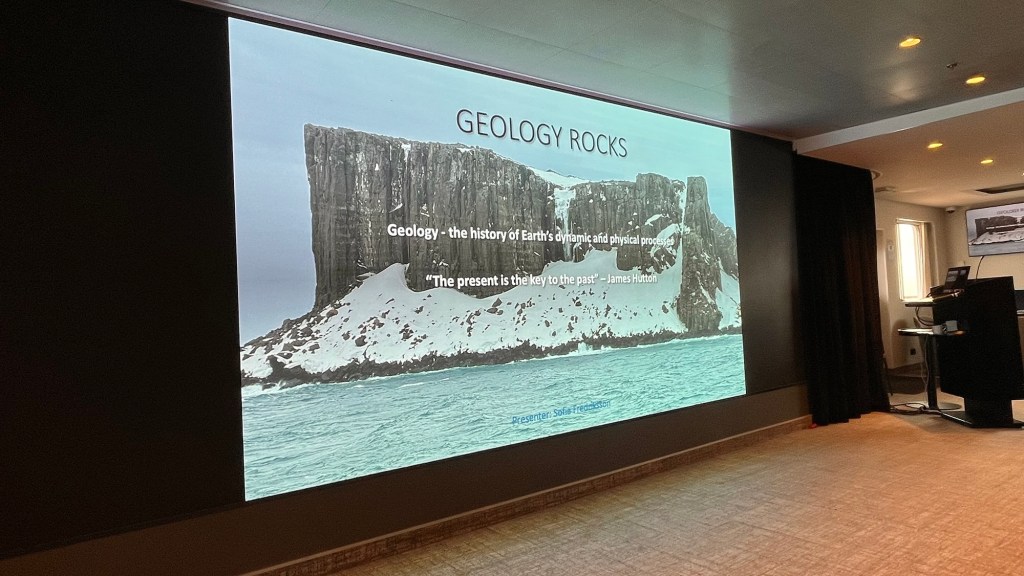
    Lectures today: Birds of Antarctica, Geology Rocks, Heli-landing briefing and Intro to the Cetaceans of the Antarctic Peninsula. 

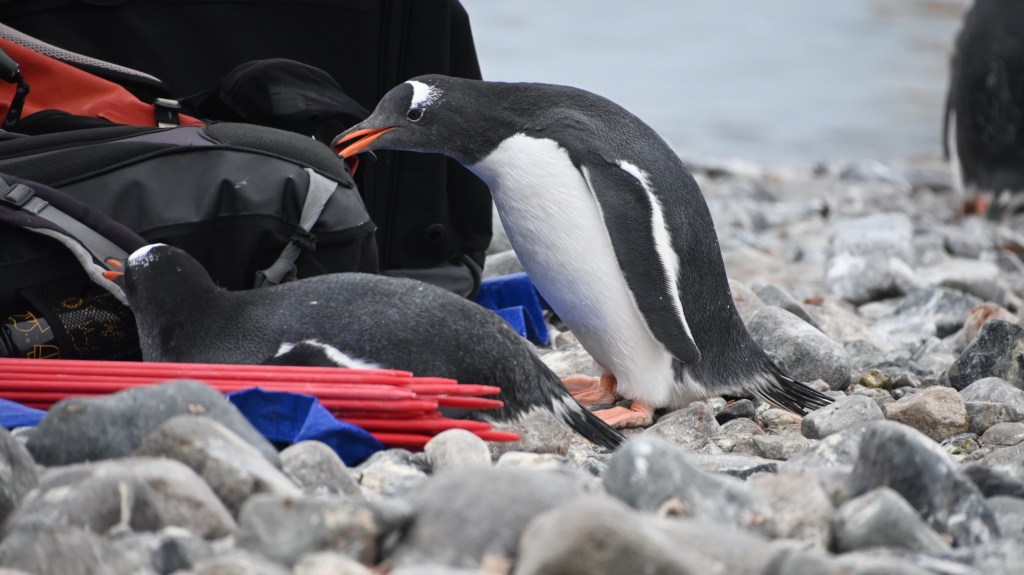
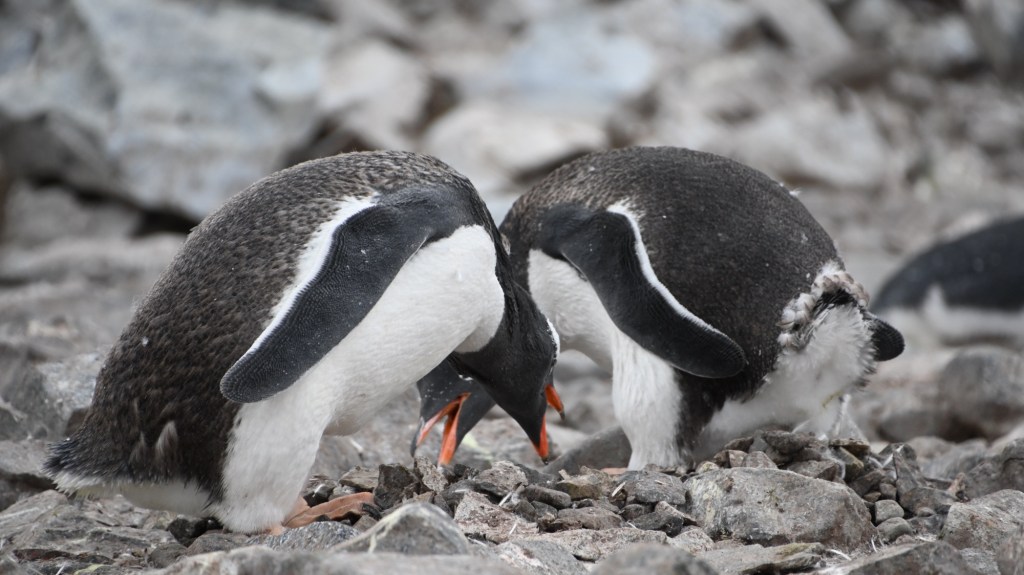
    If you ever wondered why there are no penguins in the northern hemisphere it’s because of the presence of land predators along the way. Even if the pengies made it all the way to the Arctic, they would just be a tasty snack for a polar bear during nesting season. I asked Fabrice why the different penguin species have different coloured feet. He said it’s likely has to do with sexual selection especially where the Gentoo penguins are concerned. The Gentoo, he feels, have the sexiest feet. The brighter the feet , the healthier the bird (since the colour comes from their krill diet), and the more desirable the mate.

    Sophia the young geologist/glaciologist gave a talk explaining, among other things, tectonic plate movement. Her enthusiasm made it, as she would say, rock.

    Grigory talked about whales – apparently whale poop is key to a healthy food chain in the southern ocean. Even though they are at the top of the food chain, without the poop fertilizer and whale movement up and down thru the water, there isn’t much of a food chain at all. We are crossing the continental shelf tonight (last night we crossed the Antarctic Convergence) and he expecting to see some whale action soon.

    Had all our outerwear inspected for potential contaminants before we land on continent…which may happen tomorrow.

    Got all learned up on helicopter safety – I have a one in six chance of sitting beside the pilot.

    Dinner and a bar talk yet to come – they certainly know how to fill your day!

  • Drake I

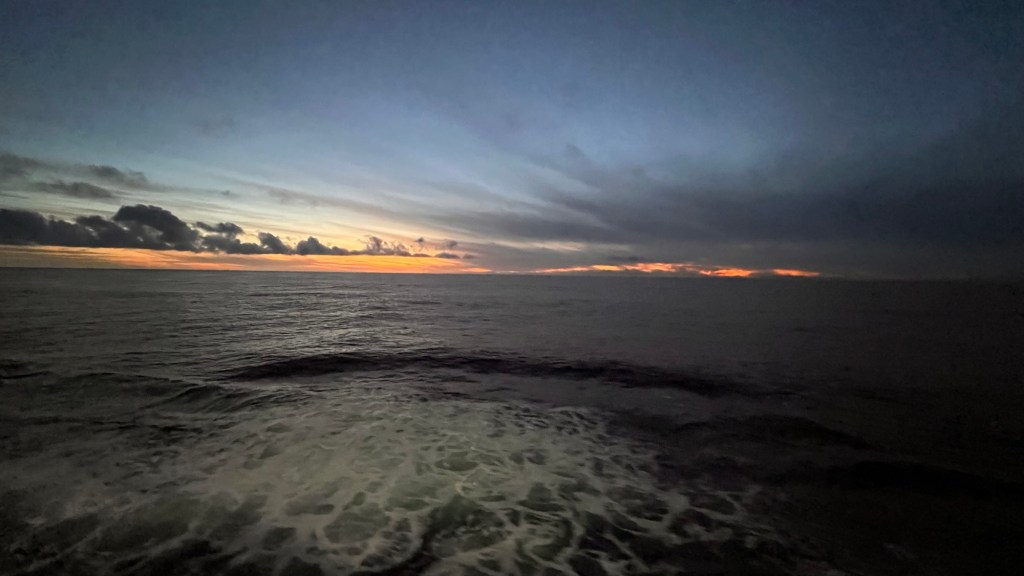
    Slept like a log last night but forgot to turn my alarm off this morning – got to see a sliver of sun before the fog set in.

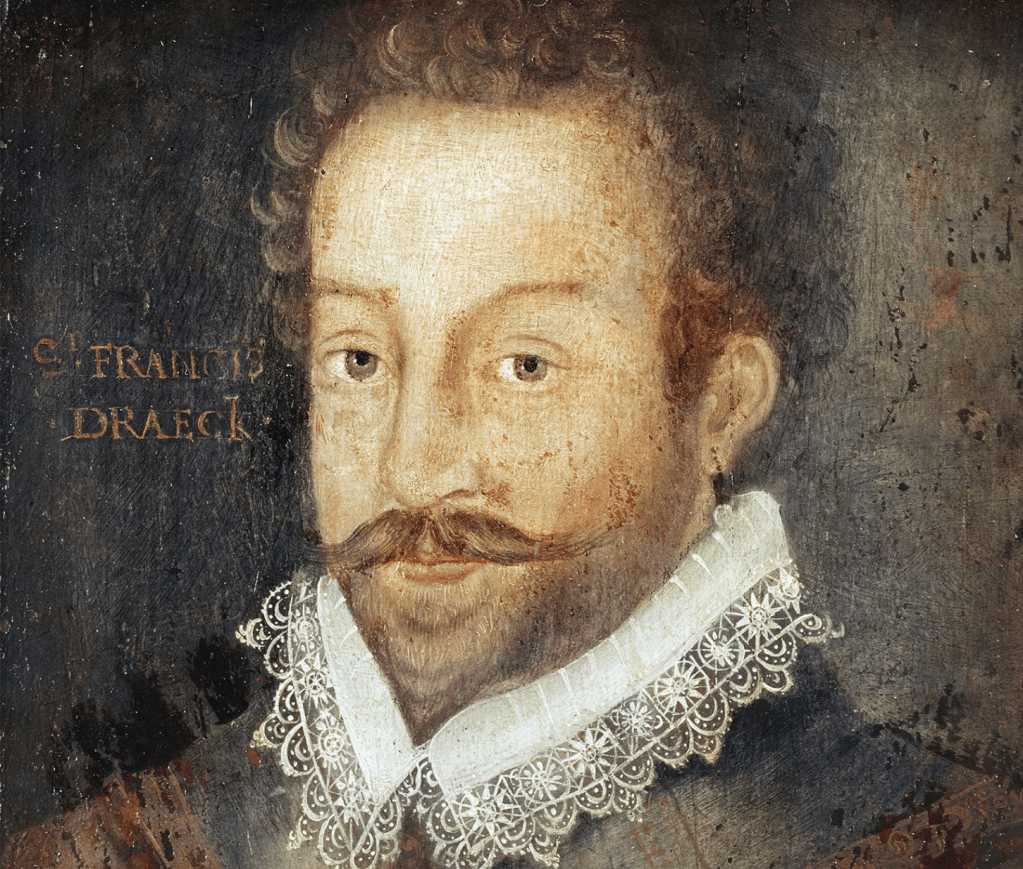
    Today is day one of two for crossing The Drake Passage. Drake, as in Sir Francis the explorer, privateer & plunderer, not the rapper dude.

    Fun fact: scopolamine patches are no longer manufactured in Canada. When not being used as a truth serum, scopolamine, aka Devil’s Breath, is a very effective seasickness remedy and worked well the first time I ventured to sea. Today I am praying my slow release Gravol and ginger pills will do the trick.

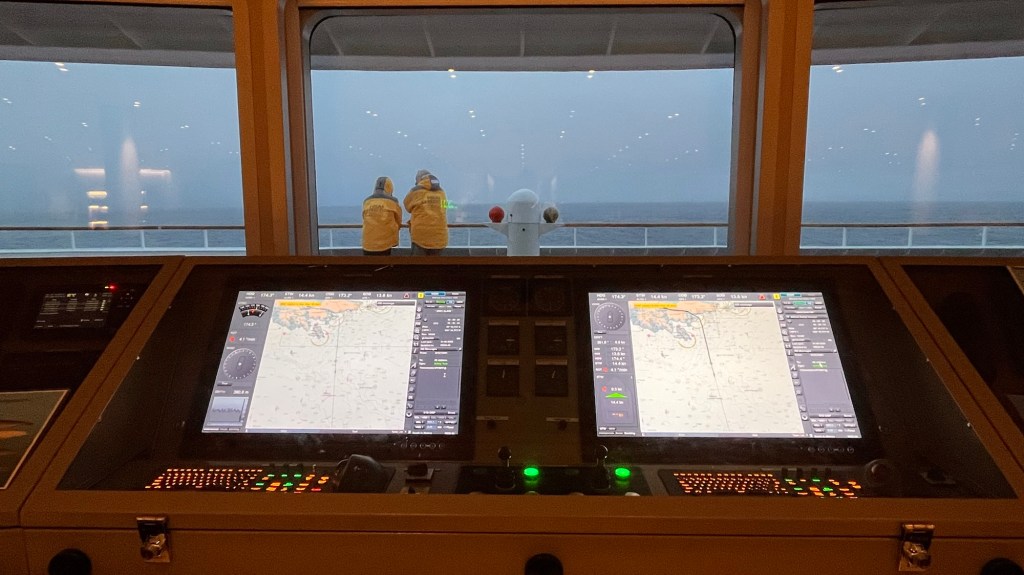
    The Panorama Lounge has secondary bridge controls at the bow (under lock and key) where you can track the ships location, depth sounding, water currents etc. more importantly, its home to a 24 hour espresso drink machine.

    Our whale expert Simon, from Victoria, BC, tells us that us we will loose count of how many whales we will see since it’s peak krill bloom time.

    I was dismayed that there is a TV in the room – one can opt to view the livestream lecture instead of going to the lecture room – but it’s handy for checking out the daily schedule. 

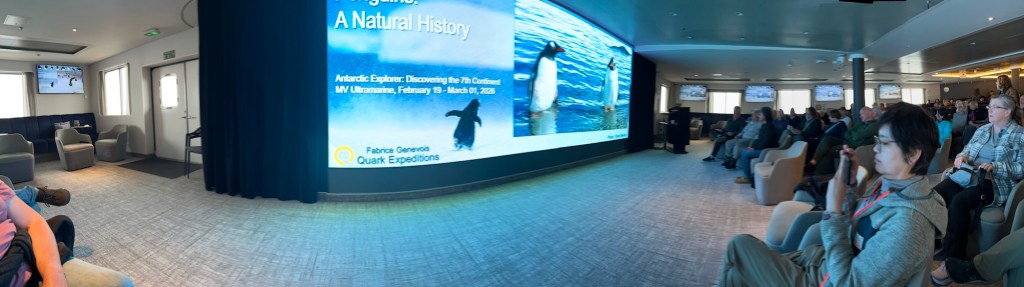
    This morning was The Penguin lecture by Fabrice, a french biologist.

    There is a massive big screen in the main lounge a 8 smaller screens on the side walls

    I learned that pengies have white bellies and black backs not only for thermo regulation but also for camouflaging while in the water – water predators can’t see the white easily from the below and bird predators can’t easily see the black from above.

    I chatted with the head chef about my oyster mushroom intolerance last night before dinner. Nendi  is a dead ringer for a chubby smiling Buddha – he assured me that there were none on board. Great attention to detail is paid here…another staff member was monitoring a list of passenger allergies and carefully conferring with the chef before striking names off…or maybe they were talking about something in Chinese…but I felt reassured

    It’s buffet for breakfast & lunch and a la carte for dinner with a lot of vegetarian and gluten free options. Snacks are at around 4:30. Loving the fruit, avoiding the pastries, using the stairs! Handwashing is mandatory before entering a dining area. There are many hand sanitizer stations throughout the ship.
    Picked up a few good tips for iphone pics at the Polar Photography lecture and got fitted for boots & dry suit. Dry suit is mandatory for heli rides and optional for zodiacs.  

    Checked out the bridge – soon to be my nice quiet escape place – and had a refresher on the discovery and exploration of the White Continent.

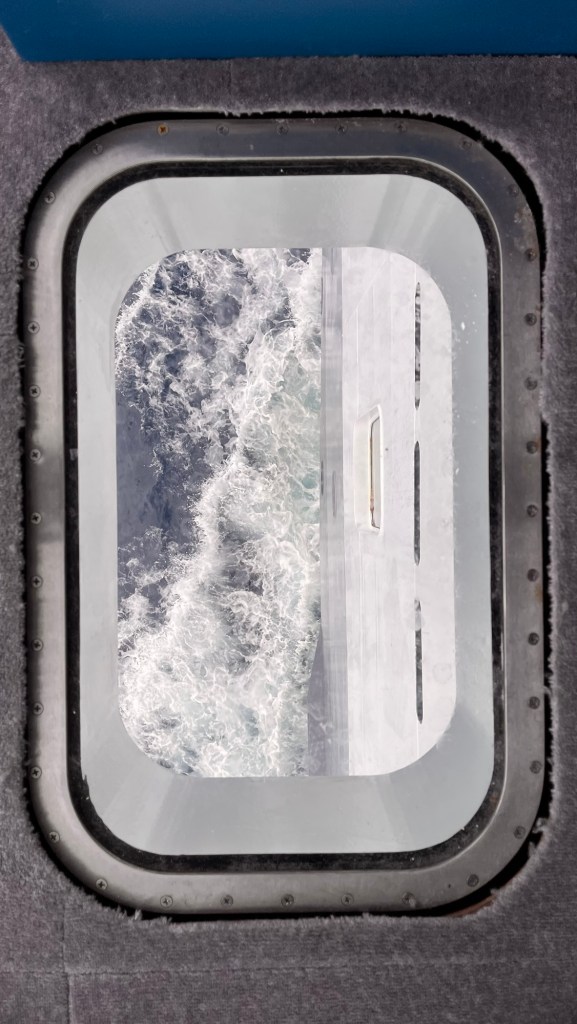
    Cool floor port hole

    Our expedition staff was introduced before the captain’s dinner and at the end of the day, it was a fireside chat about marine superstitions.

    A pretty full day on water as flat as lake Ontario.

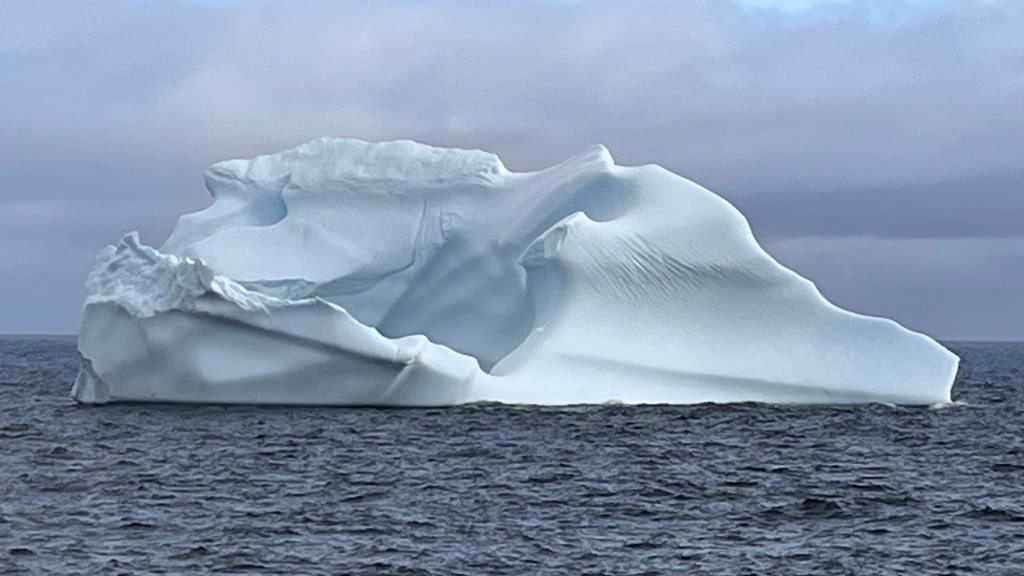
    I placed my guess on the iceberg spotting contest hoping for a second consecutive win in.

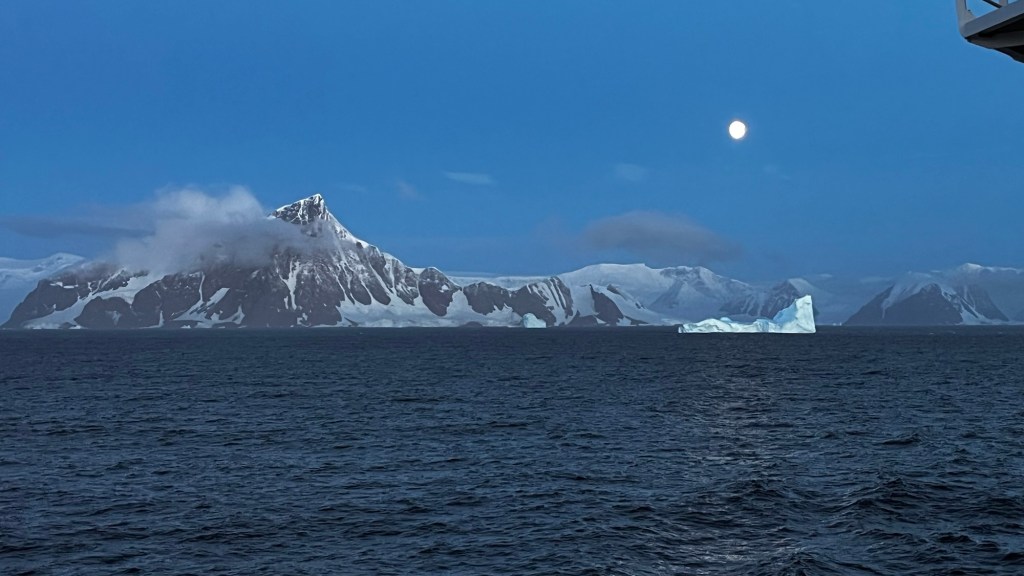
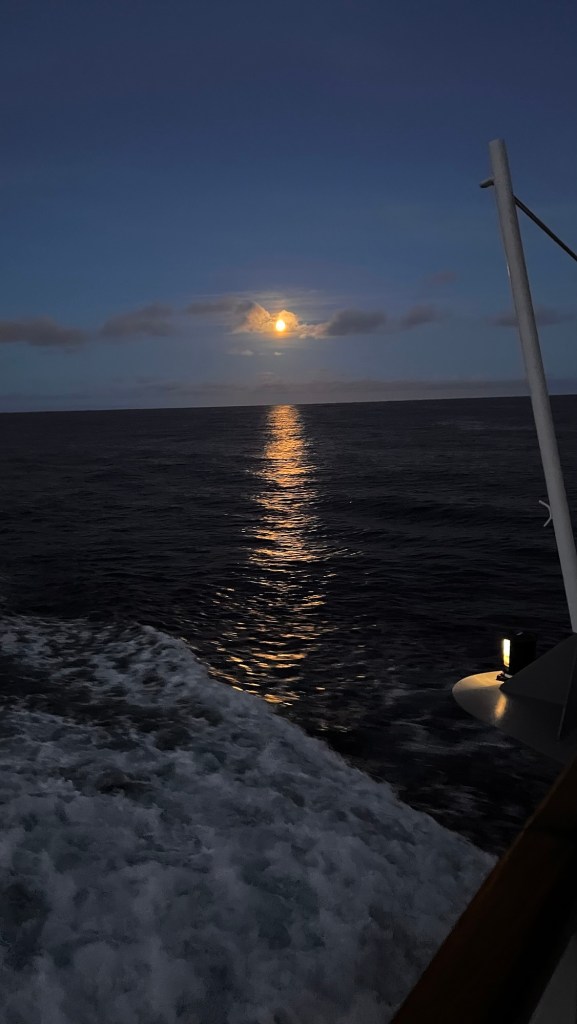
    And finally, a full moon.