
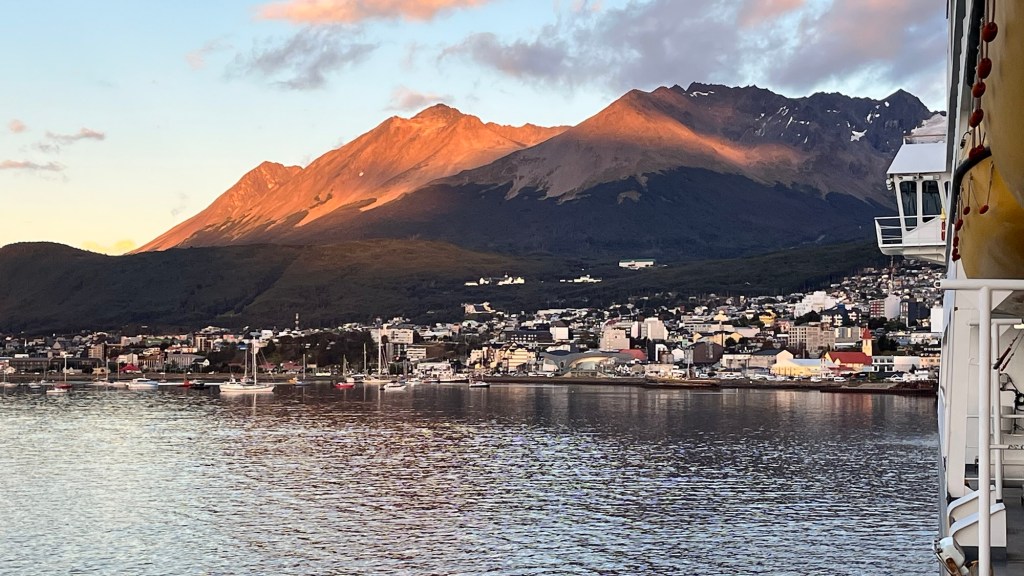
Spent the last 2 days in bed thanks to a cold – good thing both days were in the Drake Passage. It was relatively calm with some nice slow rocking.
I appreciated the TV in the cabin . I thought it was a stupid idea at first but since they livestream all the presentations I did not miss out. Found out about the helicopters, hotel operations, ship operations and even the commissioning of the ship.
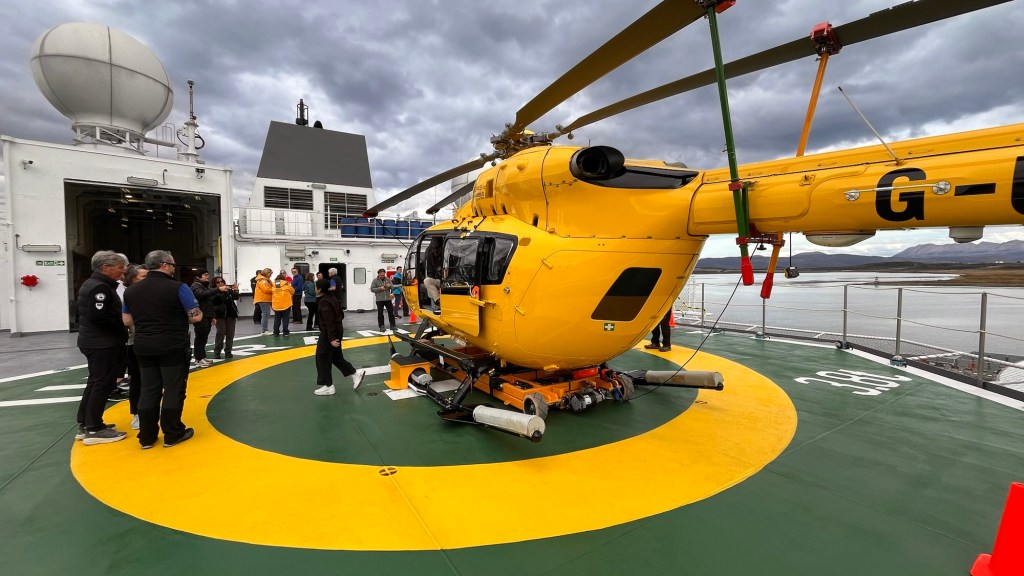
The helicopters they use cost around 10,000,000 EUR and cost about 800,000 EUR for annual maintenance and inspection. They have 2 helicopters, 2 pilots, an engineer and la mechanic. Helicopters are stored in dedicated hangars on the 8th level to protect them from exposure to salt. They are moved in and out with trolleys when needed. When operating, all rear decks are closed and at least 2 zodiacs are in the water on stand by in case of emergency. The pilots are only allowed to fly for 3 1/2 hours without a break. When doing heli-landings, the number of people at the landing spot is restricted by the amount of emergency shelter and food carried.
Hotel side, most of the staff are Filipino – and very efficient ones at that! Although there was one husband and wife couple, most are away from home for most of the year. They get a 4-6 week break in spring/fall while the boat repositions to the opposite polar area and under goes maintenance.
Service and food quality were exceptional and without all the silly chef-y affectations. They source only sustainable seafood so no salmon but plenty of swordfish. One thing everyone appreciated was the display of dinner dishes laid out in the buffet in the evening.
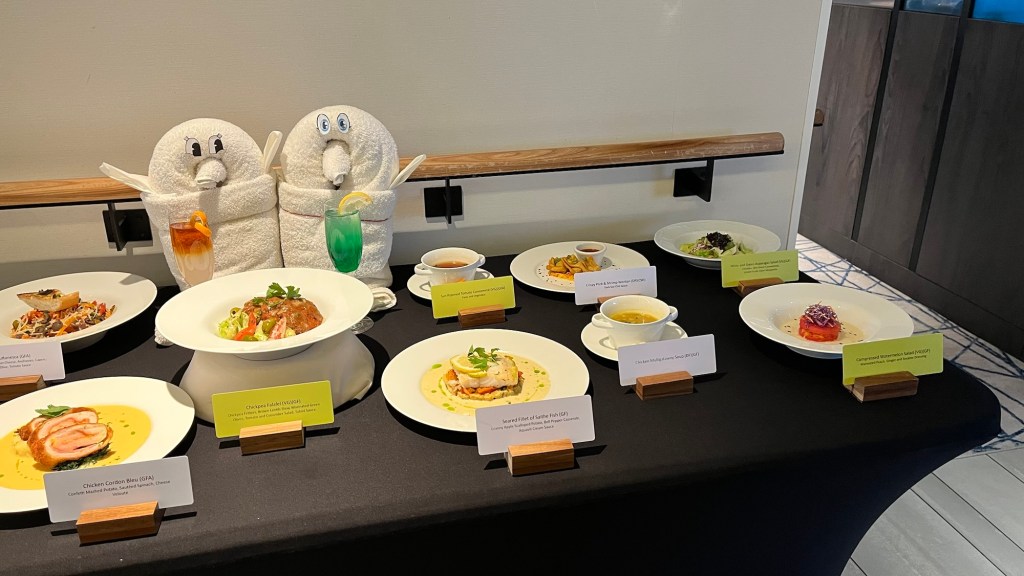
Darron the Hotel manager was on hand to answer questions – he also seemed to have memorized everyone’s name.
Apparently, our expedition used a lot less toilet paper than anticipated.
Ship fun facts:
- They process both black water and grey water and release it at appointed places at sea cleaner than when they started.
- A reverse osmosis process for desalinating sea water is used.
- Garbage and “recycling” is put through a micro auto gasification system. The process reduces it to biochar while producing heat – a scrubber is used so emissions are clean-er.
- Recaptured heat from the generators heats the interior.
- The hull has a special coating to discourage sea life from latching on – part of the seasonal maintenance is cleaning and re-coating.
- Generators use low sulphur diesel.
- They use green lights around the deck at night to reduced bird strikes.
- They treat ballast water with UV light to discourage algae growth.
- The ships base cost (that was publicly released) not including the full fit out was 180,000,000 EUR – they didn’t share the final price with us.
The ship was built in Split Croatia – Jake our expedition leader was involved in the final fit out and commissioning with all the typical challenges and frustrations that you would find in an architectural project – all during covid. Captain Oboychuck was also involved early on as a consultant before becoming captain. They certainly seem to have a great deal of pride for, and emotional attachment to, the Ultramarine.
The last livestream was a fundraiser auction to benefit a non-native mouse eradication project in one of the sub-antarctic islands in the Indian Ocean. The mice are eating eggs and even adult birds to extinction – death by a 1000 nips. They raised over $11,000 USD from an audience of 181.
It was sad to say goodbye this morning.
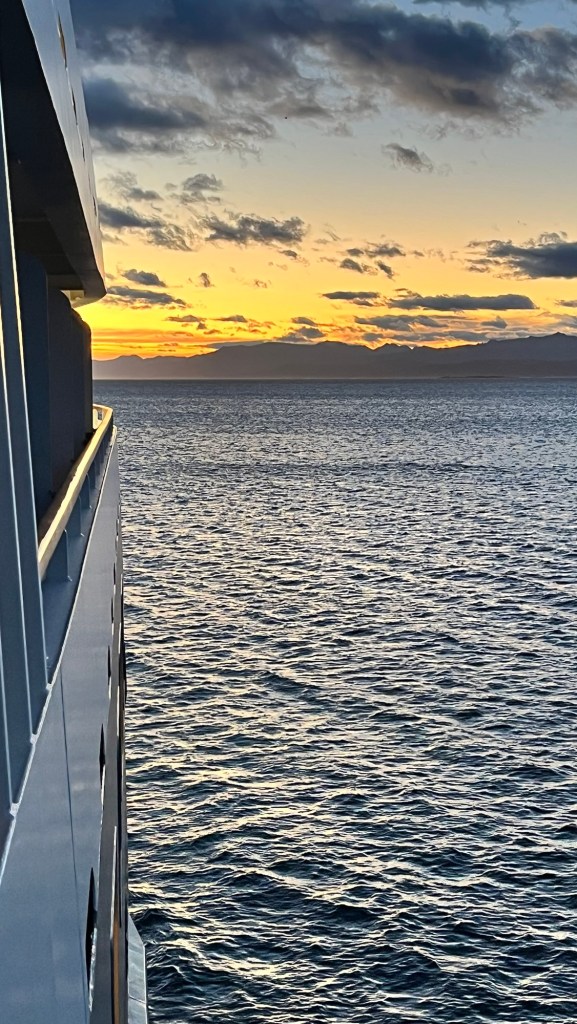
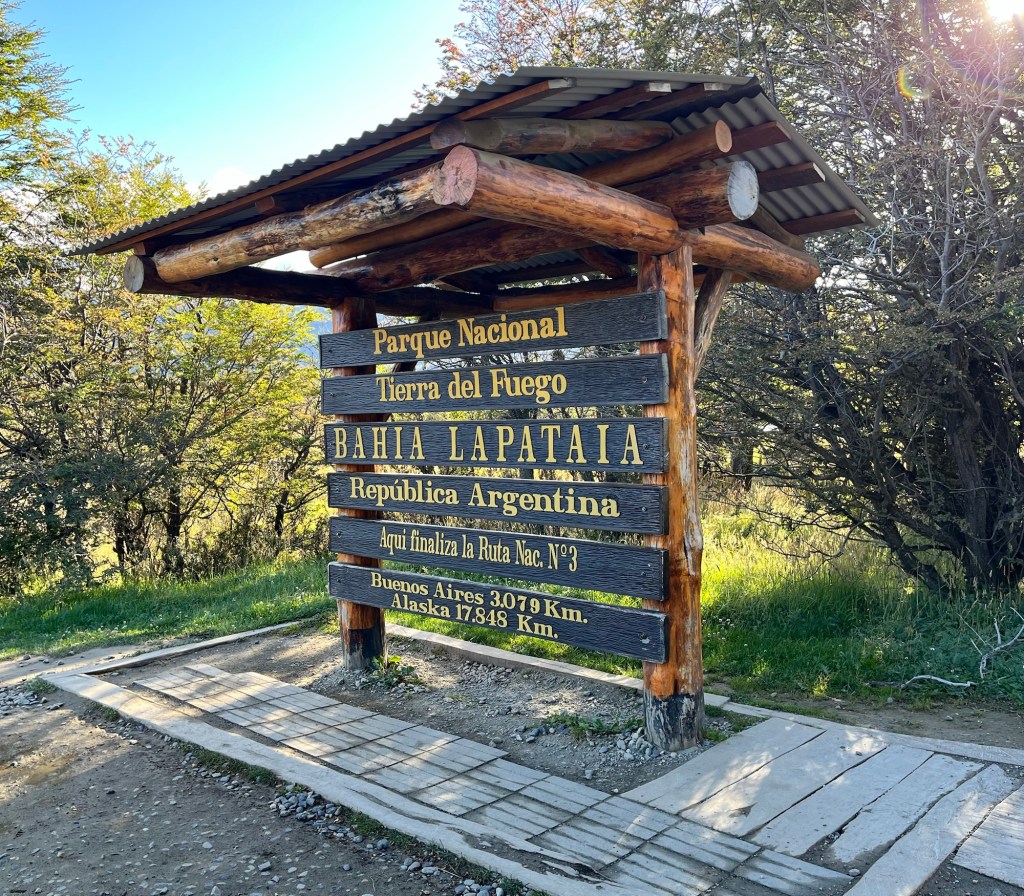
We had a few hours to tour the Fin del Mundo national park before heading back to Buenos Aires.
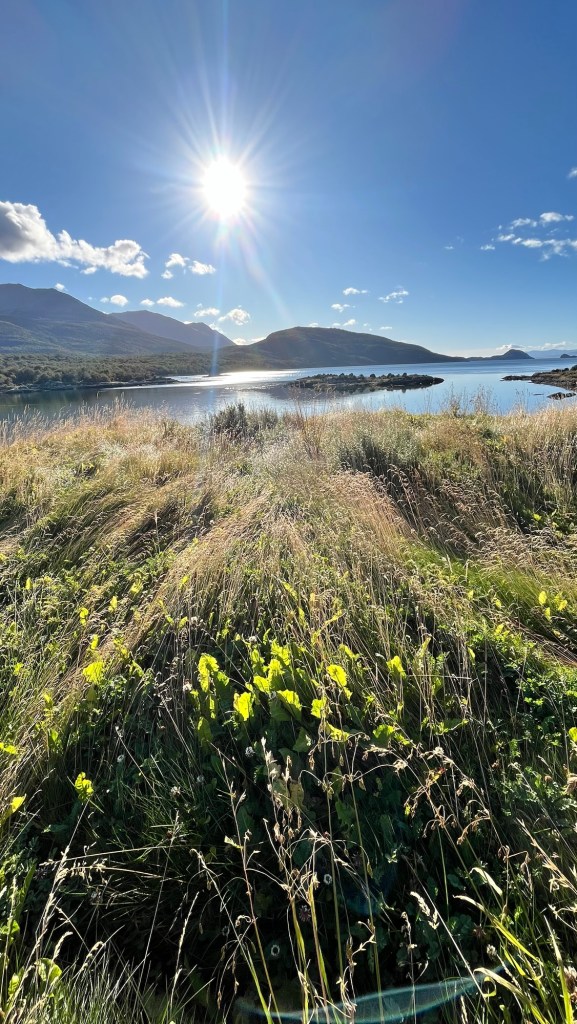
Beautiful scenery and home to another “cane toad” disaster. In 1941 someone imported 25 breeding pairs of Canadian beavers with the hope of scoring big on the sale of pelts. However, the temperature in this area hovers around 0C through the winter – it’s not cold enough for beavers to develop thick sellable pelts. So today, with no Canadian predators in the mix, there are over 200,000 beavers in Tierra del Fuego (and more on the Chilean side of the island.) Also they have devastated 200+ year old trees that really struggle to grow due to ferocious winds at the end of the earth. Watercourses have been affected as well because, well, beavers!

 66°33′ South
Leave a Reply to Sherree Cancel reply